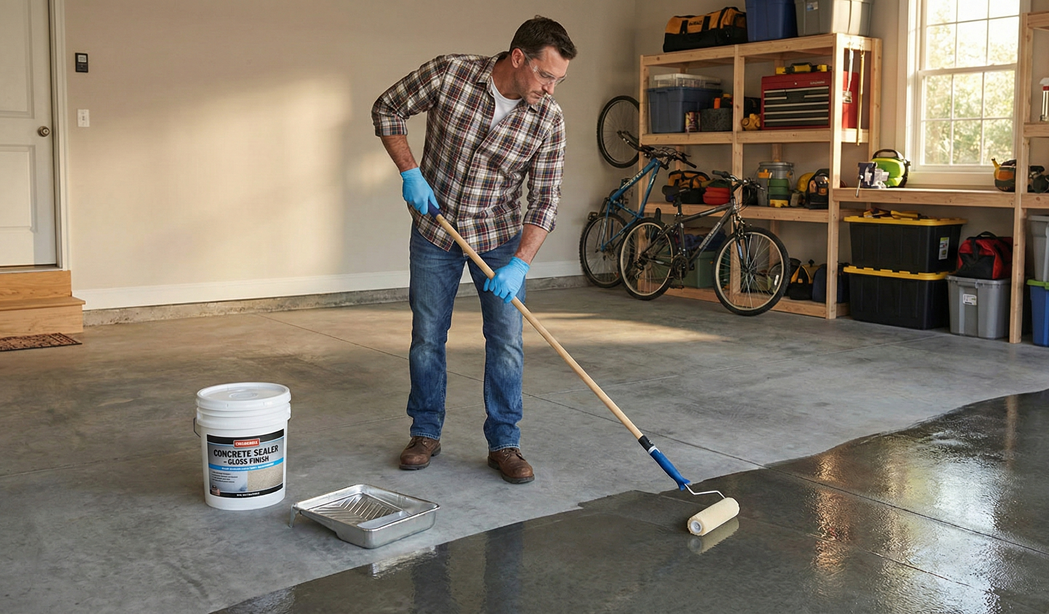
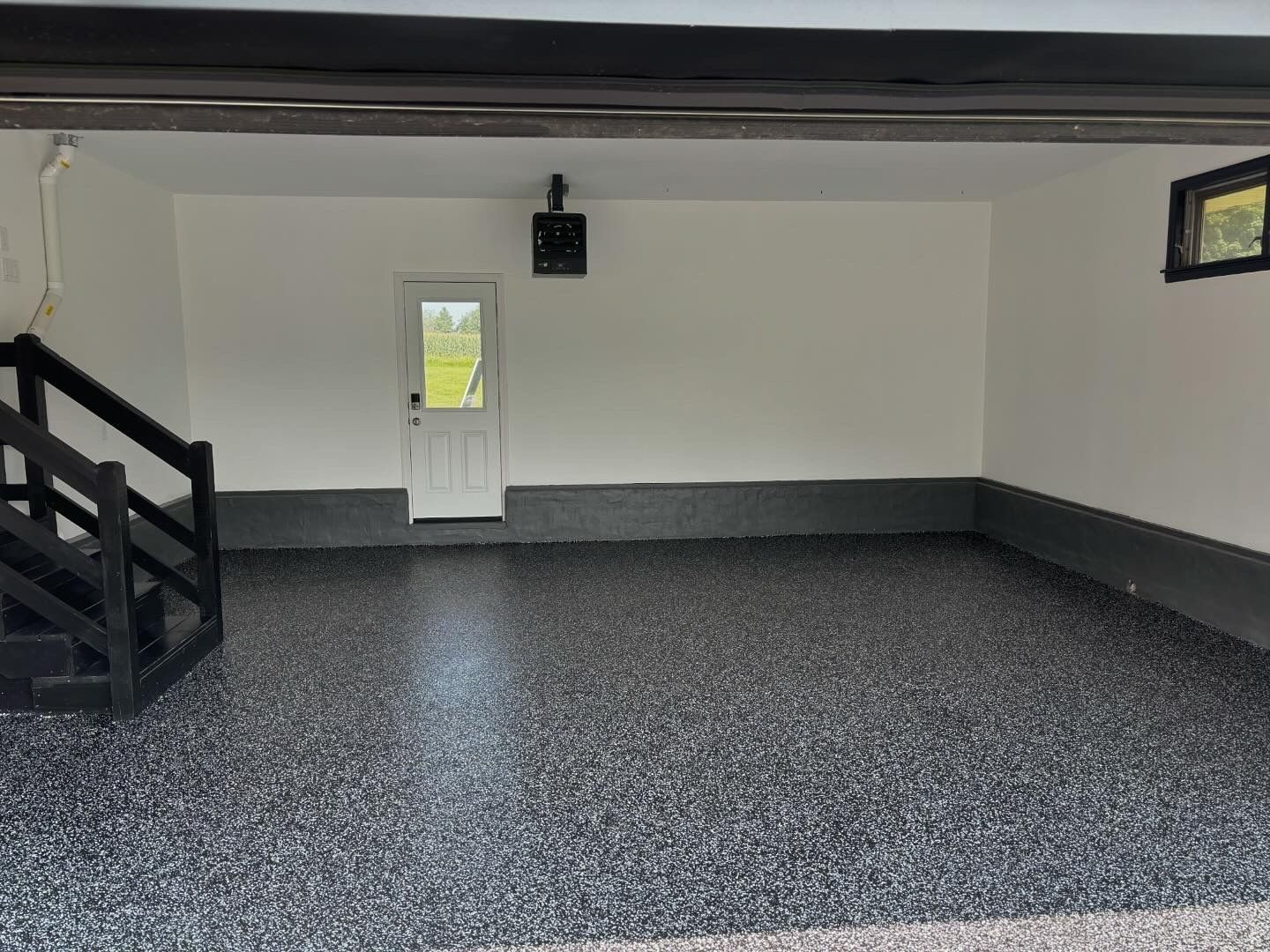
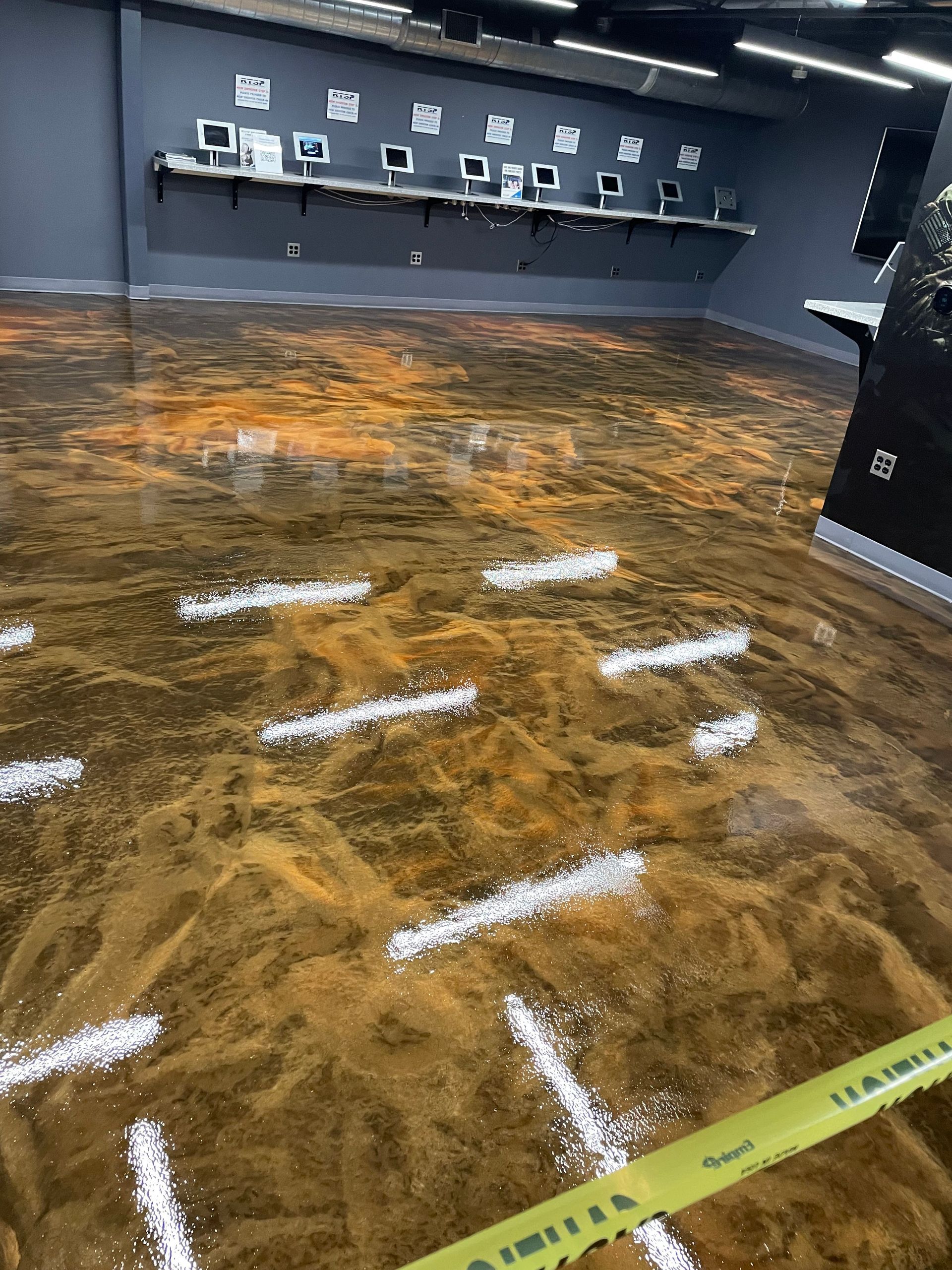
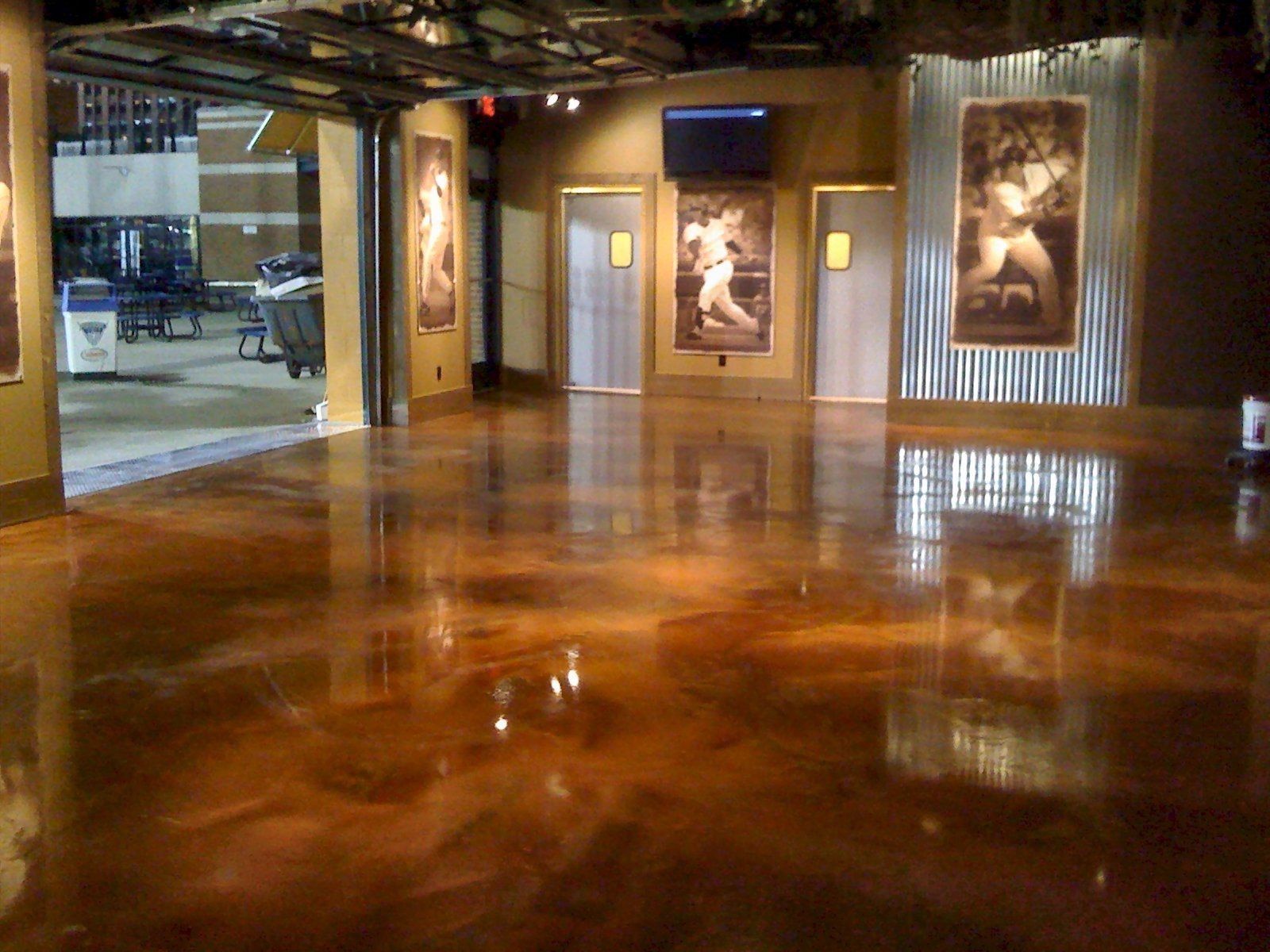
Standard epoxy is formulated for interior conditions. Two problems emerge quickly in outdoor New Jersey applications:
UV Degradation
Epoxy's chemical structure breaks down under prolonged sun exposure. It yellows, chalks, and loses surface adhesion. On a New Jersey patio under direct sunlight, visible damage can show up within one to two seasons.
Thermal Stress
A patio slab in East Brunswick or Bridgewater cycles through dozens of freeze-thaw events per winter. Rigid standard epoxy can't flex with slab contraction. It can crack at stress points, lift at edges, and eventually delaminate from the substrate.
What Actually Works: Epoxy-Compatible Outdoor Systems
The systems that work outdoors use epoxy as a base layer for adhesion and chemical resistance, then employ a UV-stable polyaspartic or polyurea topcoat. This hybrid approach retains what epoxy does well while fixing the two things that fail outdoors.
For
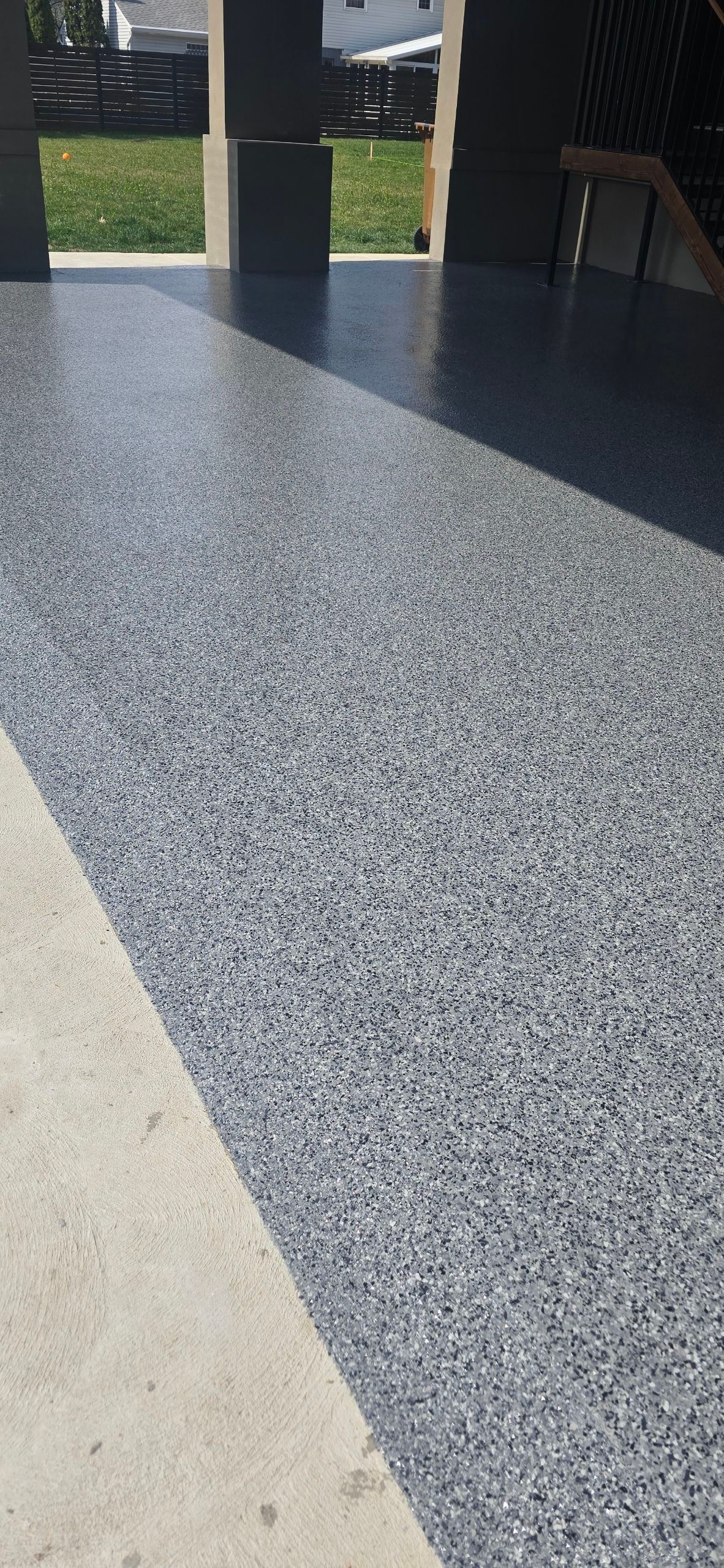
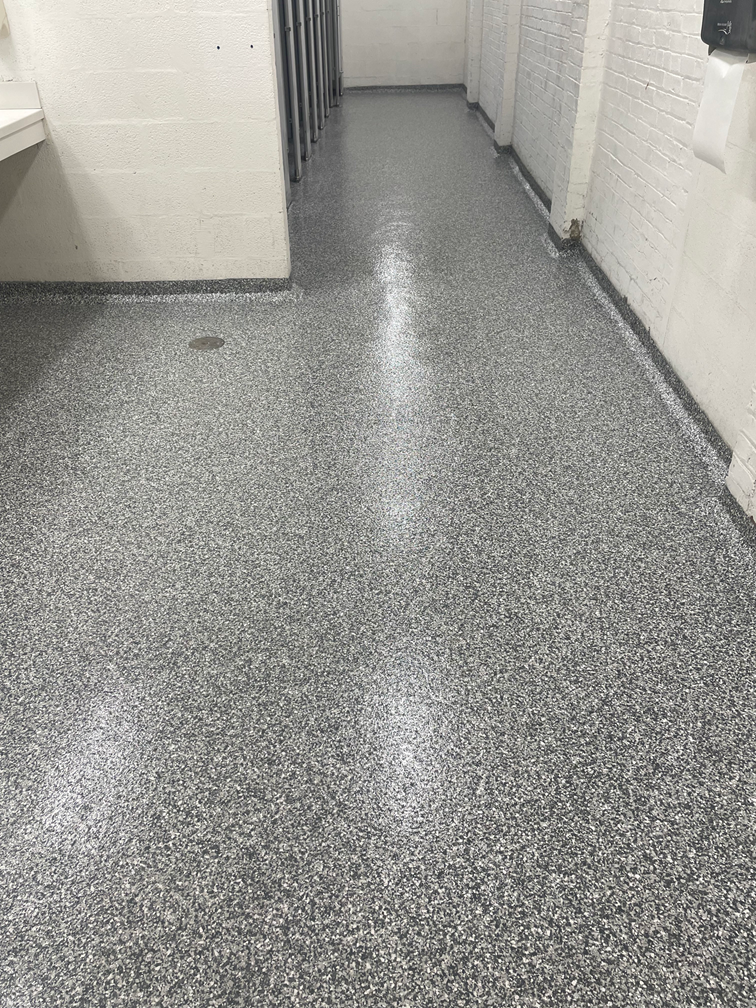
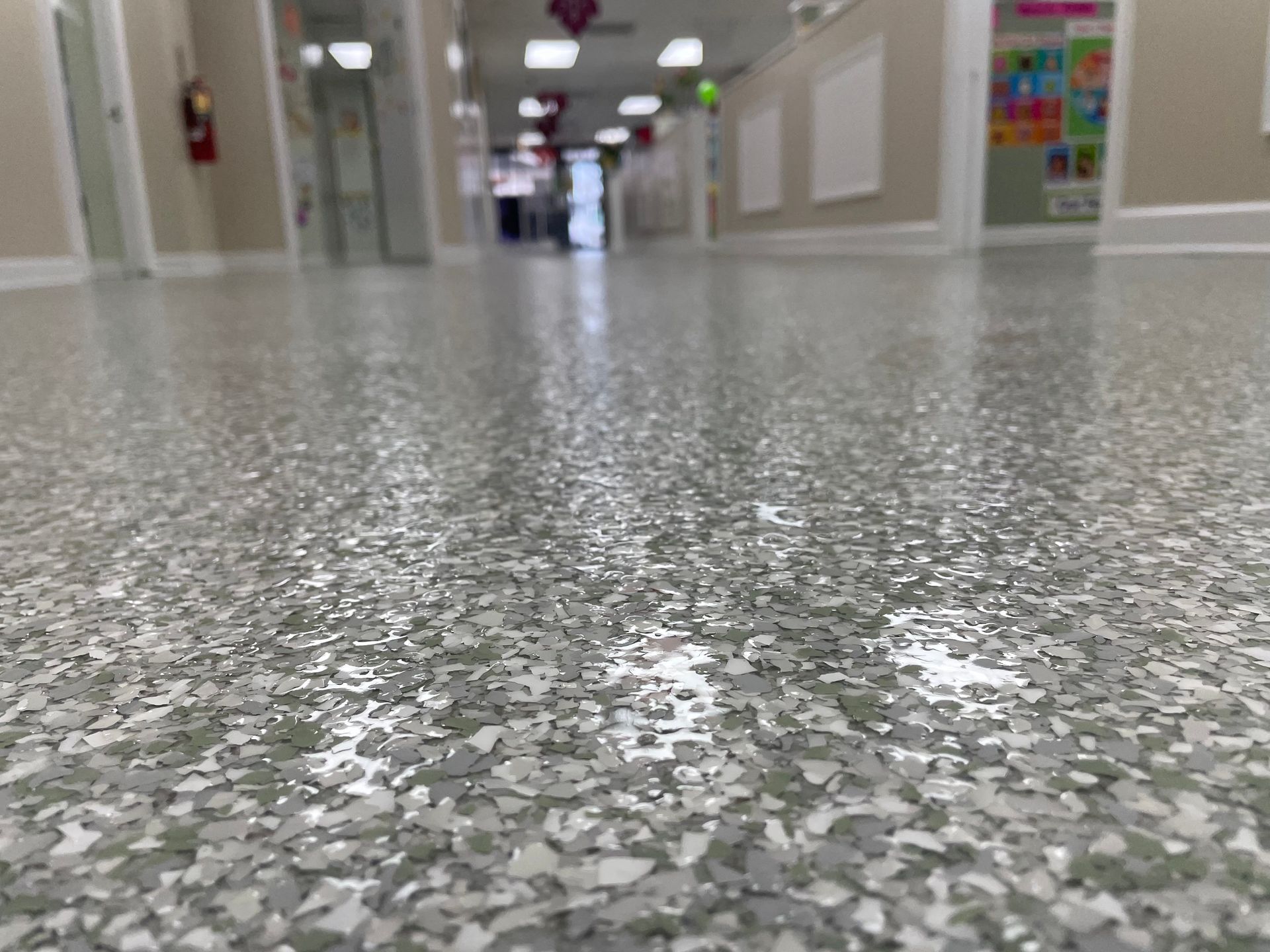
pool deck coatings, slip resistance is a third requirement. A broadcast aggregate system—quartz granules or decorative chips embedded in the topcoat—provides traction in wet conditions without compromising drainage. It's the standard approach for pool environments across Mercer and Somerset counties.
For patios with slabs in good condition, a full polyaspartic system without an epoxy base is often simpler. Polyaspartic bonds directly to prepared concrete, cures quickly even in cooler temperatures, and handles UV and freeze-thaw stress without a second product in the system.
The Honest Trade-offs
No outdoor coating is maintenance-free indefinitely. Here's what to expect from the right system vs. the wrong one:
- Standard epoxy outdoors: yellowing within 1 to 2 seasons, cracking and edge lifting within 2 to 3 seasons, and full delamination commonly within 5 years in New Jersey conditions.
- Polyaspartic or epoxy-polyaspartic hybrid: 10 to 15 years of expected performance with basic maintenance—sweeping, occasional washing, and inspection for edge lifting after severe winters.
The quality of the
surface preparation before the application of an outdoor coating is where most failures originate. Moisture testing, grinding, and crack repair are non-negotiable for performance through New Jersey's freeze-thaw cycles. Skipping prep is one of the most common reasons coating life gets cut short.
Frequently Asked Questions
Will epoxy floors get slippery outside when wet?
Smooth epoxy becomes slippery when wet, which is why it isn’t recommended as a standalone finish for outdoor surfaces. For patios and pool decks in Central New Jersey, a broadcast aggregate topcoat (fine quartz or vinyl chips embedded in the coating) provides sufficient grip for wet conditions without adding significant height or requiring special maintenance.
How does freezing weather affect outdoor epoxy coatings?
Standard epoxy becomes brittle in freezing temperatures and can crack or delaminate when the underlying concrete slab contracts. Flexible polyaspartic and polyurea topcoats handle freeze-thaw cycling significantly better because their flexibility allows them to move with the slab. This is the primary reason Concrete Refresh uses polyaspartic rather than standard epoxy for outdoor NJ applications.
Can you apply outdoor epoxy coating over existing concrete without grinding?
Grinding or mechanically abrading the surface is required before any outdoor coating is applied. Concrete's natural laitance (the smooth, weak surface layer) prevents proper adhesion without surface prep. Skipping this step is the most common cause of coating delamination within the first year, regardless of product quality. Moisture testing is equally important on outdoor slabs exposed to ground moisture.
Choose the Right System for Your Outdoor Surface