Polished Concrete vs Epoxy: Which Is Better for New Jersey Floors?
Polished concrete vs. epoxy comes down to where the floor is, how it's used, and how New Jersey's climate stresses that surface over time. Both are legitimate systems, not marketing alternatives to each other. Concrete Refresh has installed both throughout Middlesex, Mercer, and Somerset counties and has a clear view of where each one belongs.
If you've been researching floor upgrades for more than twenty minutes, you've hit this debate and found arguments on both sides. The right answer genuinely depends on application. Most comparisons ignore what actually determines performance in Central New Jersey: freeze-thaw winters, humid basements, and salt-tracked garages. Here's the honest breakdown.
What Polished Concrete Actually Is

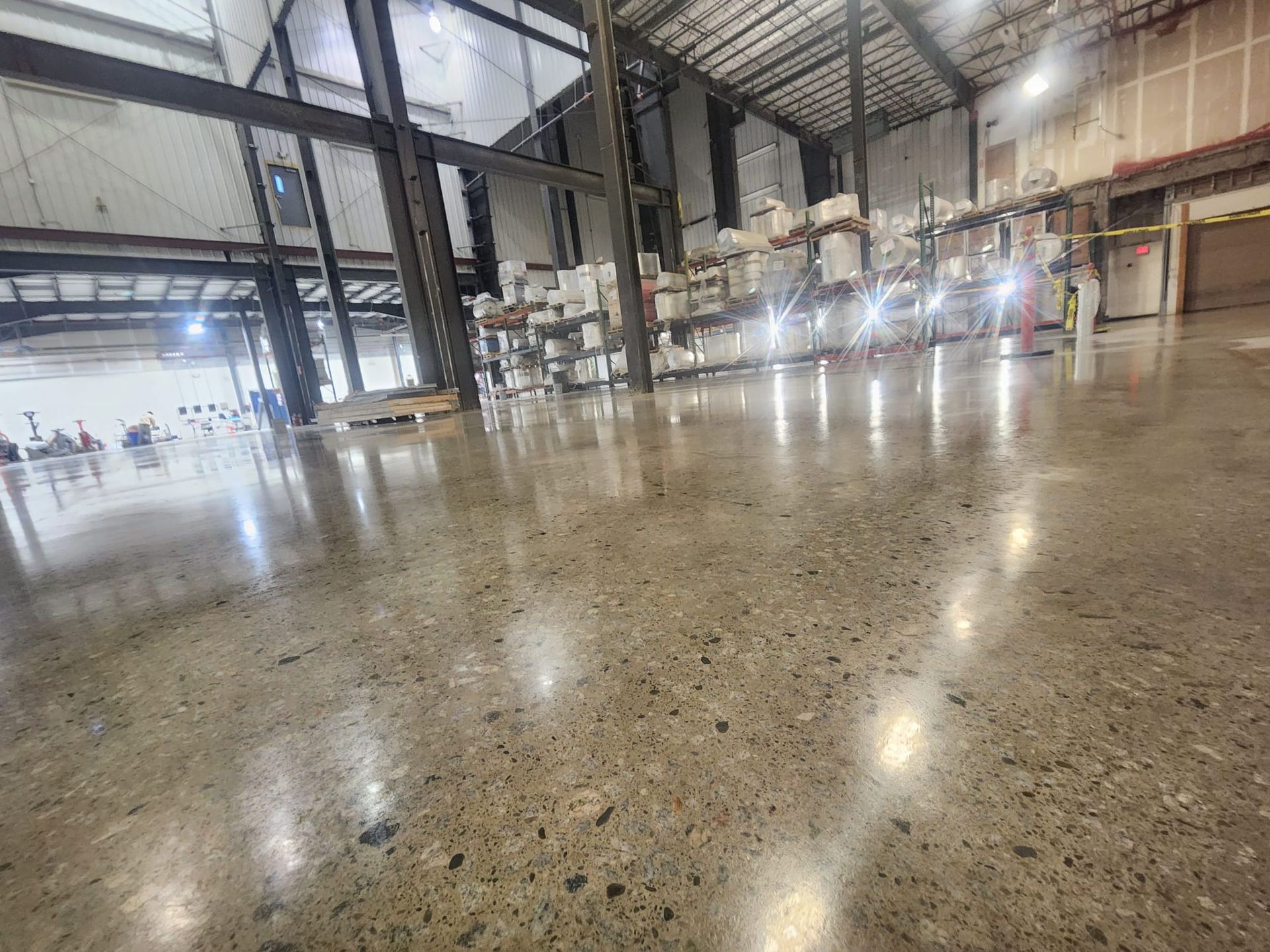
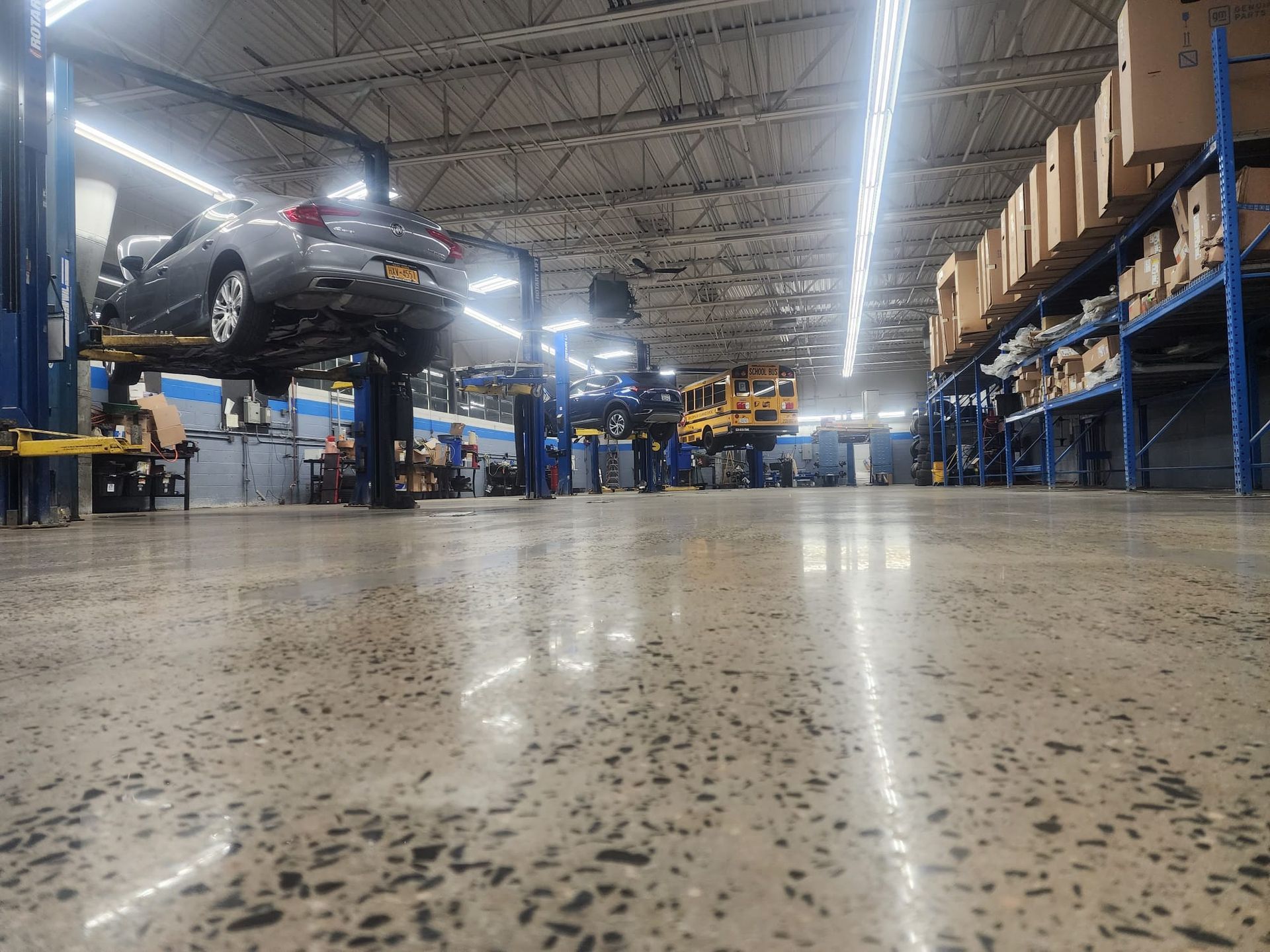
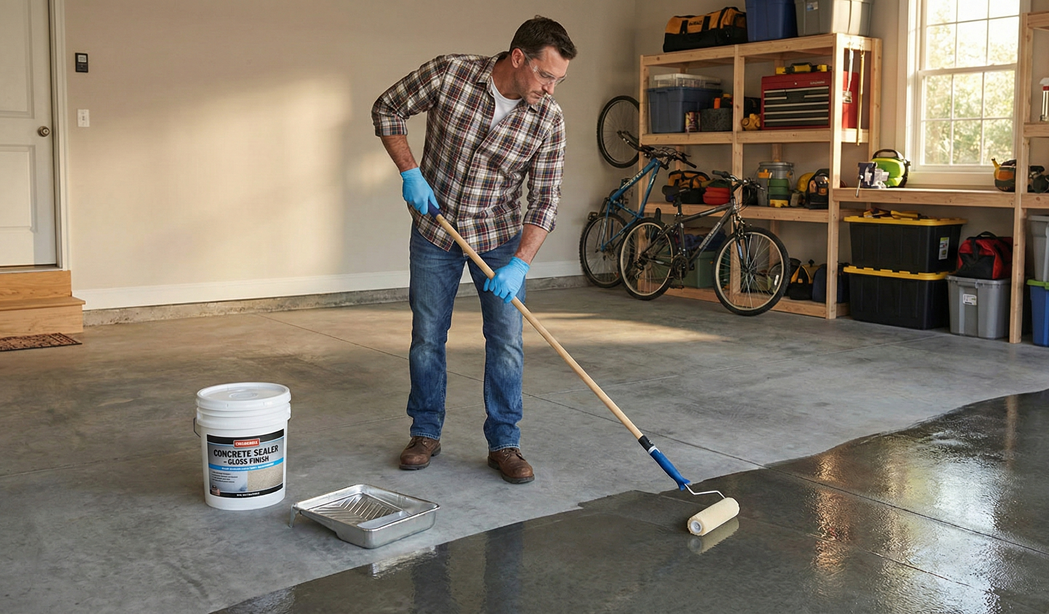
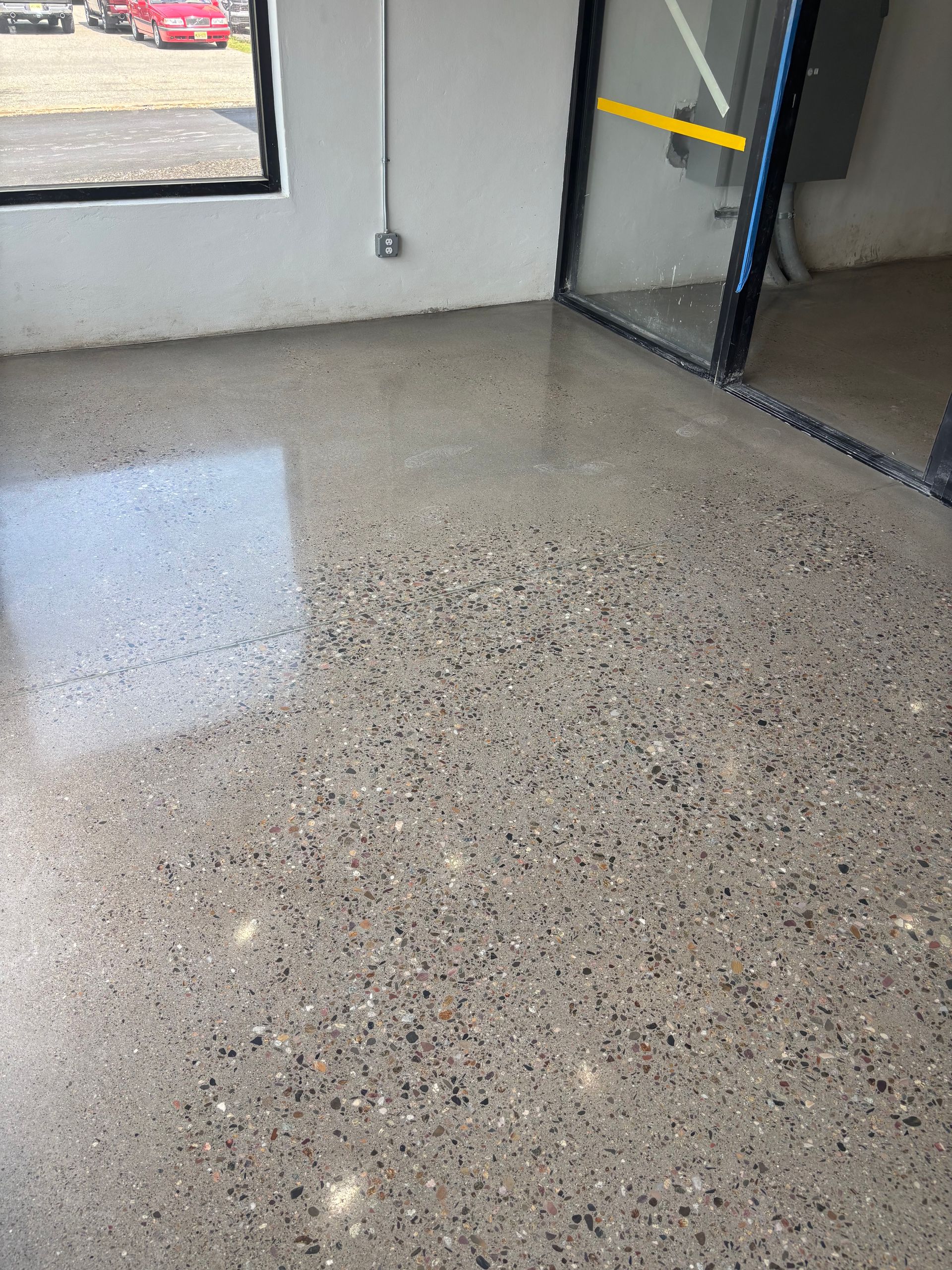
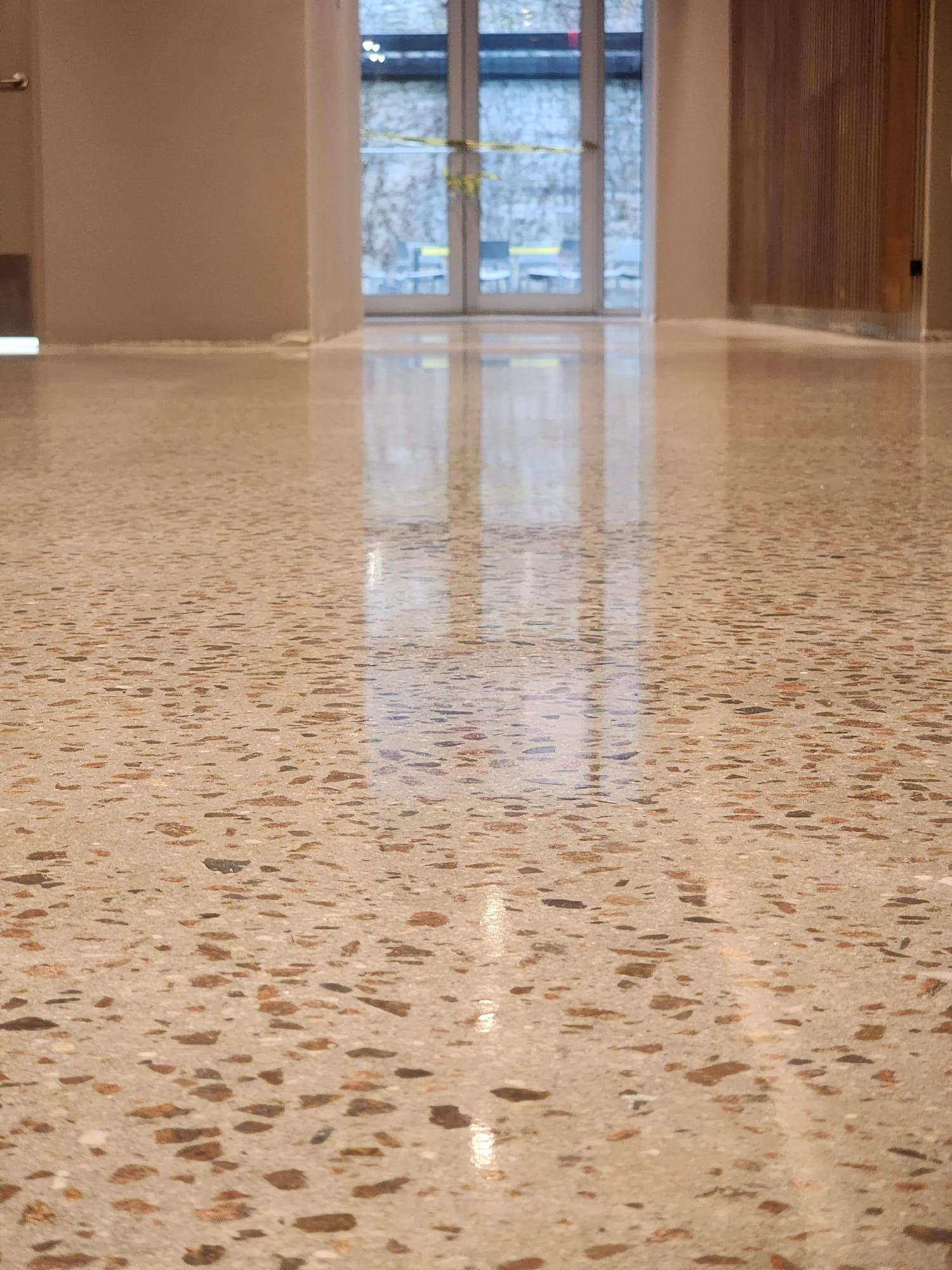
Polished concrete is a mechanically refined surface, not a coating applied on top. Contractors use diamond-tipped grinding tools in progressively finer grits to densify the slab itself, then finish with a penetrating sealer. The result is a smooth, reflective floor where the finish and the slab are one and the same—ground down, densified, and sealed from within.
That distinction matters. Because there's no coating to delaminate, a well-executed polish sidesteps the moisture vapor transmission that causes paint and thin epoxy products to blister in older homes around Princeton or Cranford. It works well for interior commercial spaces, finished basements, and retail floors where aesthetics and low maintenance drive the decision.
It's a harder sell for garages. Diamond grinding produces a smooth surface that can get slippery when wet, a real liability in a working garage.
What Epoxy Does That Polishing Can't

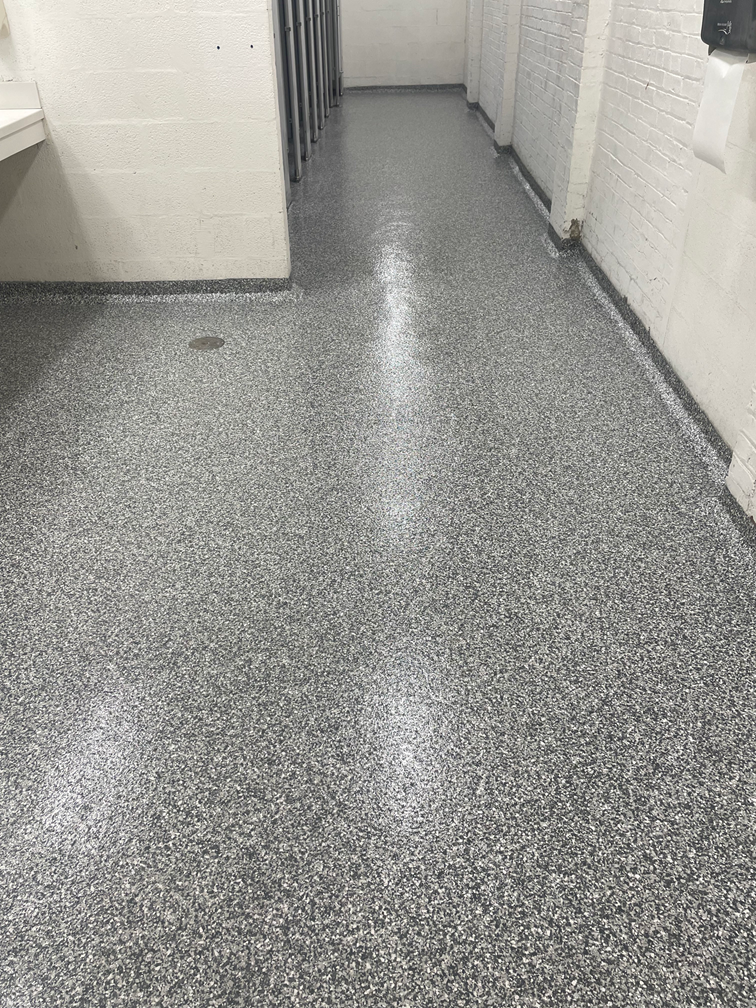
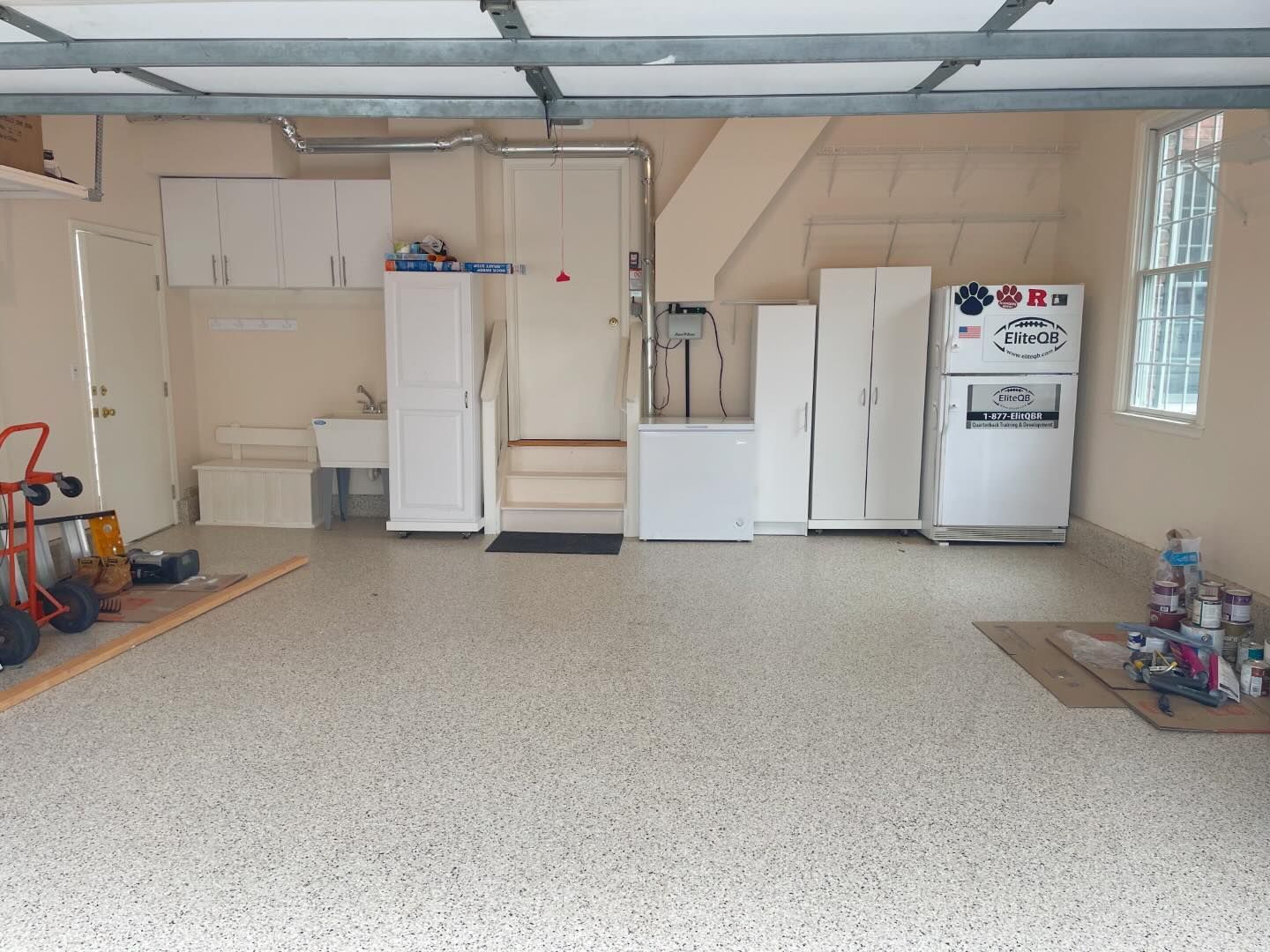
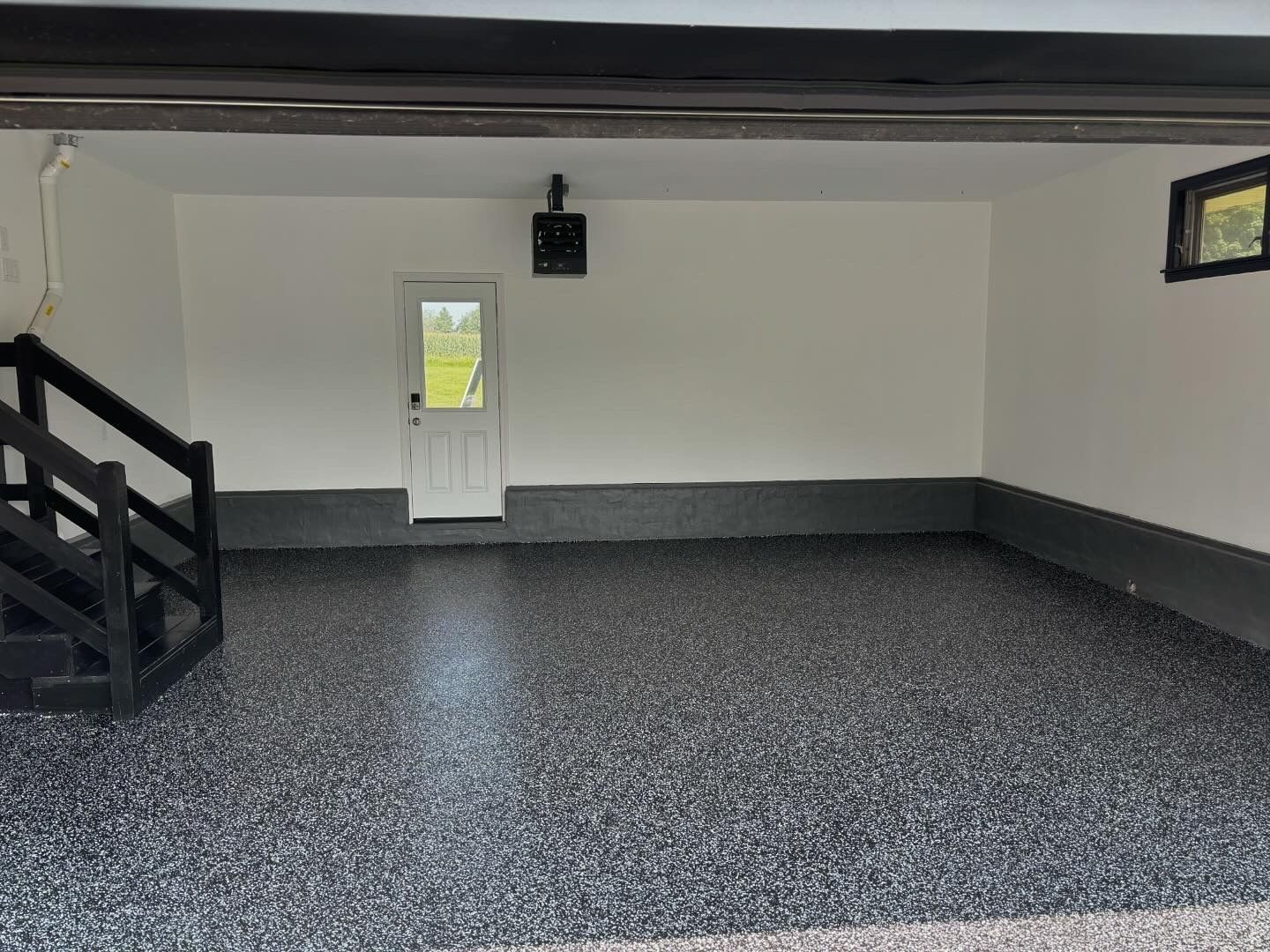
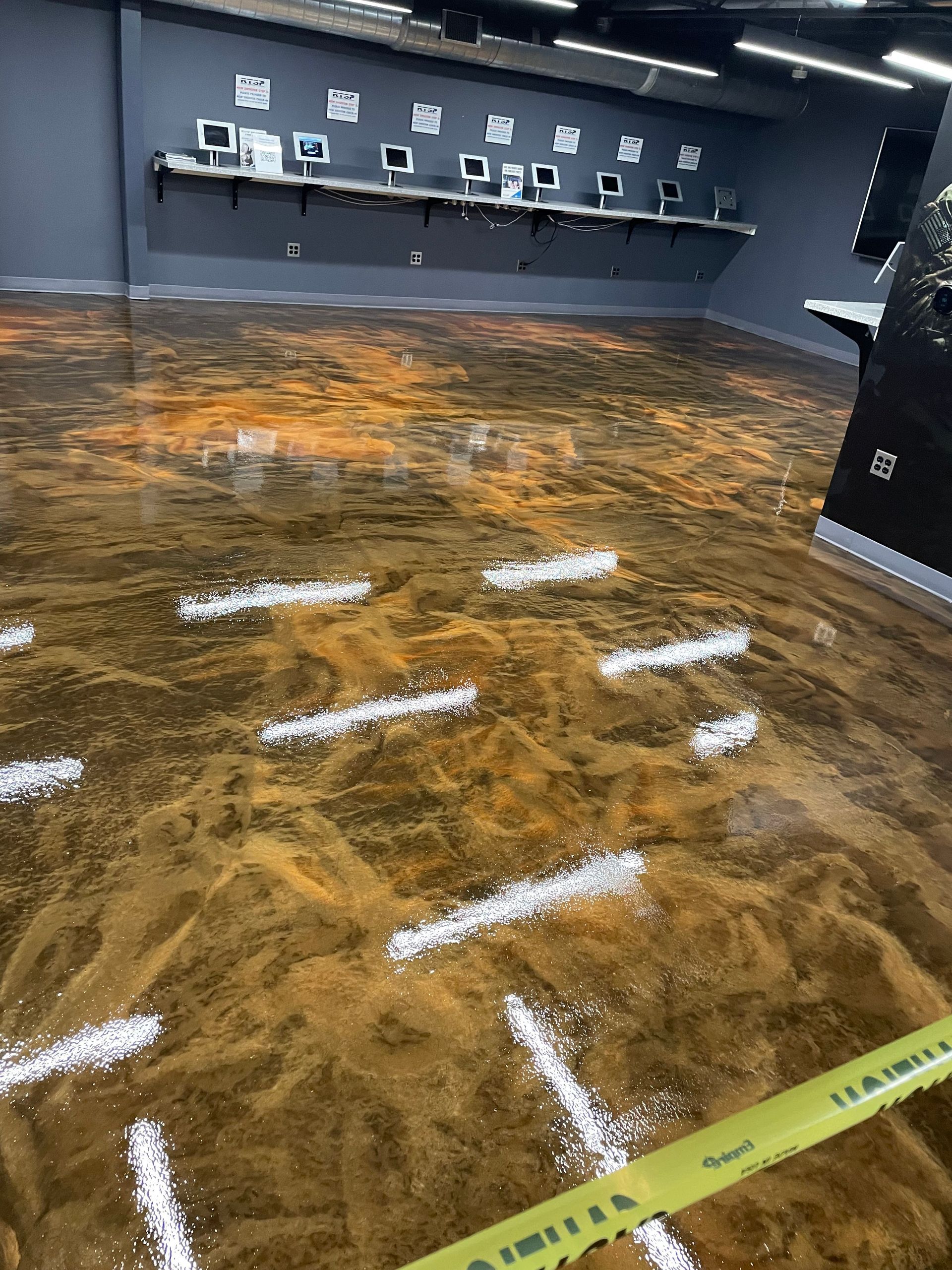
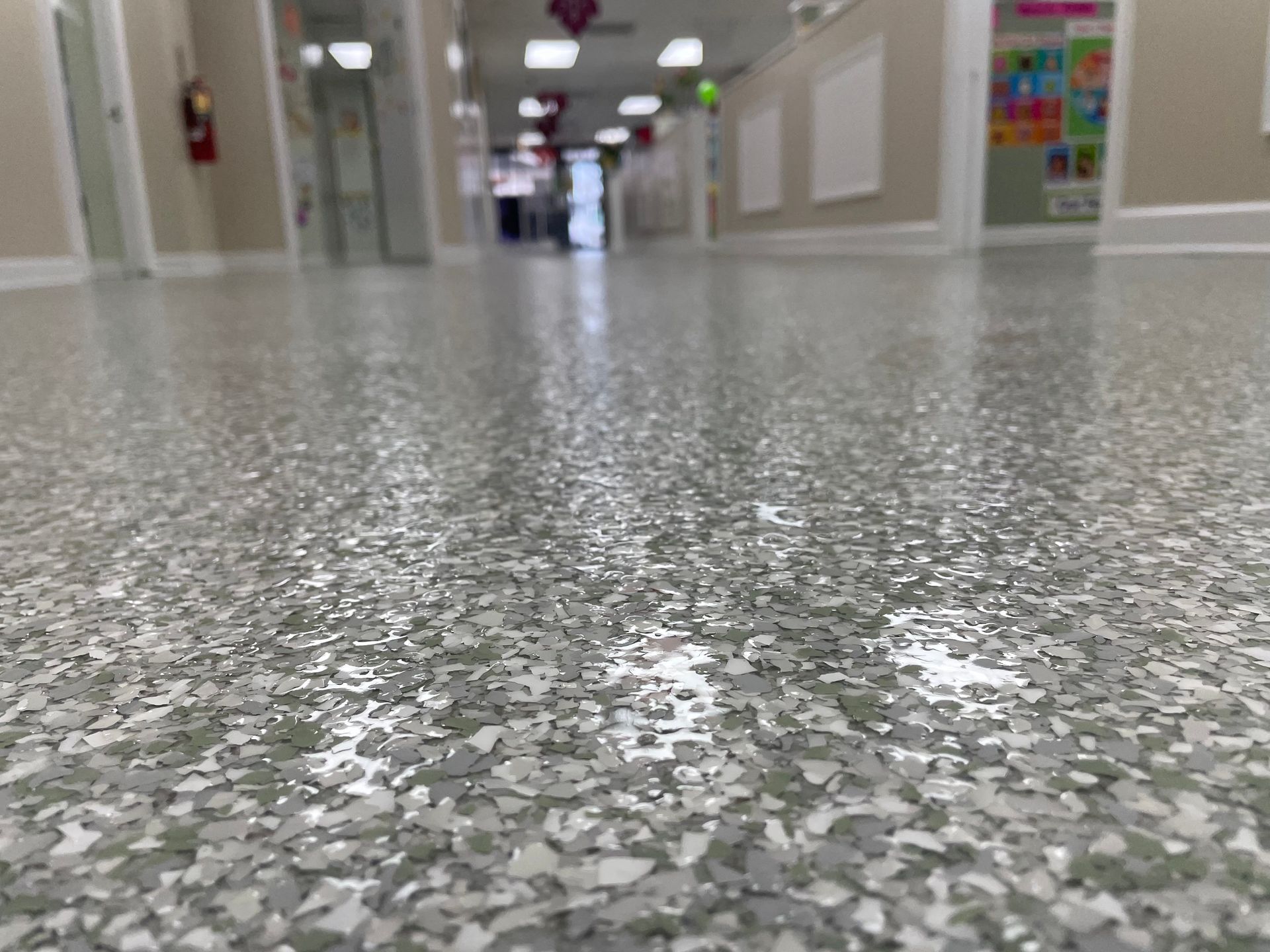
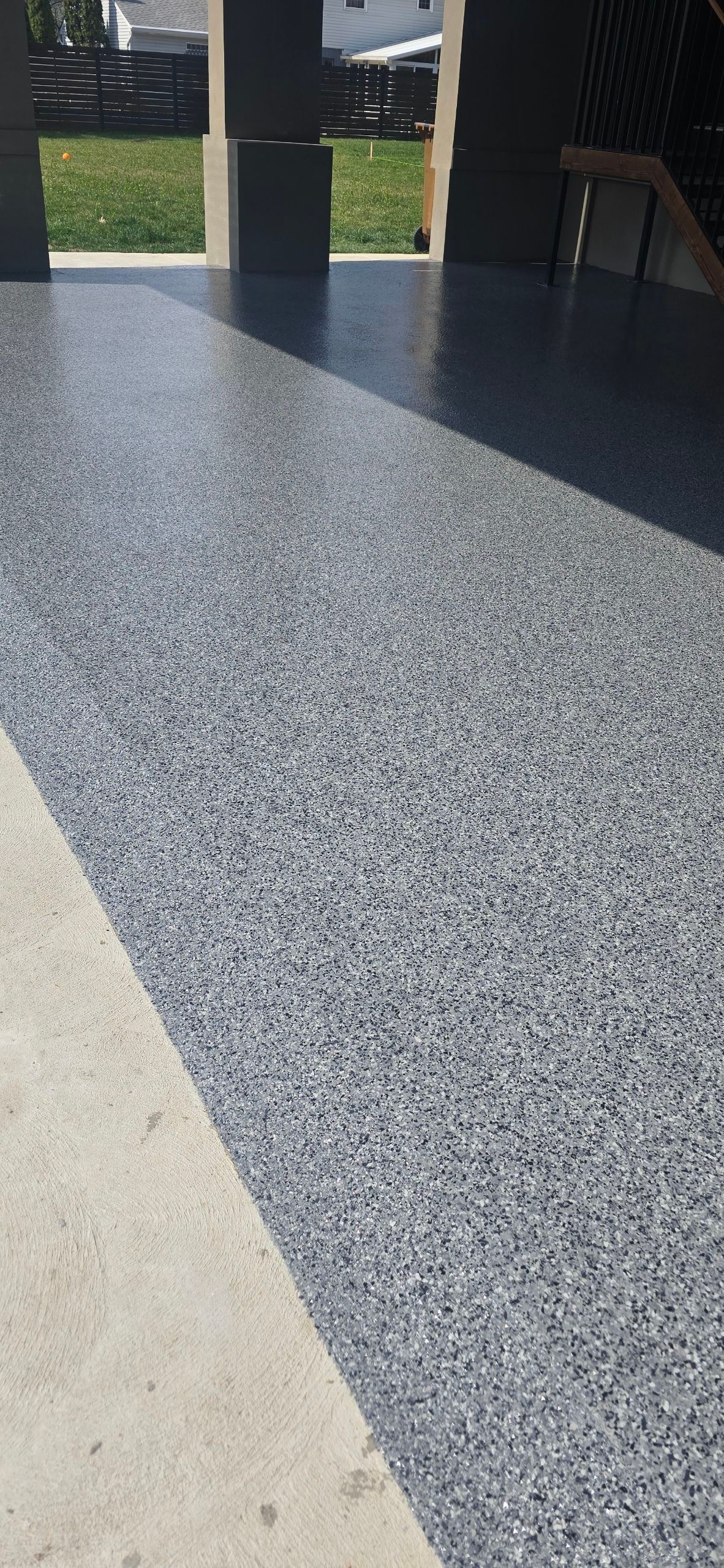
Epoxy floor coatings bond chemically to the concrete surface, adding a protective layer the slab itself never provides: chemical resistance, customizable grip, and a surface that handles automotive fluids, road salt, and hot tire contact. For garages, full flake systems are the most practical choice. Broadcast vinyl chips add texture, hide surface imperfections, and clean up easily after a New Jersey winter.
One trade-off: epoxy is rigid. A garage floor swinging from 10°F in January to 85°F in July can stress a coating at the edges if substrate prep wasn't done right. Proper grinding and moisture testing before installation are what separate a coating that performs for the long haul from one that starts lifting within a few years.
How New Jersey's Climate Drives the Choice
New Jersey winters put Middlesex County floors through significant freeze-thaw cycling. Moisture gets into microcracks, freezes, expands, and repeats—a stress cycle that generic flooring comparisons don't account for. A densified and polished slab handles this reasonably well indoors, where temperature swings are moderate. Outdoors and in garages, it's a different story.
For garage floors and surfaces exposed to the elements, epoxy with a polyaspartic topcoat is the more climate-resilient option. The topcoat adds flexibility and UV stability that standard epoxy alone doesn't deliver. For interior concrete, polished concrete often wins on total cost of ownership. No recoating, no topcoat to wear through. Once it's done, it's done.
Frequently Asked Questions
Is polished concrete cheaper than epoxy in New Jersey?
Polished concrete typically costs more upfront than a basic epoxy system but can cost less over time since it requires no recoating. For a standard basement or commercial floor in Central New Jersey, polished concrete generally runs higher per square foot than a full flake epoxy system, though the final pricing depends heavily on the slab's condition and desired finish level.
Can epoxy be applied over existing polished concrete?
Epoxy generally does not bond well to a polished concrete surface because the densifier and sealer used in the polishing process closes the pores epoxy needs for mechanical adhesion. If you want to switch from a polished surface to epoxy, the floor typically needs to be mechanically abraded or ground back down to open the surface before any coating can be applied.
Which floor finish is better for a New Jersey garage: polished concrete or epoxy?
For garages in Middlesex, Mercer, and Somerset counties, epoxy is the stronger choice. Garages face road salt, hot tire contact, and New Jersey's full seasonal temperature range. Concrete Refresh recommends a full flake epoxy system with a polyaspartic topcoat for most residential garages. It delivers chemical resistance, grip, and thermal durability that polished concrete doesn't provide in that environment.
Choose the Right System for Your Space

The right floor comes down to where it lives and what it faces. Polished concrete wins for interior commercial and basement applications. For garages and outdoor surfaces, epoxy earns its place in most situations.
Concrete Refresh serves
Mercer County homeowners and businesses with a team that's worked through over 15 New Jersey winters.
Contact us today for a free estimate. We'll match the right system to your floor, your use case, and your budget.