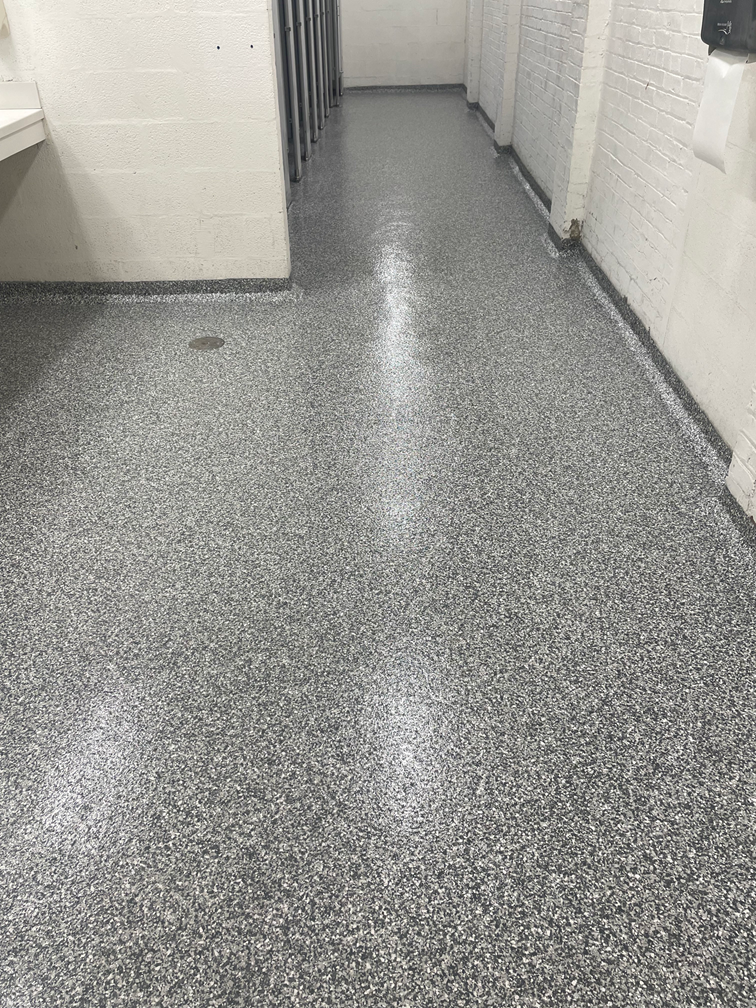
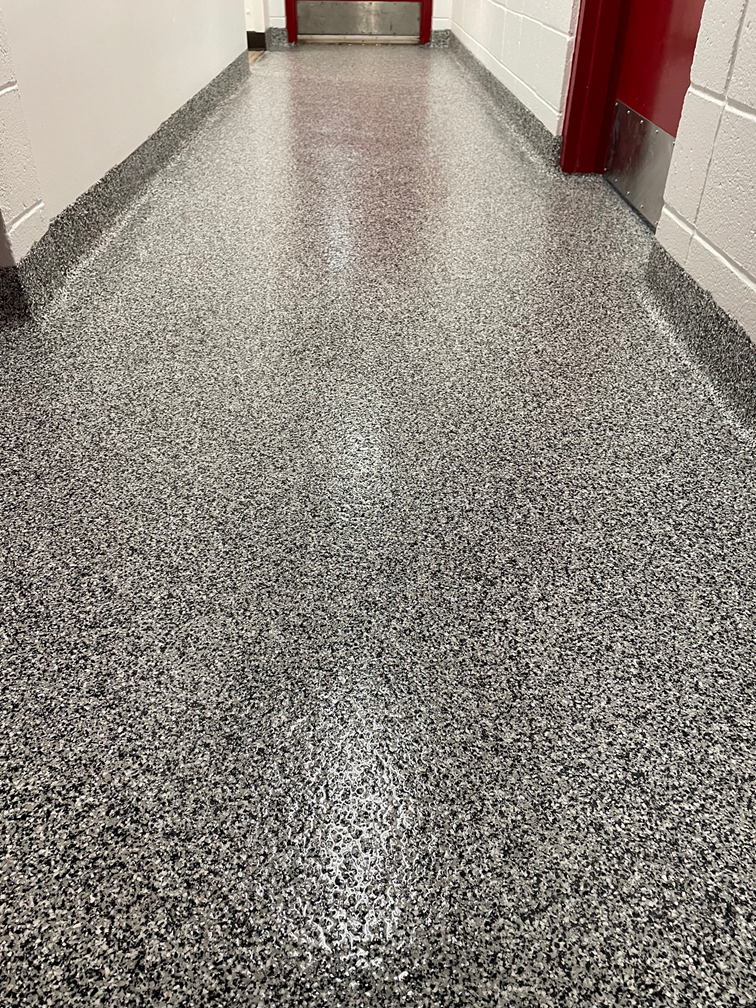
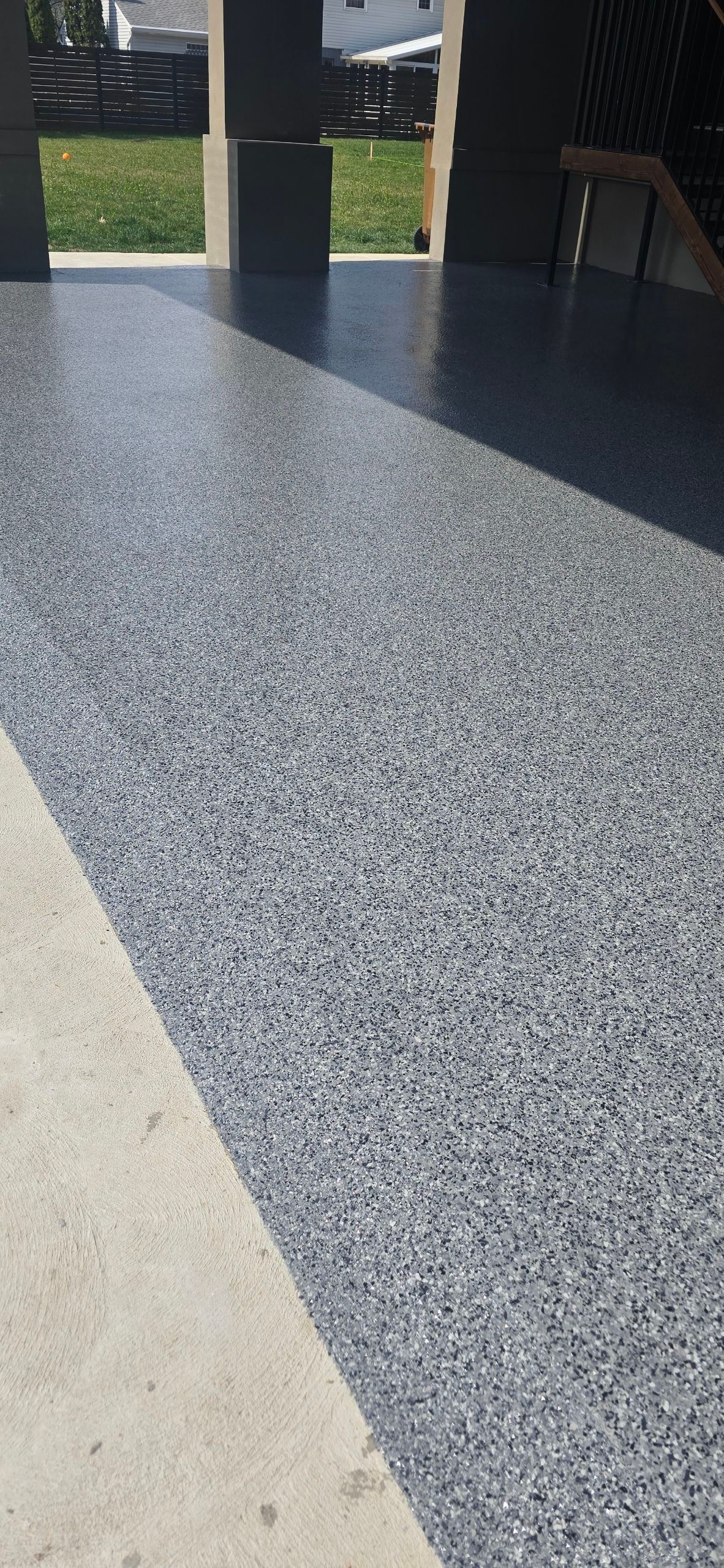
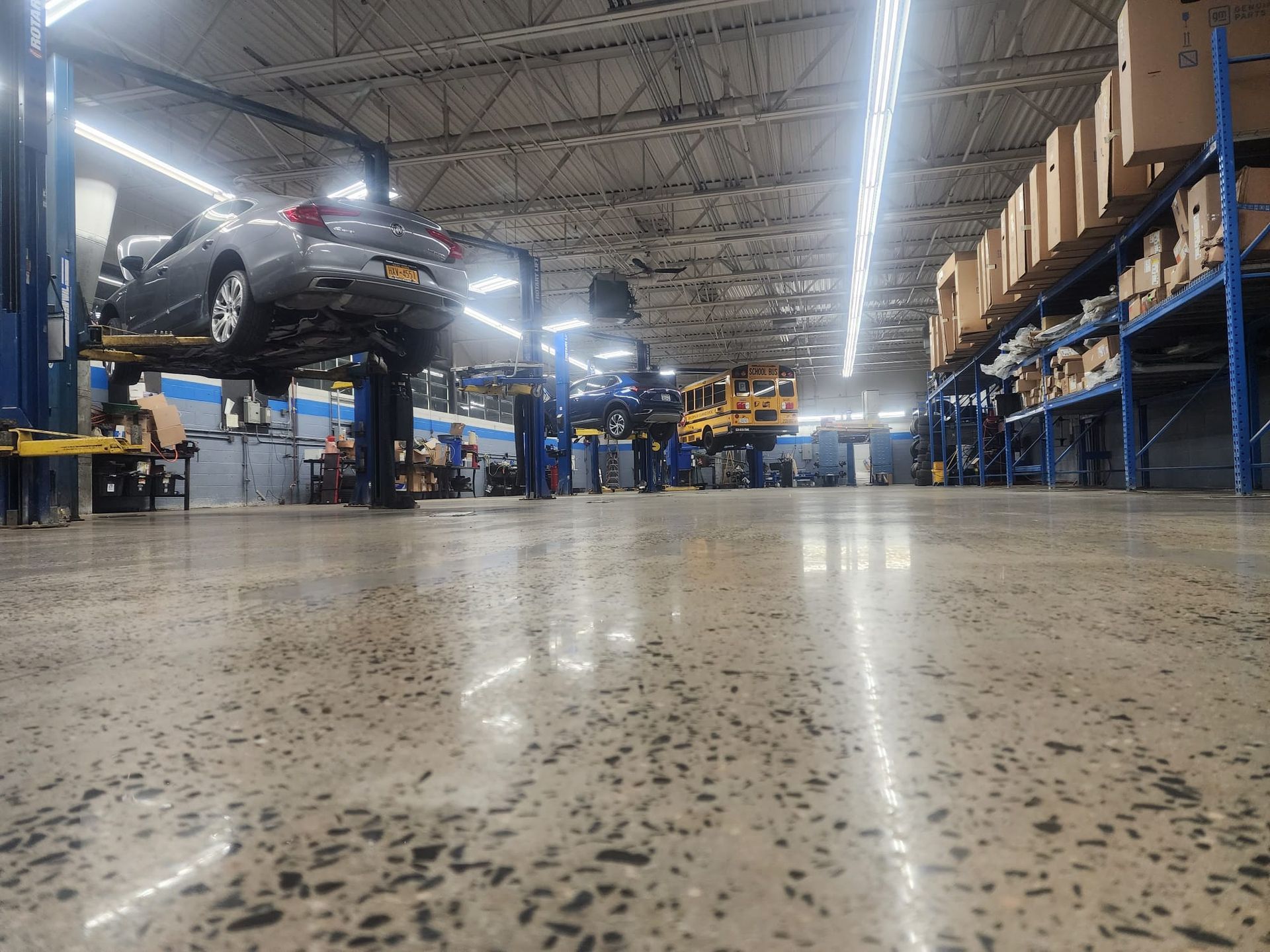
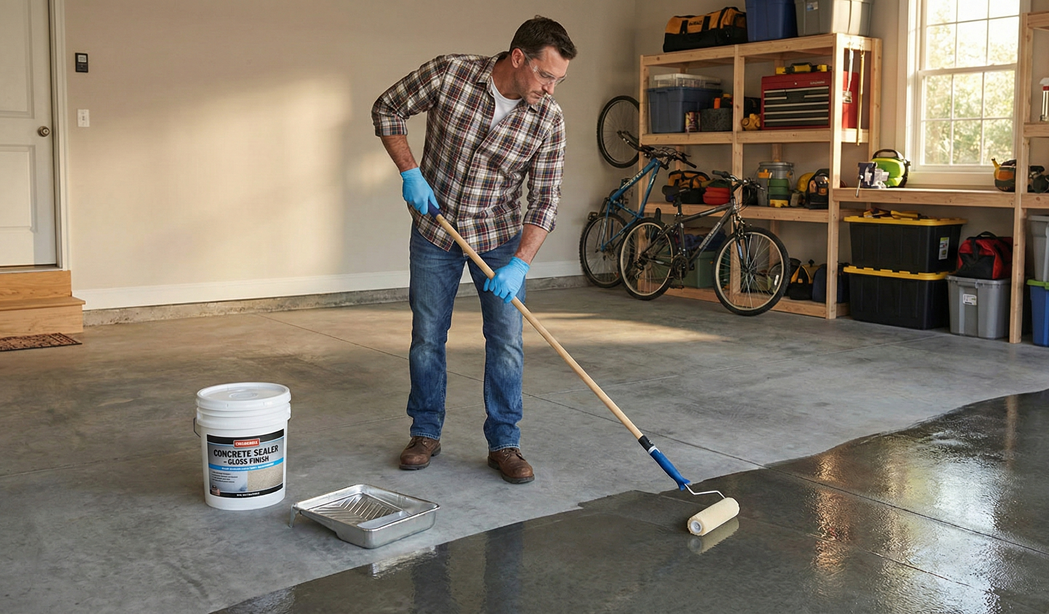
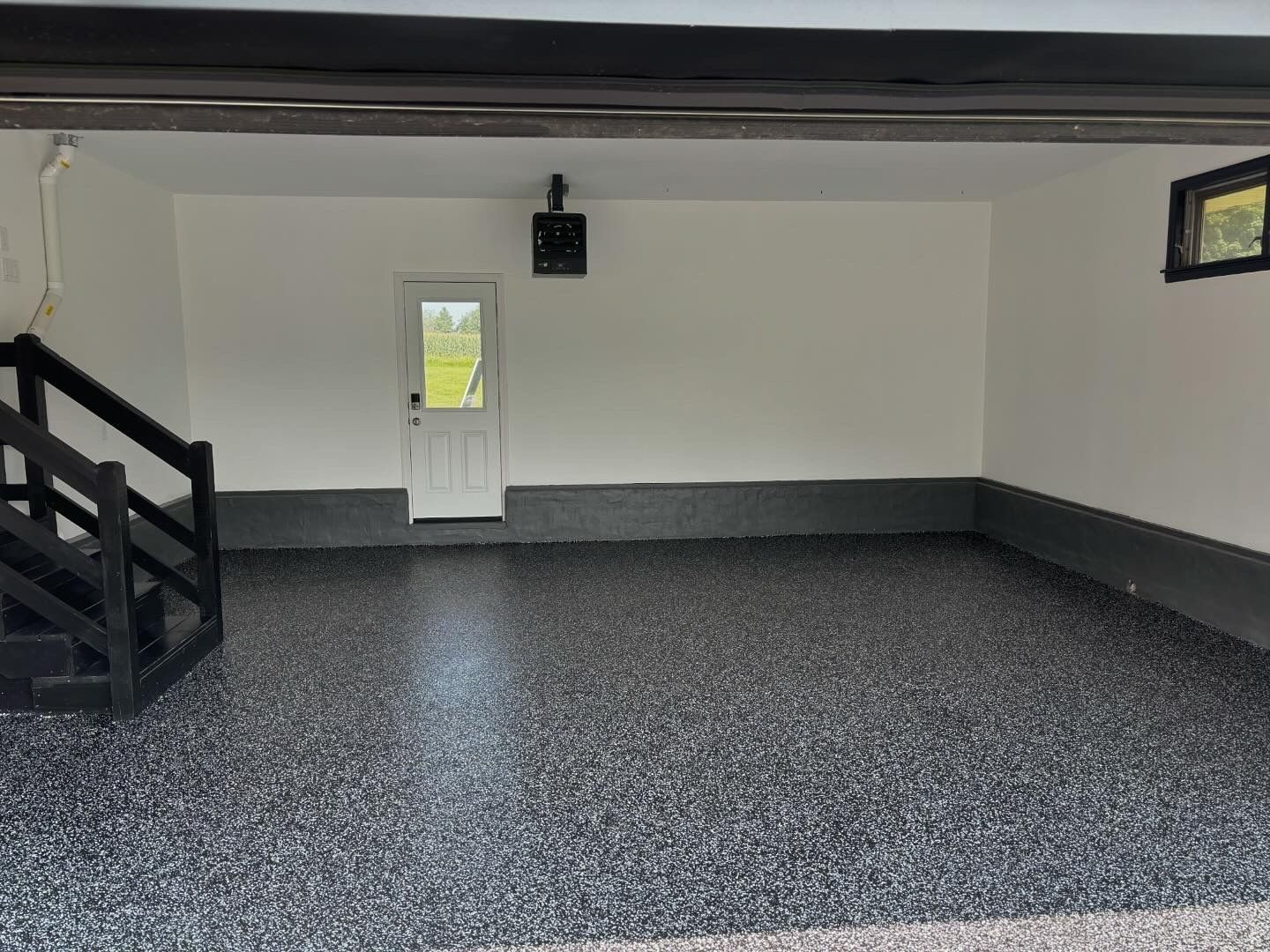
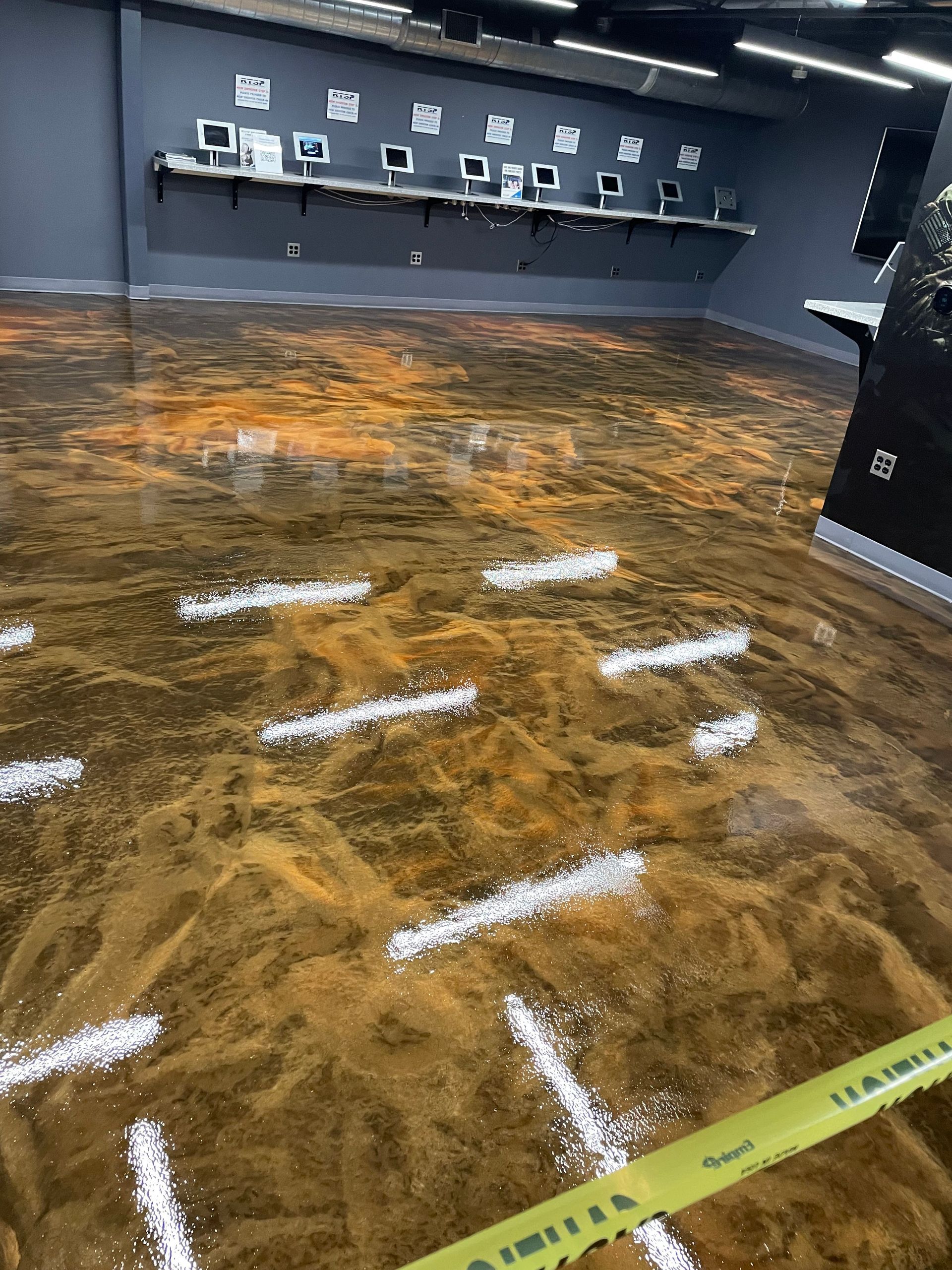
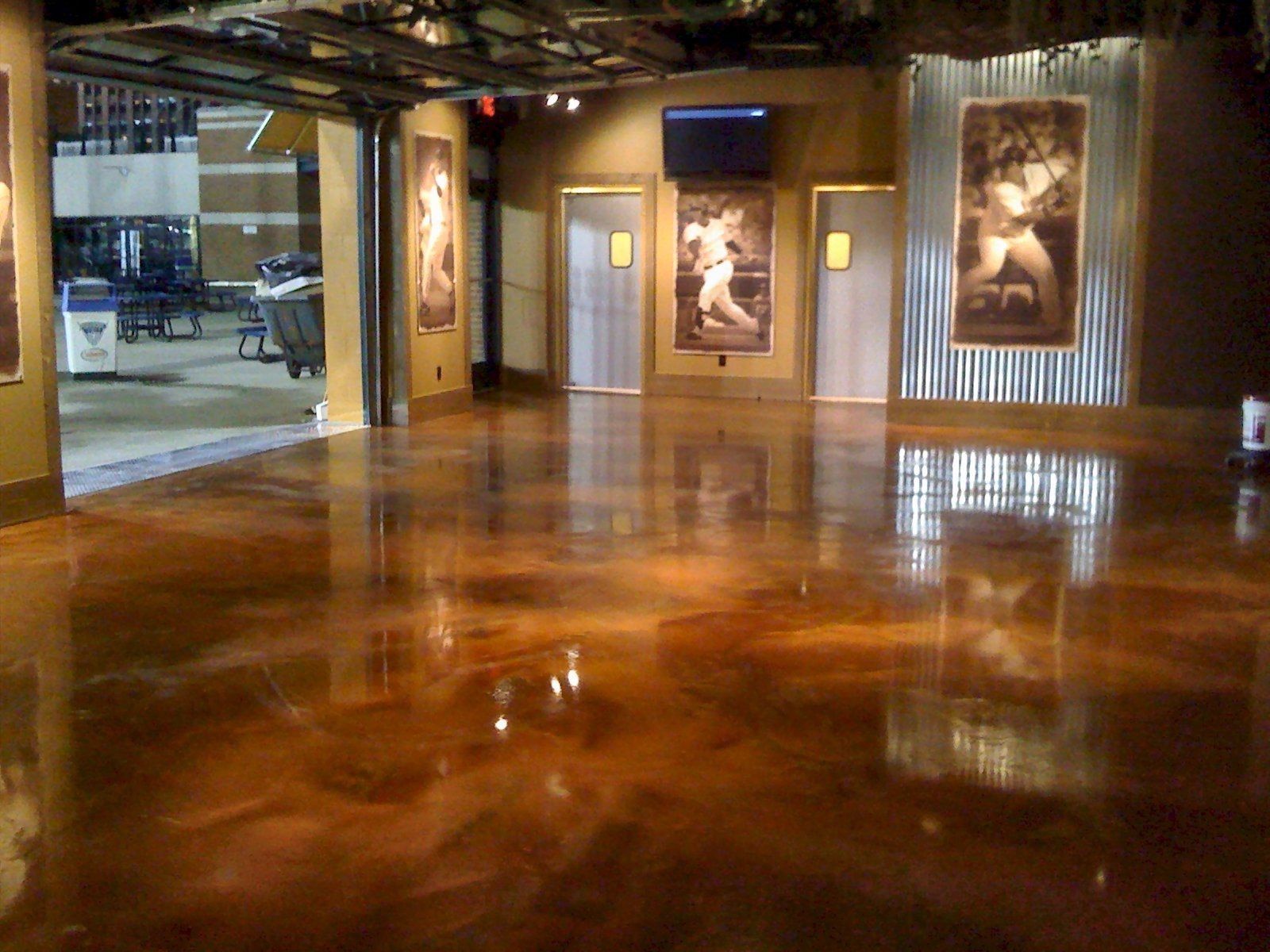
Epoxy floor coatings create a non-porous, chemically bonded surface, which is why they’re easy to maintain as long as you use the right methods. That same chemistry means high-pH or solvent-heavy cleaners can soften the topcoat over time. The rules aren't complicated, but they differ from cleaning tile or unsealed concrete.
Here are 7 tips that keep epoxy floors performing through New Jersey's seasons:
Tip 1: Sweep or Dust Mop Before Wet Cleaning
Grit (road salt, sand, and small stones tracked in from a New Jersey driveway) acts like sandpaper underfoot. Sweep before any wet cleaning to prevent micro-scratches on the topcoat. In winter months, this step matters more than any other
Tip 2: Use a pH-Neutral Cleaner
Soap-based cleaners leave a film that builds up into a hazy, dull appearance that looks like wear but isn't. Use a pH-neutral floor cleaner instead. Purpose-made epoxy cleaners are ideal, or use a half-ounce of dish soap in a gallon of hot water.
Tip 3: Mop With a Microfiber or Soft Foam Mop
Hard-bristle brushes and rough scrub pads scratch the surface. A microfiber flat mop does the job without abrading the surface. For
garage floors with heavier soiling, a soft-bristle deck brush and mild cleaner is acceptable. Avoid wire brushes entirely.
Tip 4: Deal With Road Salt Quickly
Road salt season in Middlesex and Mercer counties runs from November through March. Salt generally won't damage a properly cured epoxy coating chemically, but it leaves white residue that attracts moisture. A quick damp mop after salty days is all you need to stay ahead of it.
Tip 5: Clean Spills Immediately
Epoxy's non-porous surface gives you a window before automotive fluids or brake cleaner can work into micro-cracks. Wipe with a clean cloth and follow with a pH-neutral cleaner. Solvent-based fluids can soften the topcoat if left on the surface.
Tip 6: Avoid Harsh Chemical Cleaners
Citrus cleaners, pine oil, and bleach-heavy solutions compromise epoxy topcoats over time. High-solvent and high-alkaline products break down the coating's polymer chain, causing the floor to lose its sheen while increasing its porosity. pH-neutral solutions avoid this entirely.
Tip 7: Refresh the Topcoat When Sheen Fades
Even well-maintained epoxy shows wear in concentrated zones, such as in front of a workbench or near the garage entrance. When the gloss fades in specific spots, it's the topcoat wearing, not the base coat. A topcoat refresh costs far less than a full recoat and can significantly extend the coating's usable life.
Frequently Asked Questions
Can I use a steam mop on epoxy floors?
Steam mops aren’t recommended for epoxy floor coatings. The combination of high heat and moisture can soften the topcoat, cause it to lose adhesion at the edges, and accelerate wear in the affected areas. Stick to a damp microfiber mop with a pH-neutral cleaner. It's gentler and more effective for regular maintenance.
How often should epoxy garage floors be professionally cleaned or maintained?
For a residential garage in Central New Jersey, a deep clean once or twice a year is typically sufficient alongside regular sweeping and spot mopping. High-traffic commercial epoxy floors benefit from more frequent attention. Concrete Refresh recommends inspecting your topcoat annually. Catching early wear before it reaches the base coat keeps long-term maintenance costs low.
Will regular mopping eventually damage epoxy flooring?
Regular mopping won't damage epoxy if you're using the right cleaner and mop type. The damage comes from soap buildup, abrasive tools, or cleaners with solvents or high pH. A pH-neutral cleaner and a soft microfiber mop, used consistently, keep the surface clean without degrading the coating chemistry over time.
Keep Your Epoxy Floor Looking Sharp