How To Do Epoxy Floor Coating: Complete DIY Installation Guide

February 12, 2026

You’re standing in your garage, staring at a floor covered in oil stains, hairline cracks, and that gray dust that never seems to stop. You’ve decided this is the weekend you finally coat it. That moment of motivation is where most DIY epoxy projects begin—and where the decisions you make next determine how well the coating ultimately performs.


Concrete Refresh has installed countless epoxy systems across Middlesex, Mercer, and Somerset counties over the past 15 years. We’ve seen firsthand what separates a successful floor coating from one that peels within months. 


This guide walks you through every step of a proper epoxy floor coating, from surface prep to final cure, so you know exactly what the job demands.


Surface Preparation: The Step That Makes or Breaks Your Floor

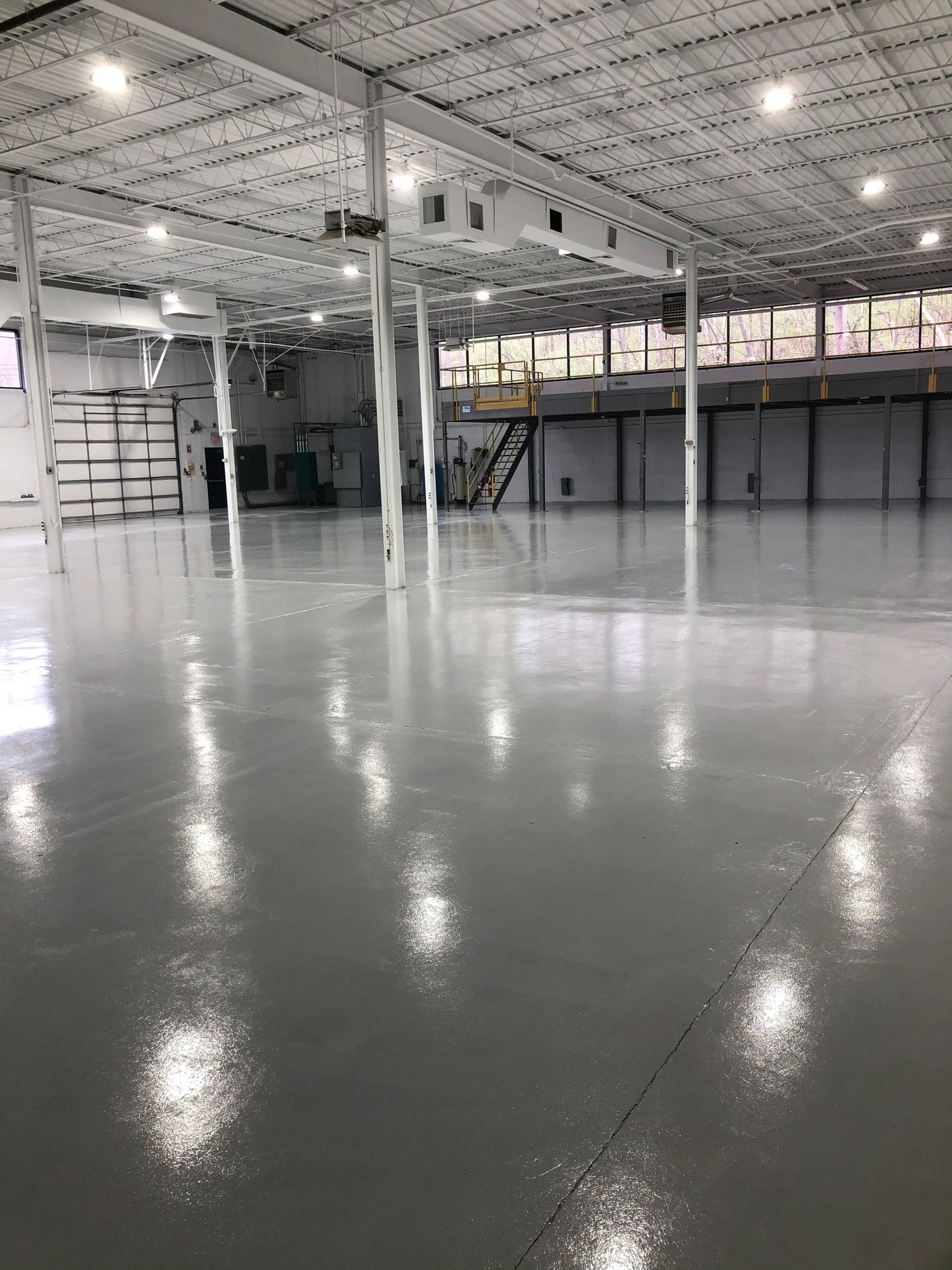
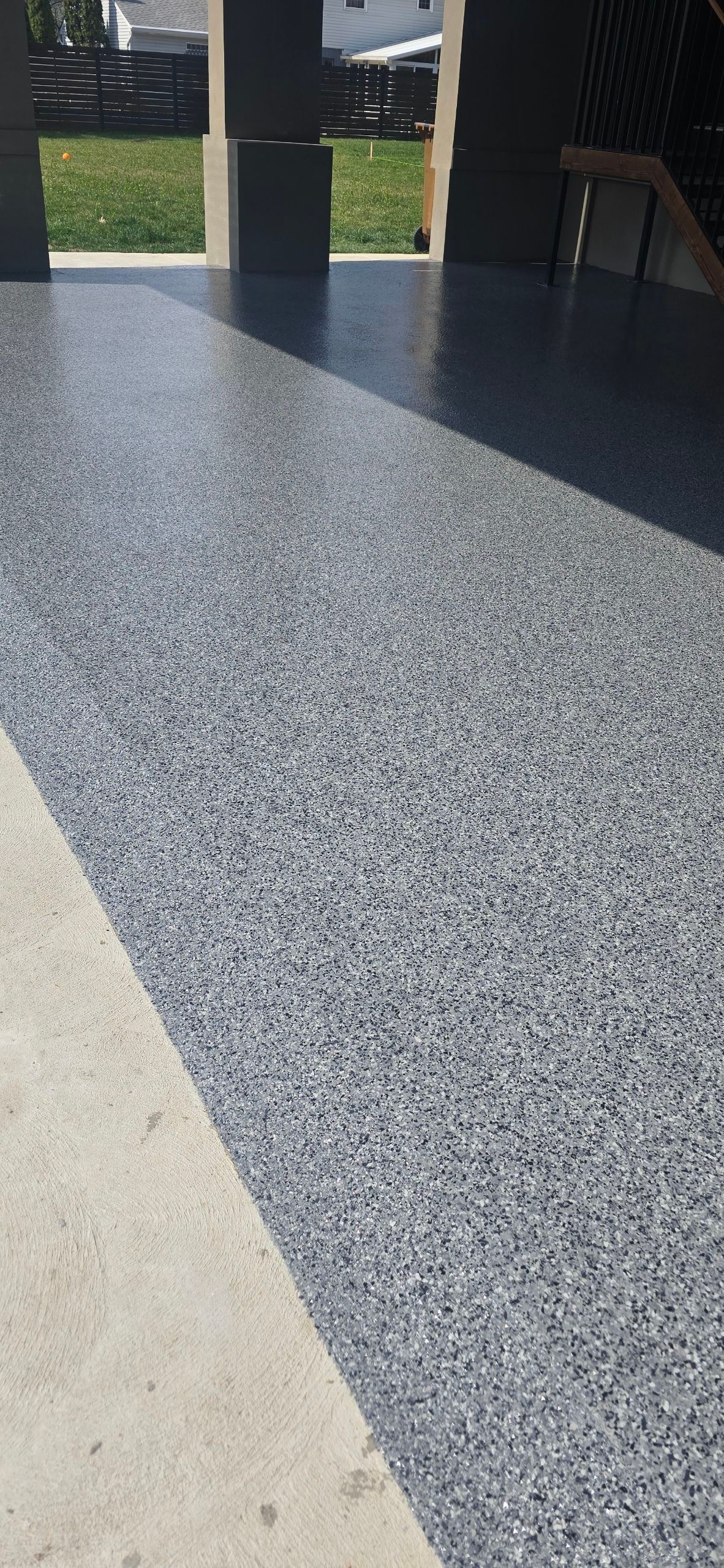
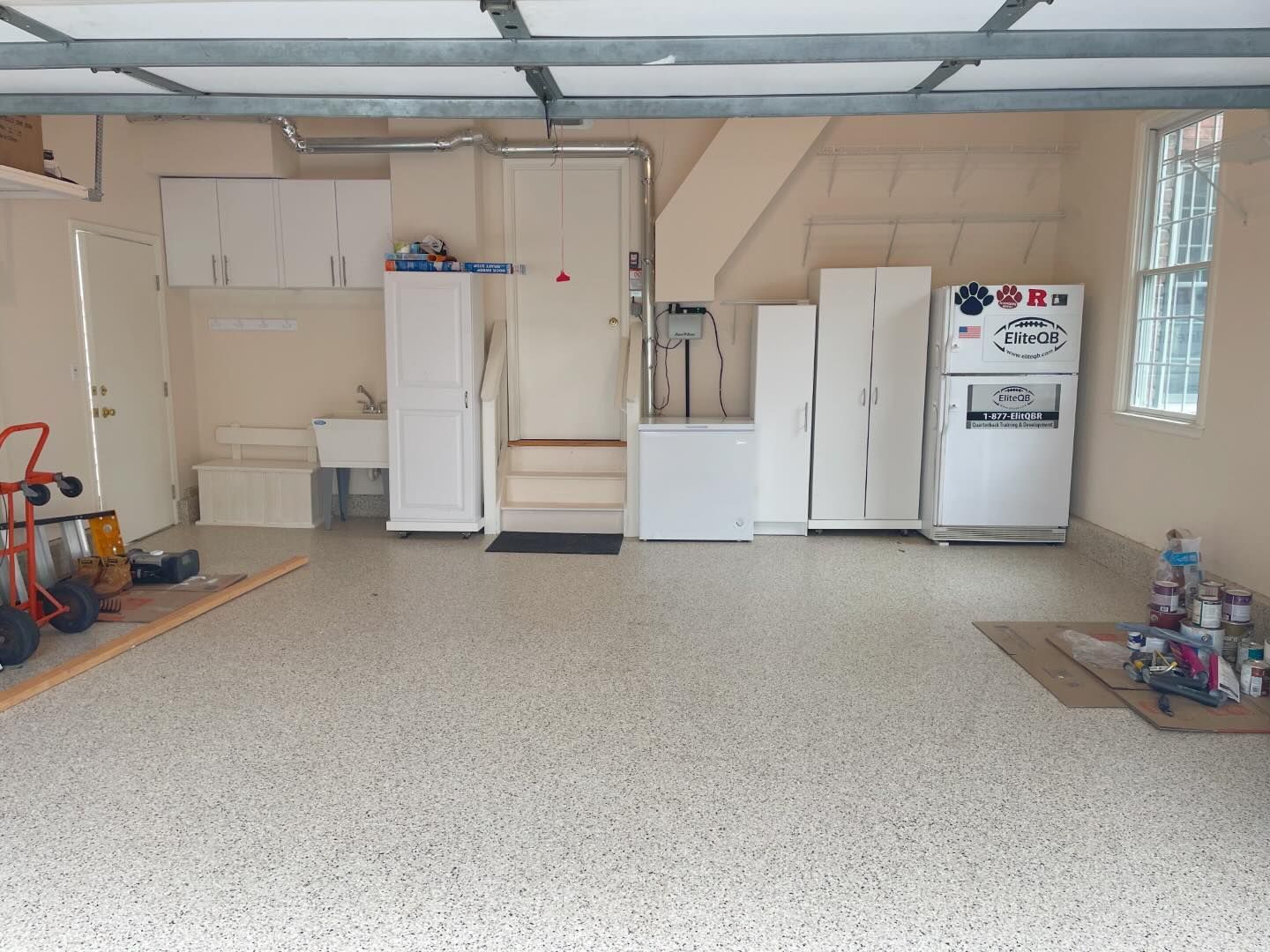
There is a staircase in the corner of the room.

Ask any flooring professional what matters most in an epoxy installation, and you’ll hear the same answer: surface prep is the single biggest factor in whether your coating succeeds or fails. Skip this phase or cut corners, and no amount of quality epoxy will save the project.


Baseline Conditions

Before you touch a roller, your concrete needs to meet several baseline conditions:


  • Age: The slab must be at least 28 days old so excess moisture from the original pour has gone.
  • Moisture content: Use a calcium chloride test kit to confirm that moisture levels are below 4 pounds per 1,000 square feet over 24 hours. Readings above that threshold mean the epoxy won’t bond properly.
  • Cracks and damage: Fill any cracks wider than a hairpin with a concrete patch compound and let it cure fully before proceeding.


Profiling the Surface

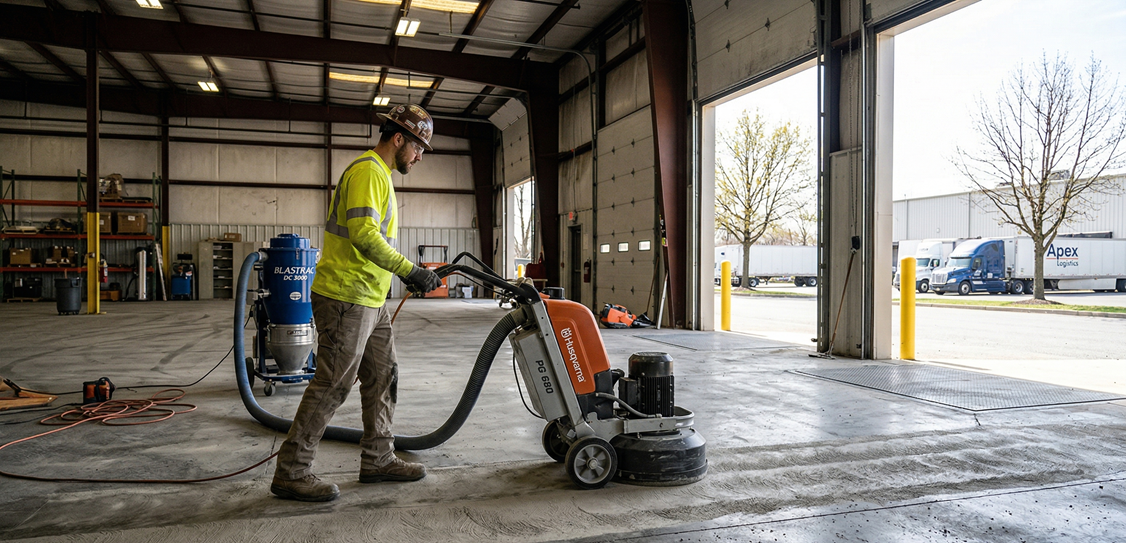
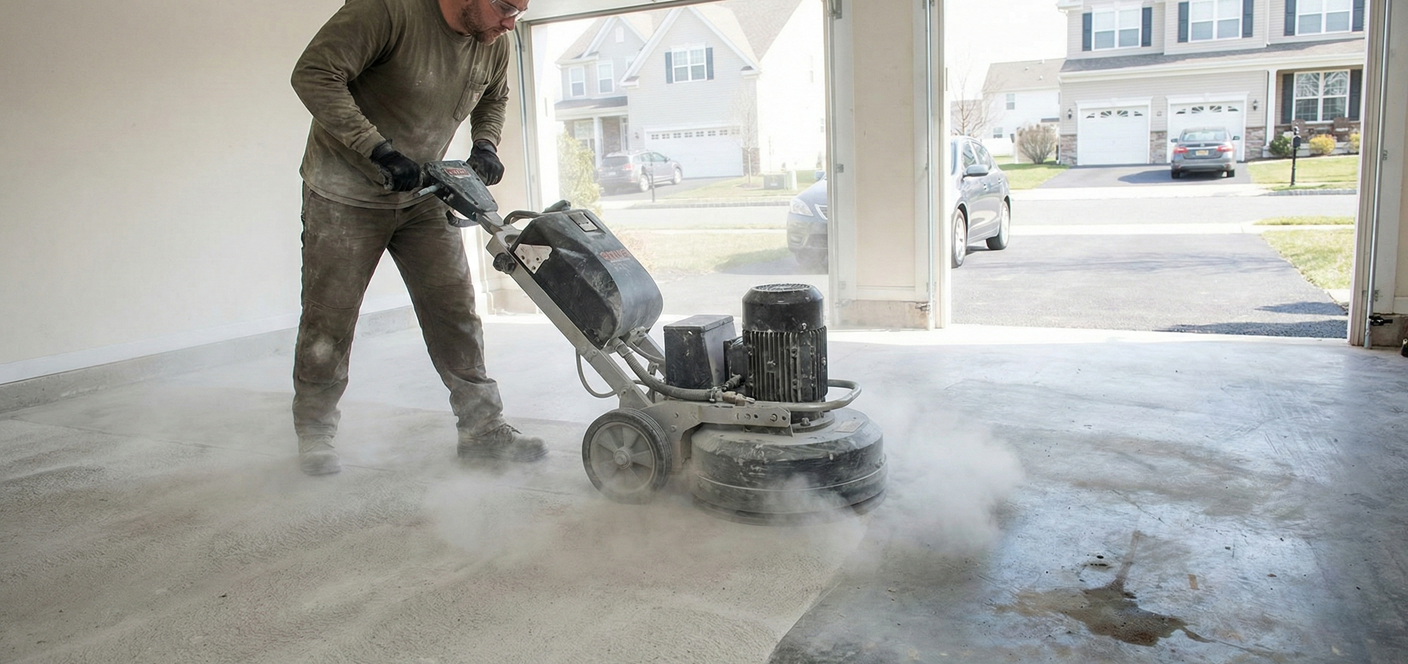
Next comes surface profiling. This means creating a texture rough enough for the epoxy to grip. Most big-box store kits include an acid etch solution, but acid etching alone often produces a less consistent profile. Professional-grade installations, like our epoxy coating systems, rely on diamond grinding to open the pores of the concrete evenly across the entire slab. 


If you rent a walk-behind grinder from a local equipment shop, expect to spend several hours on a standard two-car garage and a significant learning curve when it comes to controlling the machine.


After grinding, vacuum thoroughly with a shop vac, then wipe the surface with a damp cloth. Any remaining dust creates a barrier between the concrete and your coating.


Applying the Epoxy Coating Step by Step

A close up of a cracked concrete surface.

Once your floor is clean, dry, and properly profiled, application follows a specific sequence:


  1. Mix the epoxy resin and hardener according to the manufacturer's ratio. Most kits use a two-part system with a limited pot life, usually 30 to 45 minutes before the mixture begins to thicken.
  2. Cut in the edges first using a brush, working along walls, around support columns, and near the garage door threshold.
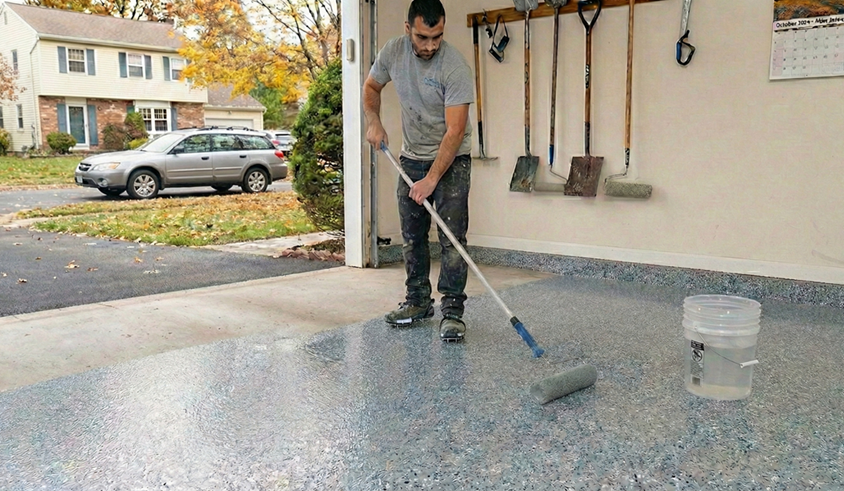
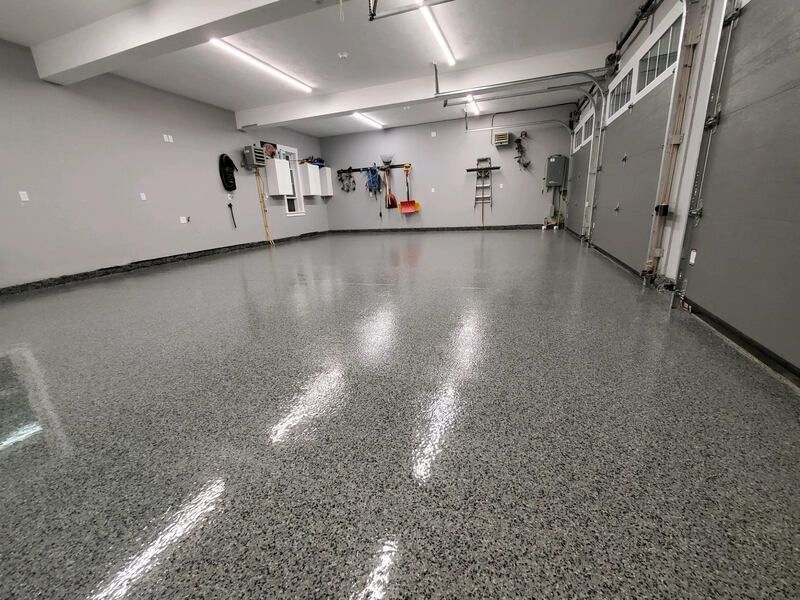
  3. Roll the body of the floor using a 3/8-inch nap roller, working in sections of roughly 4 by 4 feet. A typical DIY kit covers about 200 to 250 square feet per gallon.
  4. Broadcast decorative flake chips into the wet epoxy if your kit includes them. Work quickly because the surface becomes tacky fast.
  5. Allow the base coat to cure according to label directions before applying a clear topcoat, which adds UV resistance and gloss.


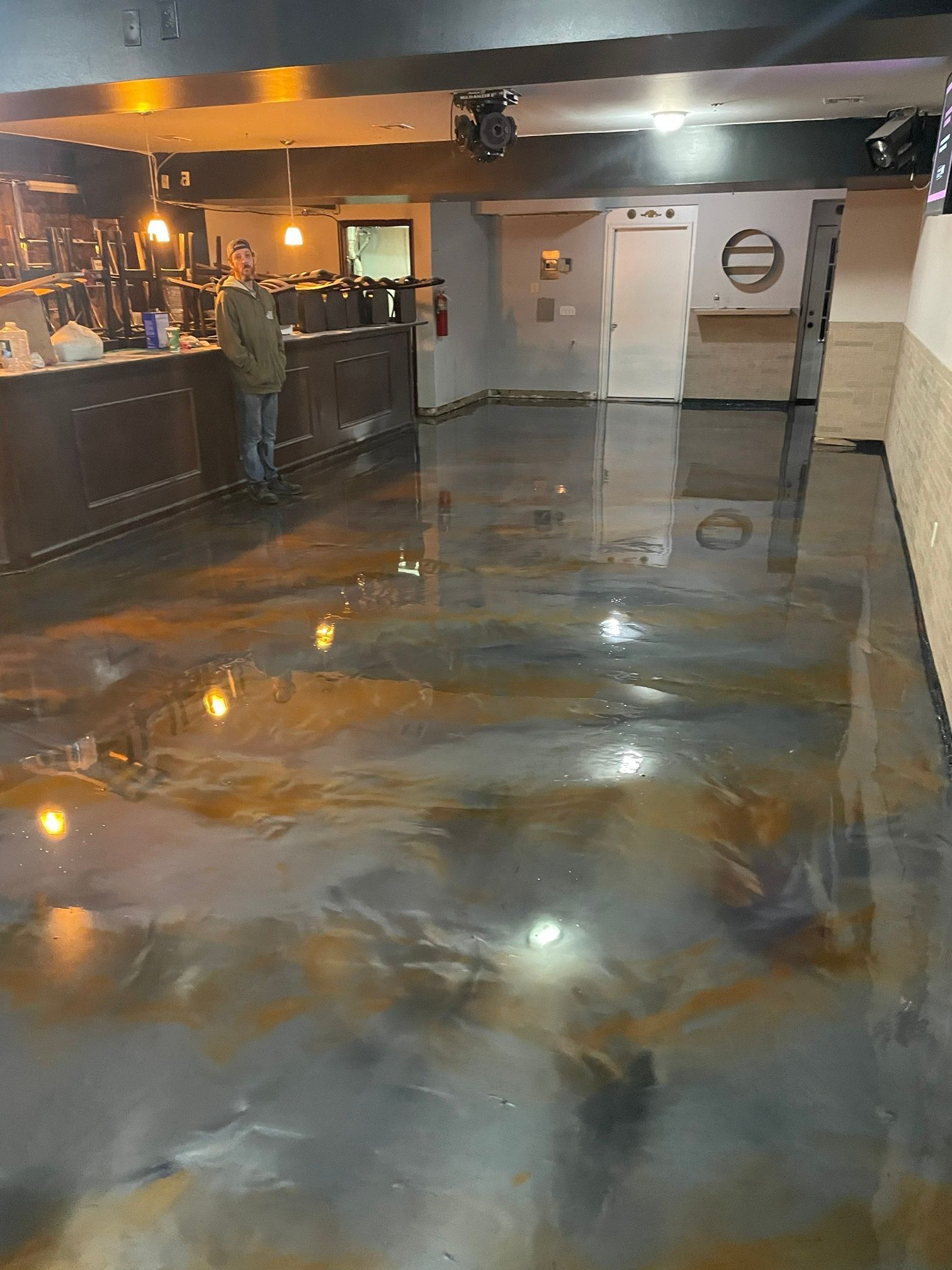
For homeowners considering a high-end look, metallic epoxy finishes create stunning swirled patterns, but they require a precise technique and significant experience in manipulating the metallic pigments while the epoxy is still fluid. This is one style where professional installation makes a noticeable difference in the final result.


New Jersey Climate Considerations for Curing

A close up of a painting of a river with a reflection of a mountain in the water.

Central New Jersey's weather patterns directly affect when and how well an epoxy coating cures. Epoxy requires an ambient temperature between 50 and 90 degrees Fahrenheit and humidity below 85 percent during application and throughout the initial cure window.


Best and Worst Seasons for Installation

Spring and fall tend to offer the most reliable conditions in Middlesex, Mercer, and Somerset counties. Summer installations are possible but watch for afternoon humidity spikes that can cloud the finish or slow curing. Winter is the riskiest season because unheated garages often drop below 50 degrees overnight, stalling the chemical reaction that hardens the epoxy.


Full cure takes 5 to 7 days regardless of season. During that window, avoid parking vehicles on the surface or dragging heavy items across it. For homeowners exploring other concrete floor finishes, temperature and humidity requirements vary by product type, so always check the technical data sheet.


See What a Professional Epoxy Floor Looks Like in Your Space

A close up of a painting of a river with a reflection of a mountain in the water.

A successful epoxy floor coating comes down to careful surface preparation, proper environmental conditions, and patience during the cure. If you have a clean slab in good condition and you follow every step carefully, a DIY kit can deliver a reasonable result for a few years. 


For a floor engineered for long-term durability under New Jersey conditions, professional installation remains the standard. Get Your Free Quote Now or call (908) 208-3698 to speak with the Concrete Refresh team.

February 9, 2026
Learn how to seal concrete floor surfaces step by step. Get DIY tips for NJ homeowners plus expert help from Concrete Refresh. Call (908) 208-3698.
February 5, 2026
Learn how to do concrete polishing with this professional guide covering diamond grit progression, densifiers, equipment, and timelines from NJ experts.
February 2, 2026
Learn how to seal concrete floor surfaces step by step. Get DIY tips for New Jersey homeowners plus expert help from Concrete Refresh. Call (908) 208-3698.
January 8, 2026
Planning a garage upgrade? Find out how much garage epoxy floors cost in Central NJ in 2026. Learn the 5 key factors for a professional, long-lasting finish.
January 5, 2026
Wondering how much concrete coating costs in Central NJ? Our 2026 guide breaks down pricing for epoxy, urethane cement, & more, ensuring you get the best value.
December 1, 2025
Deciding between urethane cement flooring vs epoxy? Compare thermal resistance, durability, and cost. Concrete Refresh explains which is right for your space.
December 1, 2025
Learn exactly how long concrete needs to cure before epoxy coating with this expert guide from Concrete Refresh, Central New Jersey's flooring specialists.
November 3, 2025
How much does concrete polishing cost in New Jersey? Get realistic estimates and learn about the factors that affect pricing from the Concrete Refresh team.
November 3, 2025
Discover why urethane cement floors are the ultimate heavy-duty industrial flooring solutions. Concrete Refresh shares what they are, their benefits, and more.
October 1, 2025
What is the best epoxy floor coating for New Jersey garages? Understand your floor coating options and get recommendations from the experts at Concrete Refresh.
Show More