How Much Does Commercial Epoxy Flooring Cost in New Jersey? (2026 Price Guide)

April 2, 2026

The square-foot cost of commercial epoxy flooring in New Jersey typically ranges from $3 to $12 installed, depending on system type, substrate condition, and project size. Concrete Refresh has been installing commercial concrete coatings across Middlesex, Mercer, and Somerset counties for over 15 years. The breakdown below explains what drives that range and what to watch for when comparing quotes.


Why does one contractor quote $4 per square foot and another quote $10 for the same floor? It's a reasonable question, and most facilities managers in New Jersey are asking it. The answer comes down to three things: what your concrete actually needs before any coating goes down, how large the space is, and which system is appropriate for how your facility runs.


What Drives Commercial Epoxy Flooring Cost Per Square Foot

There is a staircase in the corner of the room.

The square-foot cost of commercial epoxy flooring is driven less by the coating itself and more by site-specific factors, such as surface condition and project scale, which directly impact labor, materials, and overall complexity.


Surface Preparation

Surface preparation is the biggest pricing variable most facility managers underestimate. Concrete grinding, crack repair, and moisture mitigation can represent a significant share of the total invoice on a deteriorated slab—sometimes half or more. A floor that has absorbed oil and loading dock salt needs far more prep than a clean slab. Skipping that prep is where most commercial epoxy failures begin.


Square Footage

Based on recent project estimates in Central New Jersey, slabs under 3,000 sq ft typically runs $7 to $12 per foot. When open-plan layouts measure over 10,000 sq ft, the price range often comes down to $3 to $6, because mobilization costs are spread across a larger area.


NJ Commercial Epoxy Pricing by System Type

A close up of a cracked concrete surface.

The system you choose directly determines your cost and the floor’s performance.


Standard Epoxy Floor Coating ($3 to $6/sq ft)

A two-coat system (primer plus topcoat) is the entry point for commercial work. It handles light to moderate foot traffic, provides good chemical resistance, and fits offices, retail spaces, and schools. It isn’t the right choice for kitchens, loading docks, or anywhere that sees heavy thermal cycling or standing water.


Full Flake Epoxy System ($5 to $9/sq ft)

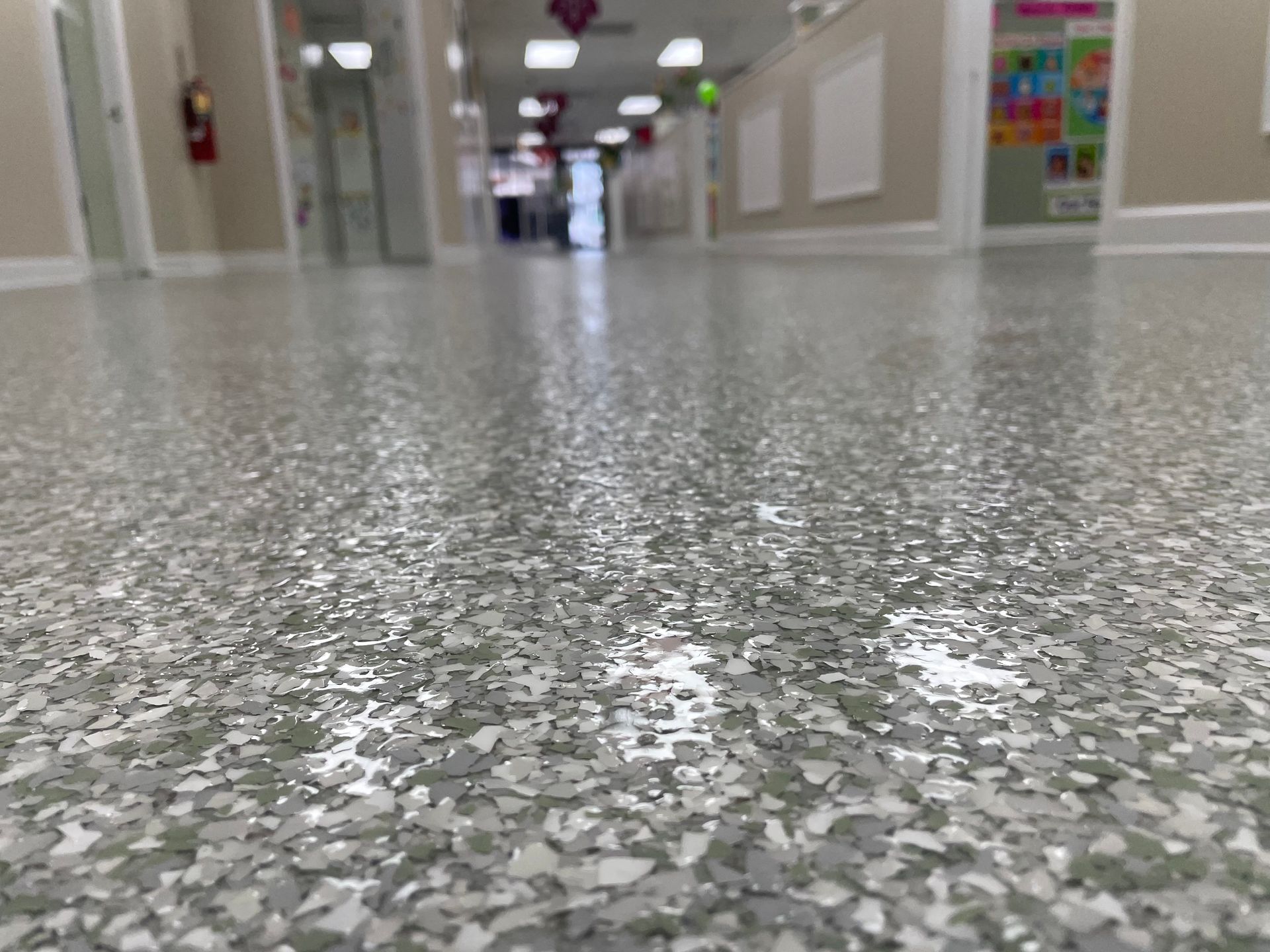
In a full flake epoxy system, decorative chips are broadcast into the basecoat, then sealed under a clear topcoat. The result is a slip-resistant, professional-looking surface common in auto service centers, medical offices, and commercial garages across Central New Jersey.


Urethane Cement and Quartz Systems ($8 to $12/sq ft)

For commercial kitchens and food processing facilities, urethane cement is the correct specification. It handles thermal shock and satisfies NJ health code requirements for food service environments. Quartz systems handle heavy industrial use. The full range of epoxy floor finish systems spans standard to specialty industrial.


Hidden Cost Factors in Commercial Projects

A close up of a cracked concrete surface.

The downtime required by concrete coatings catches facility managers off guard more than any other line item. Standard epoxy typically needs 24 to 48 hours before light foot traffic and up to 72 hours before full load, depending on the product and conditions. Polyaspartic topcoats can be ready on the same day. Despite their more premium pricing, polyaspartic’s short cure time protects the revenues of facilities that can't sustain a multi-day closure.


Concrete repairs are also a wildcard. If a quote assumes a sound slab and the actual floor has cracking, spalling, or delamination, expect addendum costs. Multi-phase projects add mobilization cost per phase, so pricing the full floor at once is smarter when scheduling allows.

Our post on how much concrete coating costs covers residential pricing for comparison.


Frequently Asked Questions

How long does commercial epoxy flooring last in New Jersey?

Commercial epoxy flooring in New Jersey typically carries manufacturer-rated lifespans of 5 to 15 years depending on system type, prep quality, and maintenance. Urethane cement and quartz systems outperform standard epoxy under heavy use. Annual inspections catch wear before it reaches the bonding layer and becomes a delamination repair.


Does concrete condition affect the cost of commercial epoxy installation?

Yes. Concrete condition is one of the biggest variables in commercial epoxy pricing. Floors with oil contamination, cracks, or active moisture vapor transmission require additional prep before any coating is applied. Skipping that prep often leads to adhesion failure within the first one to two years. Recoating a failed floor typically costs more than the original preparation would have.


Can a commercial epoxy floor be installed in phases to avoid facility shutdowns?

Phased installation is possible. Concrete Refresh has completed multi-phase commercial projects across Central New Jersey. Each phase adds mobilization cost, so coating the full floor at once is the more cost-effective approach when scheduling allows. Polyaspartic topcoats can also reduce a two-day shutdown into a single-day closure.


Get a Commercial Epoxy Quote for Your NJ Facilit

Commercial epoxy pricing in New Jersey spans a wide range because the variables do. A clean slab in a low-traffic office is a different project from a warehouse floor near the Turnpike that's absorbed decades of forklift traffic and road salt. The type of coating system and concrete condition move the number significantly.


Contact Concrete Refresh for a no-obligation estimate. Our team will assess your facility's actual conditions before quoting, so the price reflects your flooring needs.

April 9, 2026
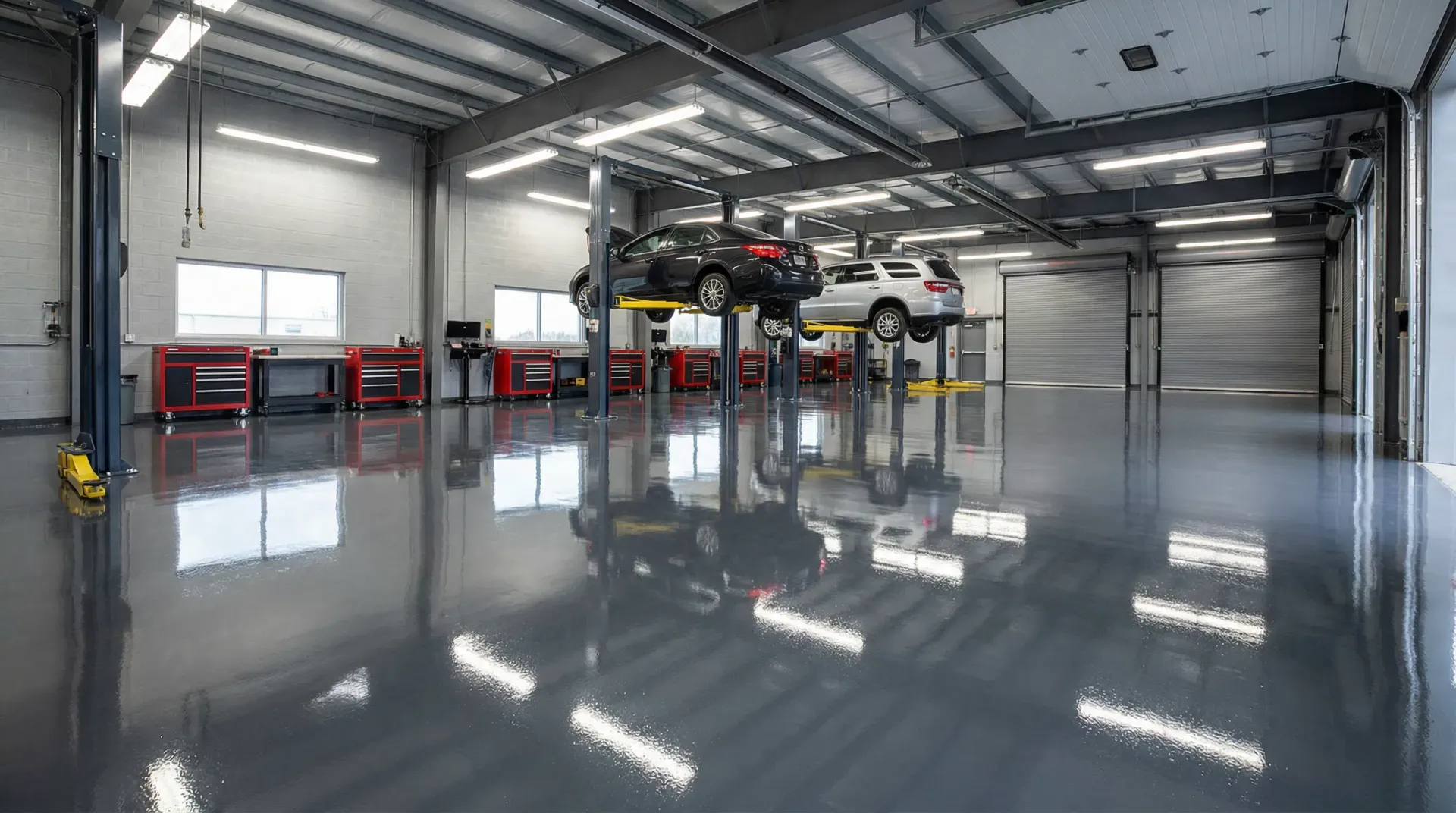
Learn the commercial epoxy floor coating process step by step—surface prep, application, curing, and downtime—for NJ businesses and facility managers.
An empty underground parking garage with purple walls and blue floors.
By Eric April 8, 2026
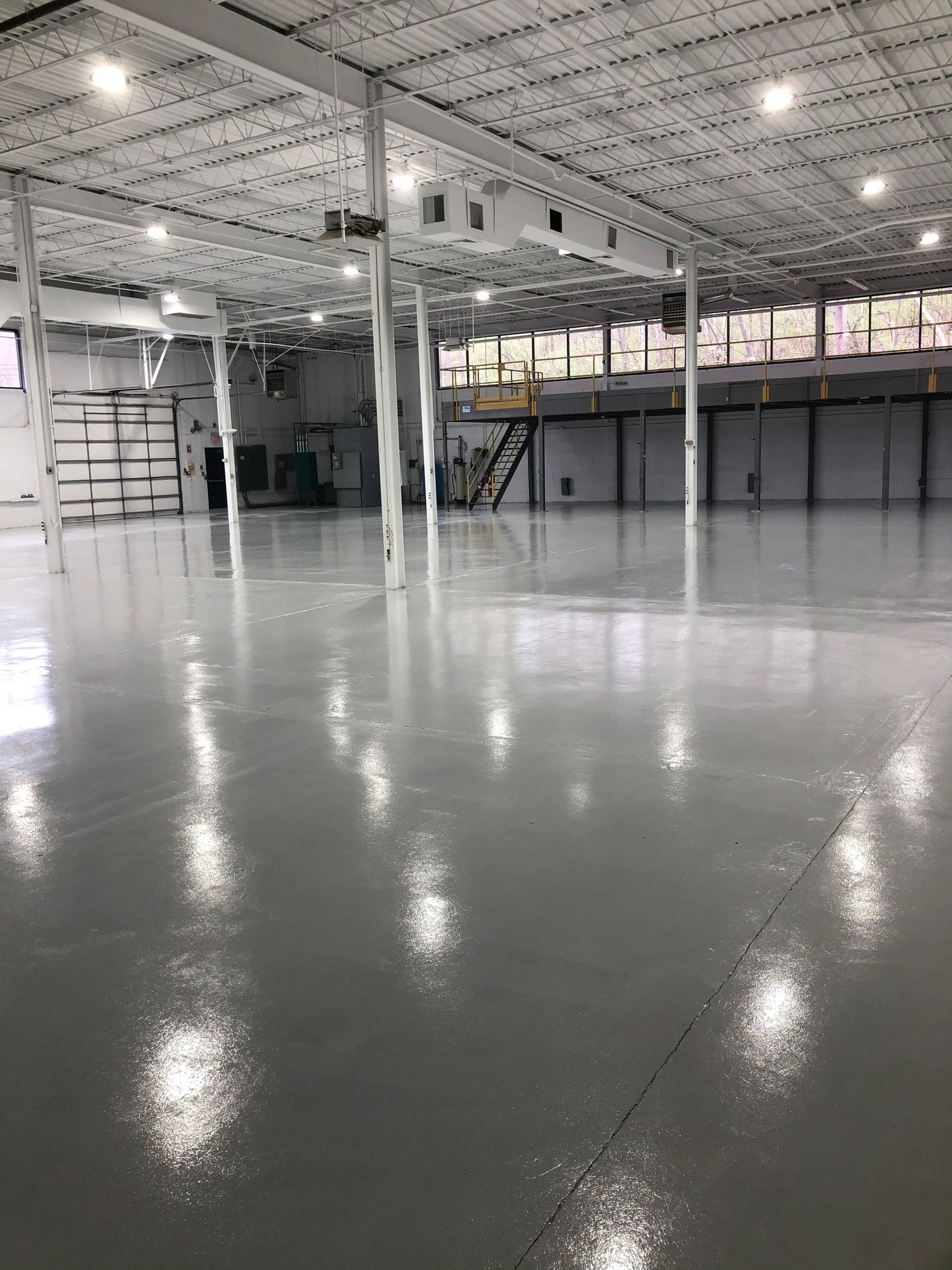
Why is industrial epoxy flooring the top choice for NJ automotive shops and showrooms? Learn about its chemical resistance, durability, & more.
April 7, 2026
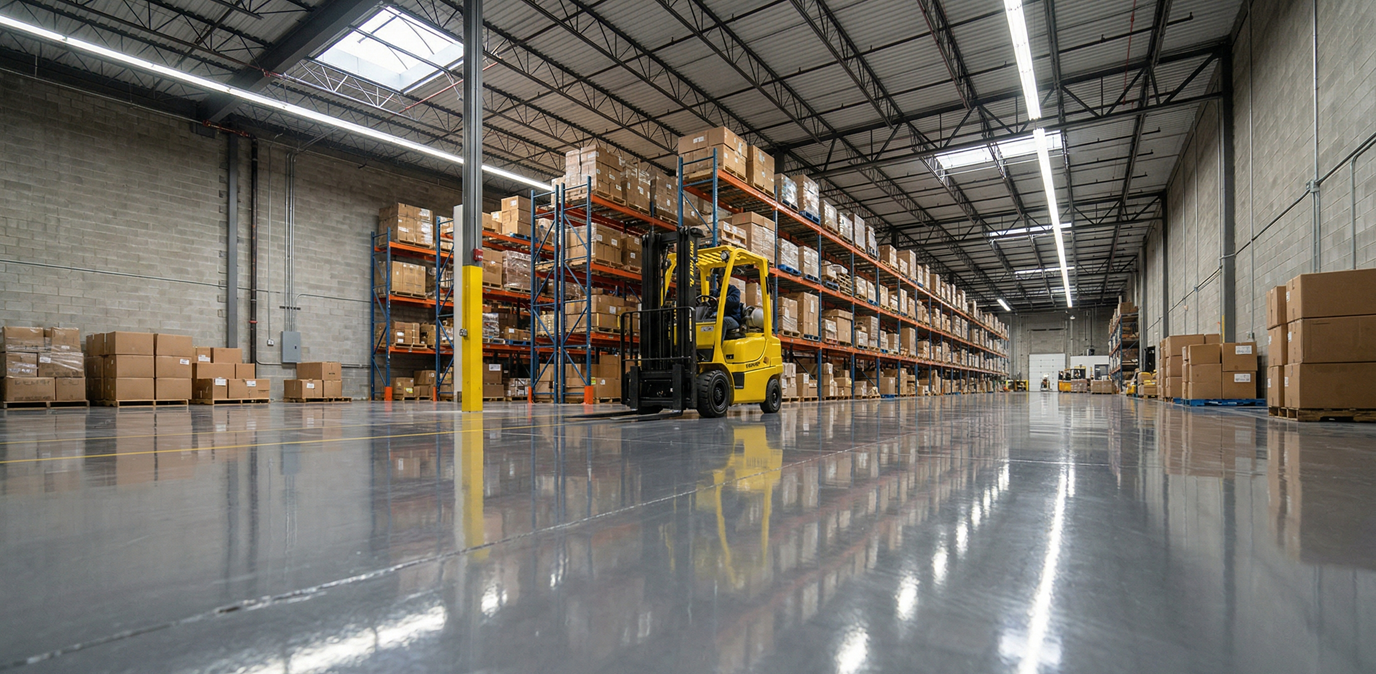
Comparing polyaspartic vs epoxy flooring for NJ commercial spaces? Learn which coating handles downtime, durability, and New Jersey conditions better.
April 6, 2026
Discover epoxy flooring pros and cons for commercial and industrial facilities in NJ. Learn where epoxy excels, where it falls short, and what to use instead.
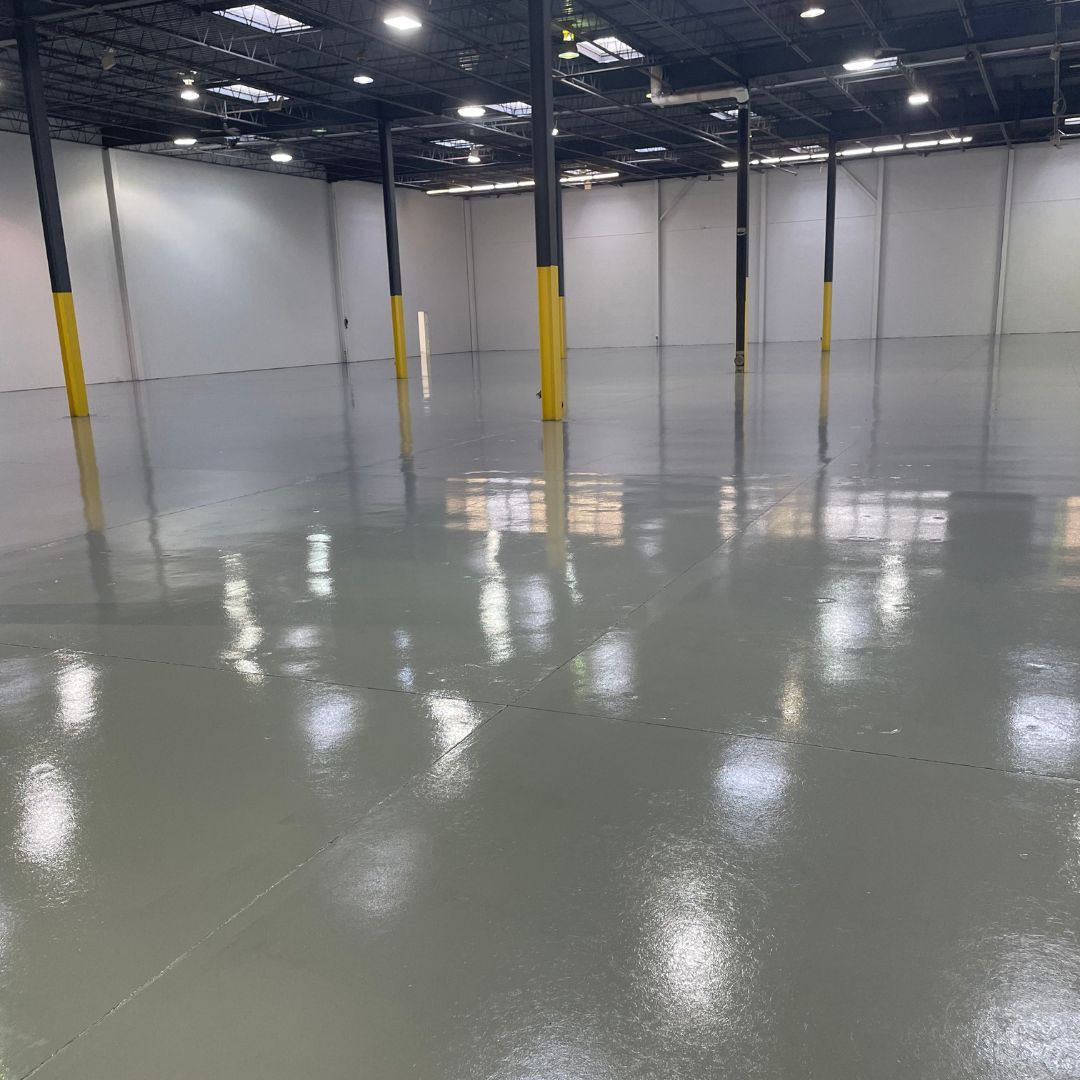
April 3, 2026
Learn which industrial floor coating is right for your NJ facility—epoxy, urethane cement, or polished concrete—and how each performs in real-world conditions.
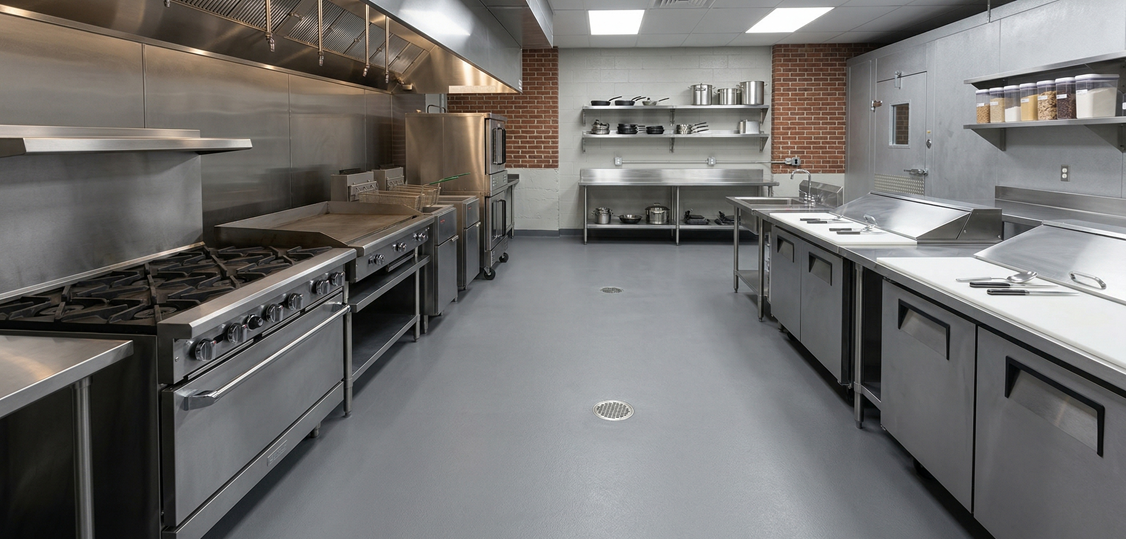
April 3, 2026
Compare epoxy, tile, and urethane cement for commercial kitchen floors. See which holds up to heat, grease, and health codes in NJ food service facilities.
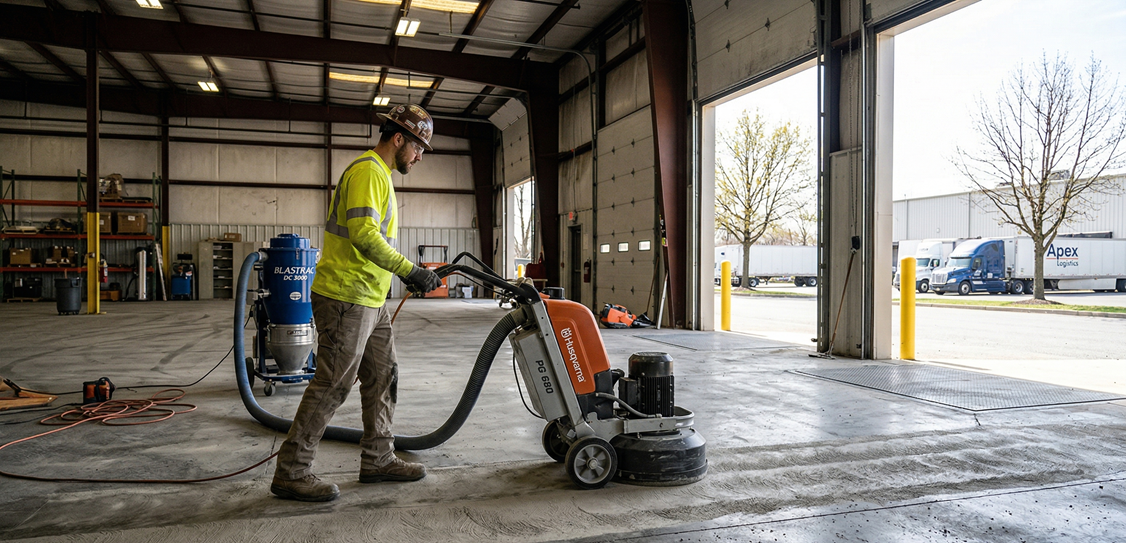
April 1, 2026
Spring is the best time to install commercial epoxy in NJ. Learn why temperature and timing matter, and how Concrete Refresh carefully prepares NJ floors.
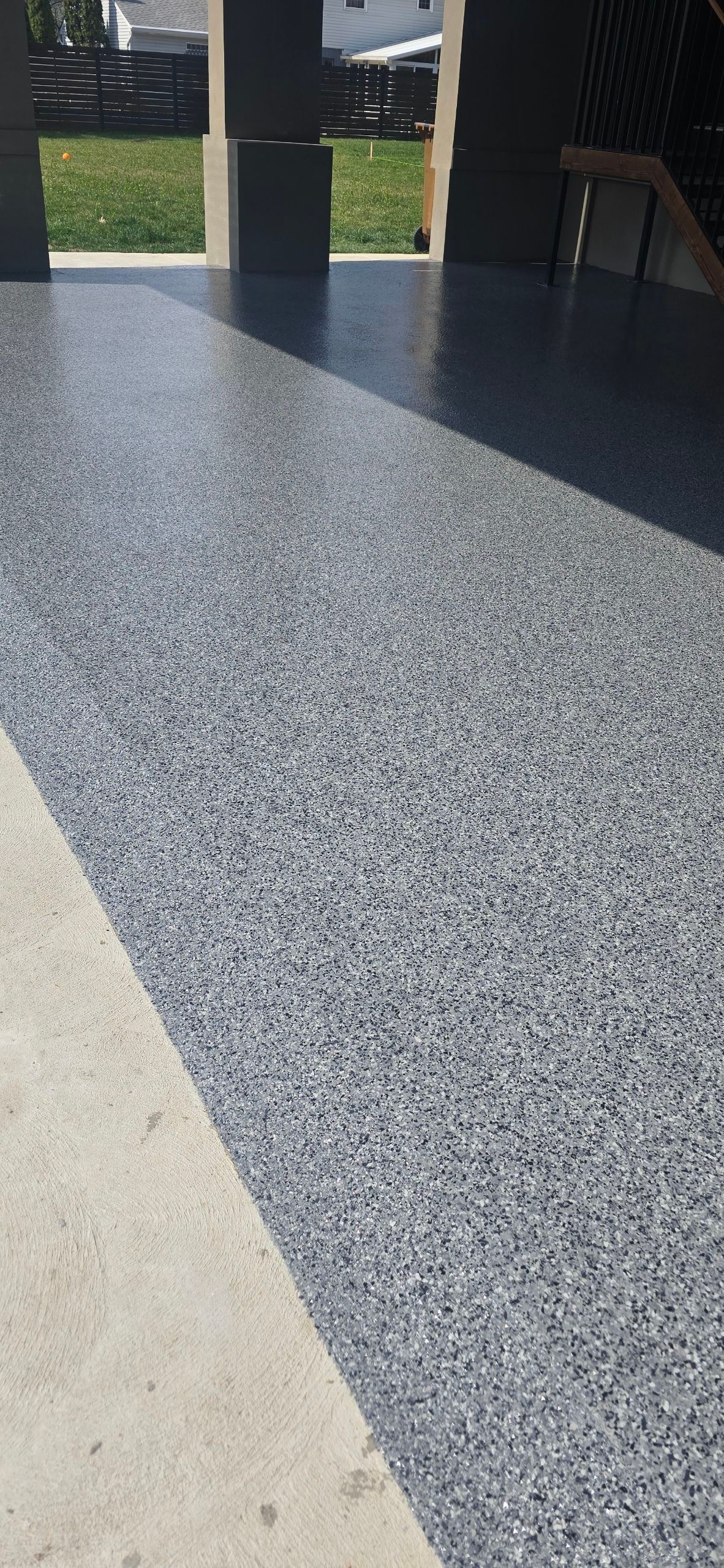
March 11, 2026
Can you epoxy outdoor concrete? Yes, but standard epoxy fails in NJ's climate. Learn which epoxy systems work for patios and pool decks, and which don't.
March 9, 2026
Find the most durable outdoor concrete coating for NJ patios. Compare options, understand freeze-thaw performance, and get expert advice from Concrete Refresh.
March 5, 2026
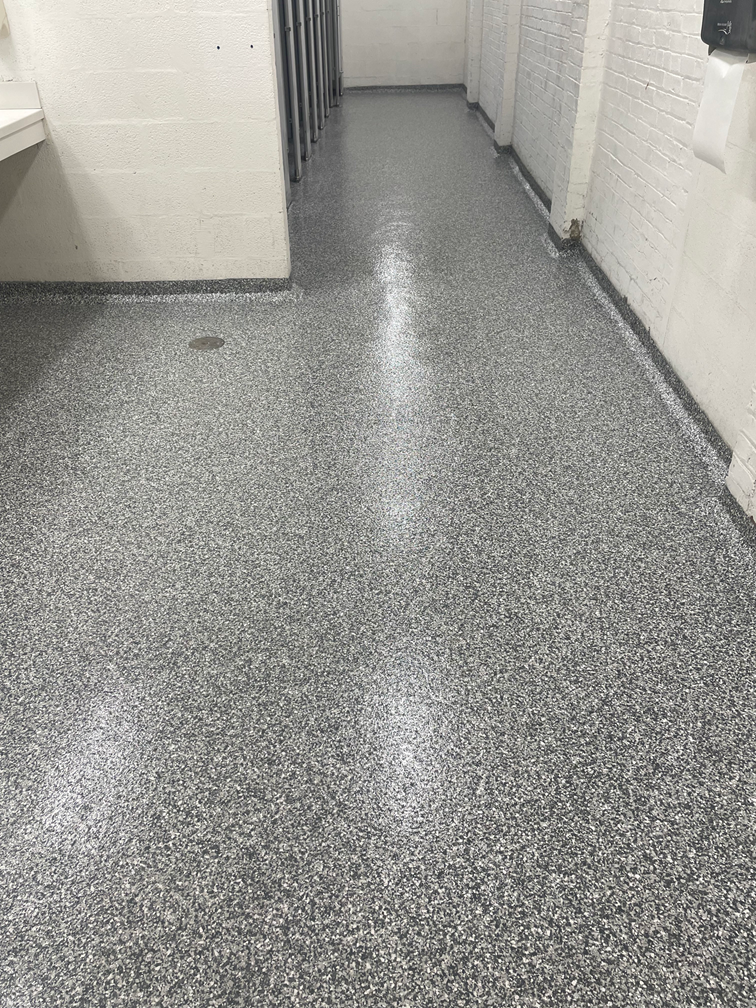
Learn how to clean epoxy floor coatings and keep them looking sharp. Here are 7 maintenance tips from Concrete Refresh—covering daily care, stains, and more.
Show More