
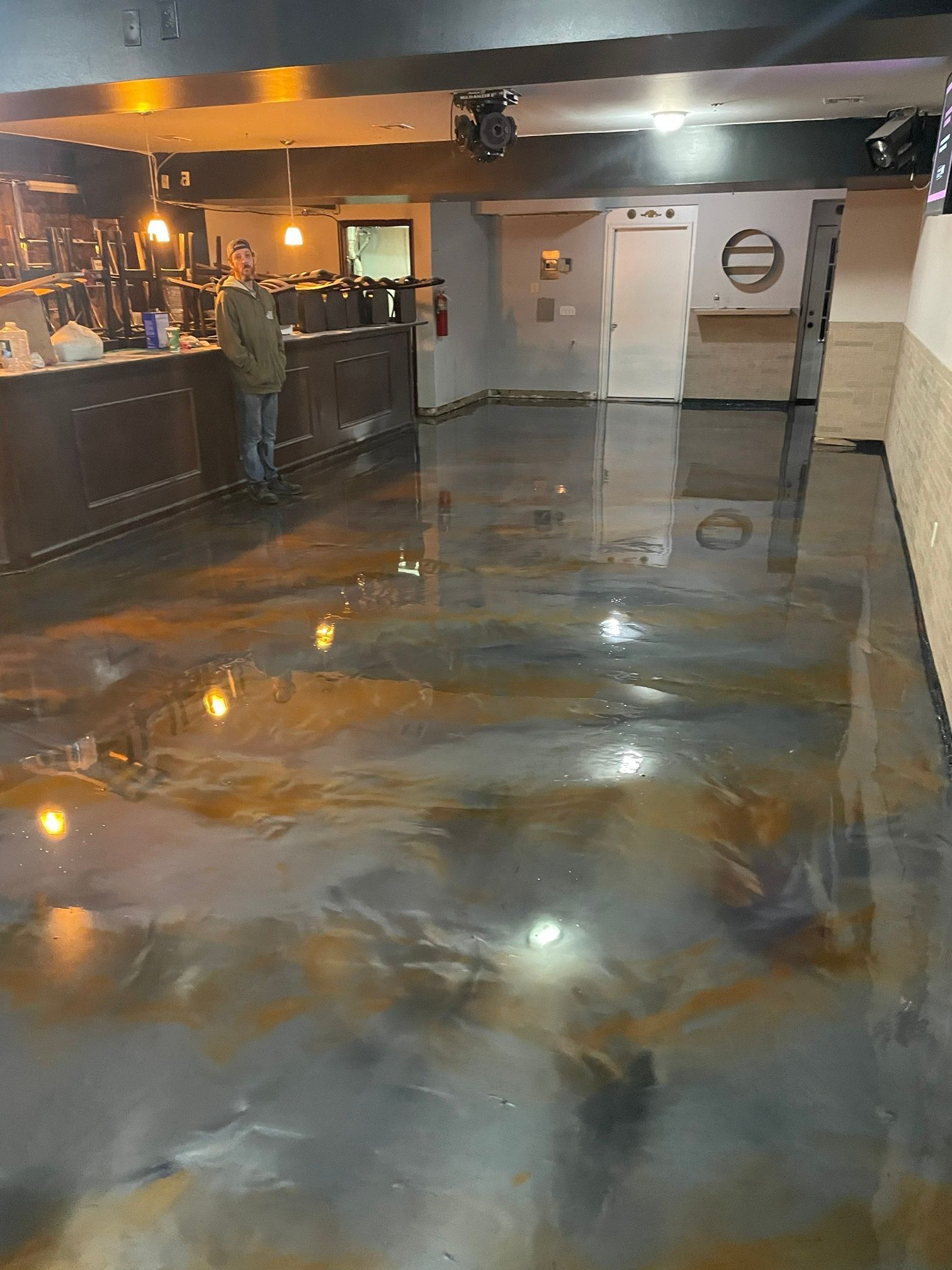
Spring Construction Season: Why It's the Best Time to Install Commercial Epoxy in NJ
The best time to install epoxy flooring in a New Jersey commercial space is spring. During this window between late March and early June, concrete temperatures remain stable above 50°F and humidity hasn't peaked yet. Concrete Refresh installs commercial epoxy floor coatings for businesses throughout Central New Jersey and typically sees better adhesion and fewer callbacks on spring installations.
Every year in April, facility managers across Central NJ walk their floors after a long winter and see the same thing: hairline cracks that weren't there in October, surface spalling near entryways where road salt tracked in, and a dullness no floor scrubber can fix. That damage is telling you that something changed over the past four months. Spring is your opportunity to respond before another season compounds it.

Why Temperature Is the Real Deciding Factor

Epoxy chemistry is sensitive to substrate temperature, not just air temperature. Manufacturers specify a minimum concrete surface temperature of 50°F for proper resin cross-linking, the molecular bonding process that determines how well the coating adheres and how long it holds up under traffic. Below that threshold, resin cures slowly and unevenly, creating weak spots that often show up as peeling within months.
In New Jersey, winter concrete temperatures in unheated commercial spaces routinely drop into the 30s. Even heated buildings see slab temperatures lag 10 to 15 degrees behind ambient air: a warehouse heated to 55°F may have a slab sitting at 42°F. By mid-April, slab temperatures in Central NJ commercial properties typically reach the optimal cure window for commercial-grade epoxy and polyaspartic systems.

What NJ Commercial Floors Experience During Winter

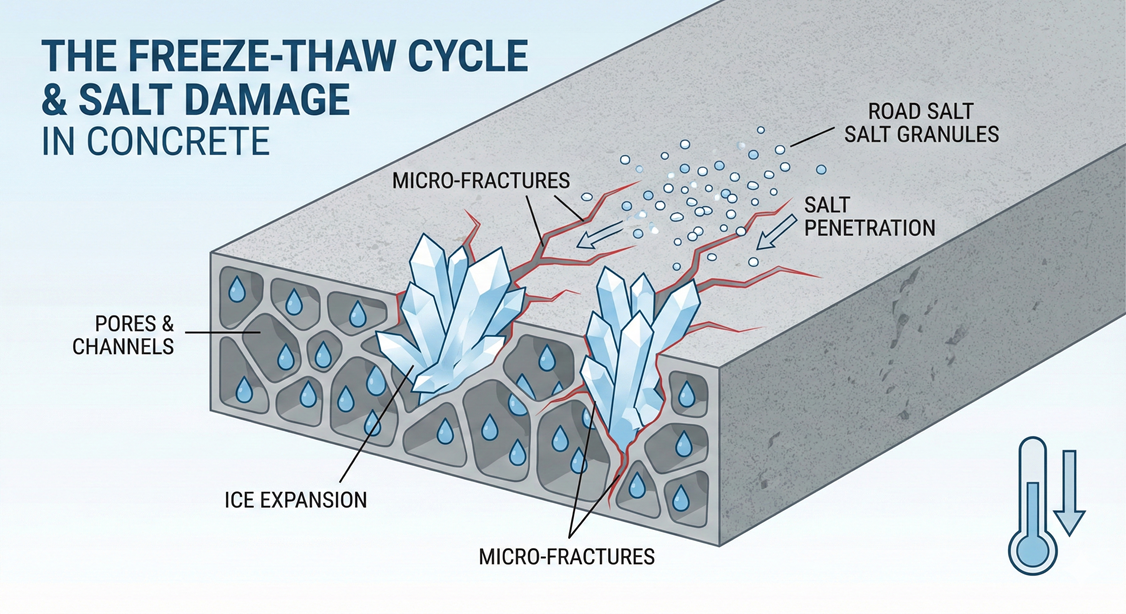
The freeze-thaw cycle hits commercial floors harder than residential ones. A warehouse floor near the NJ Turnpike corridor in South Brunswick or Piscataway absorbs forklift traffic, chemical spills, and temperature swings all winter long.
Concrete expands and contracts with each freeze-thaw cycle, and any existing surface cracks widen slightly with each pass, small damage accumulating into a floor that's harder and more costly to prep by spring.
Moisture compounds it. As temperatures drop, concrete slabs draw more moisture from the ground below, creating vapor pressure that pushes upward from inside the slab. When you apply a coating over high-moisture concrete, the vapor gets trapped underneath. The coating delaminates as a result indicating a timing failure, not a product shortcoming.
Spring installation avoids this: ground temperatures remain moderate, vapor levels normalize, and the concrete is dry enough to accept the mechanical profile that proper adhesion requires.

The Case for Spring Scheduling

Spring offers Central NJ businesses a strategic window to schedule commercial floor coating installations with minimal disruption, optimal curing conditions, and more reliable long-term performance.
Align Installation With Your Operational Calendar
Most NJ commercial businesses have natural low-traffic windows in spring. Commercial epoxy floor systems require a curing window of 24 to 72 hours. Quartz broadcast and urethane cement overlays need also need to cure fully before heavy equipment returns.
Scheduling installation during a natural operational gap eliminates disruption. Spring's moderate temperatures also remove the need for auxiliary heating across large floor areas, which keeps costs predictable and cure conditions uniform.
What a Spring Floor Assessment Covers
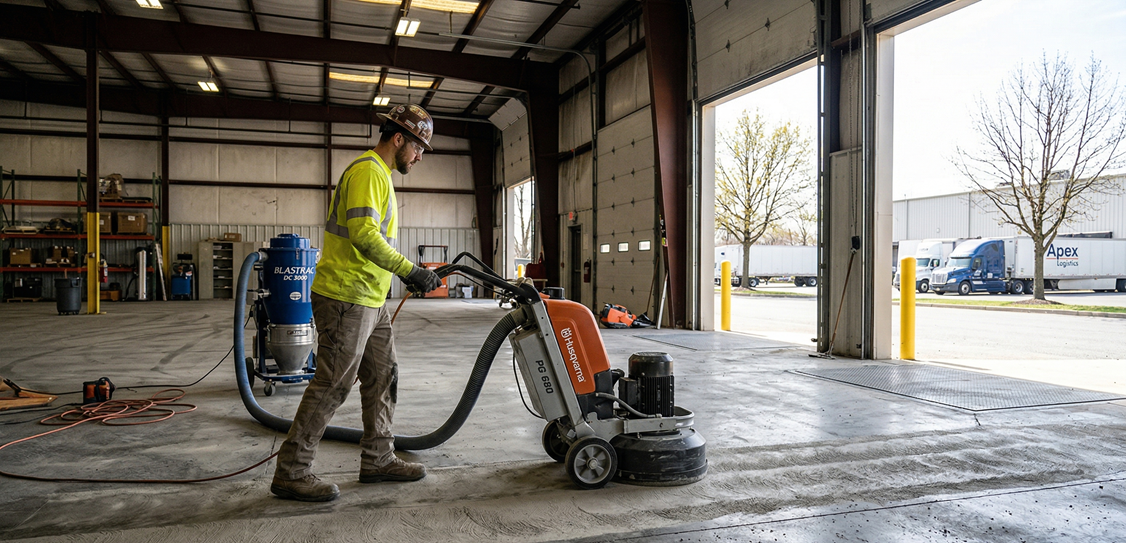
After a Central NJ winter, a proper assessment means checking for active cracks, surface contamination from road salts and oils, moisture vapor emission readings, and areas of previous coating failure. The epoxy floor coating process starts with this step. Spring's stable conditions make each part of that preparation more reliable, and the finished coating more durable as a result.
Frequently Asked Questions
Can commercial epoxy be installed in winter in New Jersey?
Installing commercial epoxy in winter is possible but significantly riskier in New Jersey. Slab temperatures in unheated commercial spaces often fall below the 50°F minimum required for proper resin adhesion. Temporary heating can compensate, but it adds cost and creates uneven cure conditions across large floor areas, which increases the likelihood of adhesion failure.
How long does a commercial epoxy floor installation take?
Most commercial epoxy installations take one to three days depending on floor size and the system selected. Quartz broadcast and urethane cement systems used in high-traffic or food service environments typically require additional cure time. Concrete Refresh schedules installations around each client's operational calendar to minimize business disruption.
Does spring humidity in New Jersey affect epoxy installation?
Early to mid-spring offers a favorable humidity window before levels climb in June and July. Epoxy applied in high humidity can develop surface cloudiness or slowed cure times. Scheduling in April or May lets you take advantage of moderate conditions before summer complicates the process and contractor availability becomes limited.

Schedule Your Spring Installation

Spring is a short window. Concrete temperatures that are ideal in April can give way to high humidity by late June, and contractor schedules fill fast once the season opens. If your commercial floor took a hit this past winter, the decision is timing: address it now or let another season compound the damage.
Concrete Refresh has been installing commercial epoxy floor systems for businesses across Middlesex, Mercer, and Somerset counties for over 15 years, backed by a 5-year workmanship warranty.

Contact us today to get your free estimate before the spring window closes.