Types of Industrial Floor Coatings Explained: A Guide for NJ Facility Managers

April 3, 2026

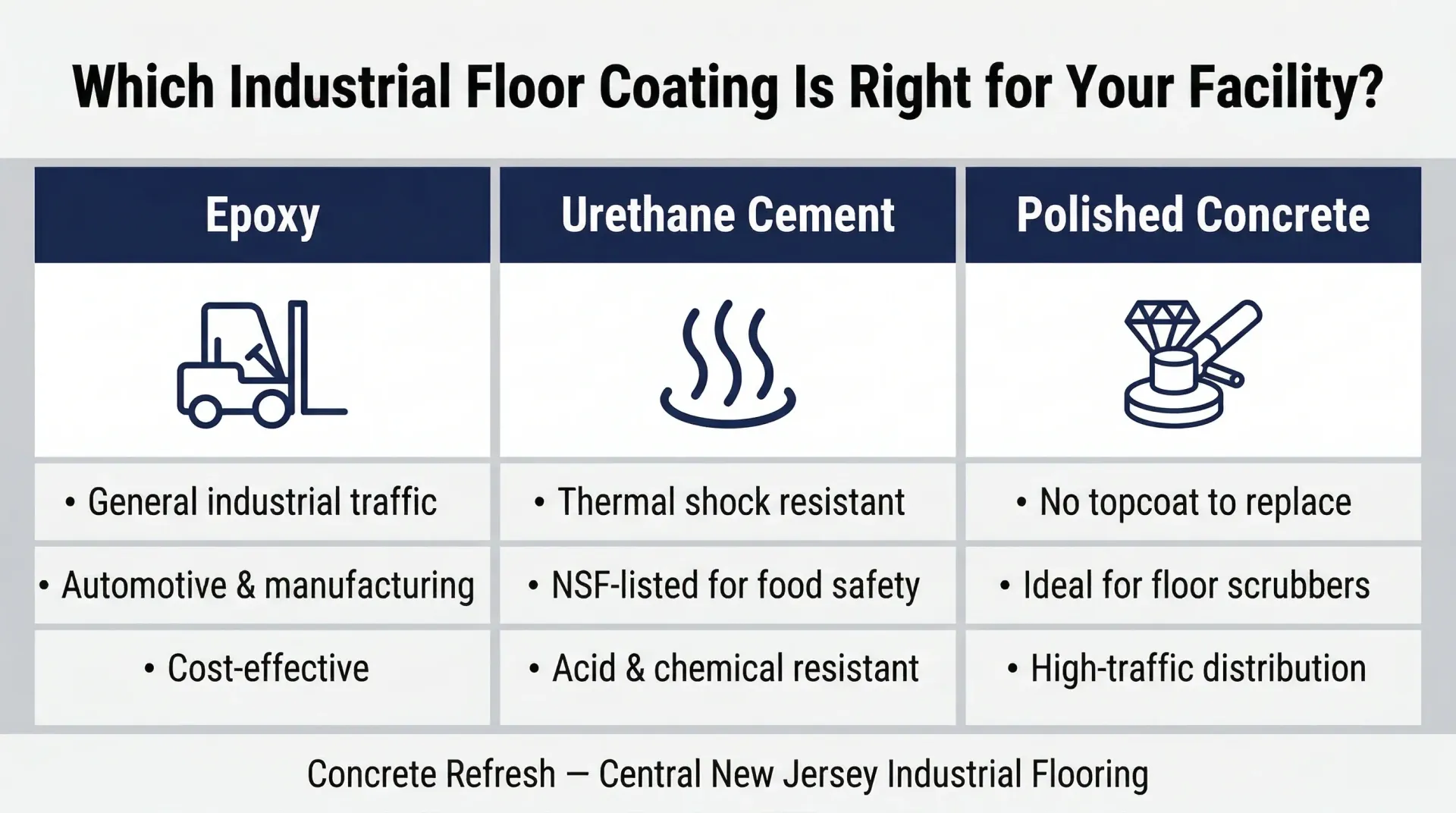
The main types of industrial floor coatings are epoxy, urethane cement, and polished concrete. Epoxy handles general industrial traffic well, urethane cement withstands thermal shock and chemical exposure in food service and processing environments, and polished concrete suits facilities that need a permanent topcoat-free surface. Concrete Refresh installs all three systems for facilities across Central New Jersey.


Most facility managers approach this as a product question: which coating should we buy? The real question is what the floor has to withstand. A general-purpose epoxy in a food processing environment will delaminate. A urethane cement system on a basic storage floor means spending money to solve a problem that doesn't exist. The decision starts with the demands, not the product.


Why Coating Choice Matters in NJ Industrial Facilities

There is a staircase in the corner of the room.

NJ facilities face pressures that make coating selection consequential. Warehouses along the NJ Turnpike corridor (South Brunswick, Piscataway, Robbinsville) host heavy forklift traffic across surfaces that absorb road salt from loading docks. That combination rules out certain systems right away.


Our industrial concrete coatings are matched to traffic type, chemical exposure, thermal demands, and substrate condition. The right answer in Middlesex County is rarely the same as in Somerset County.


Epoxy: The Standard for General Industrial Use

A close up of a cracked concrete surface.

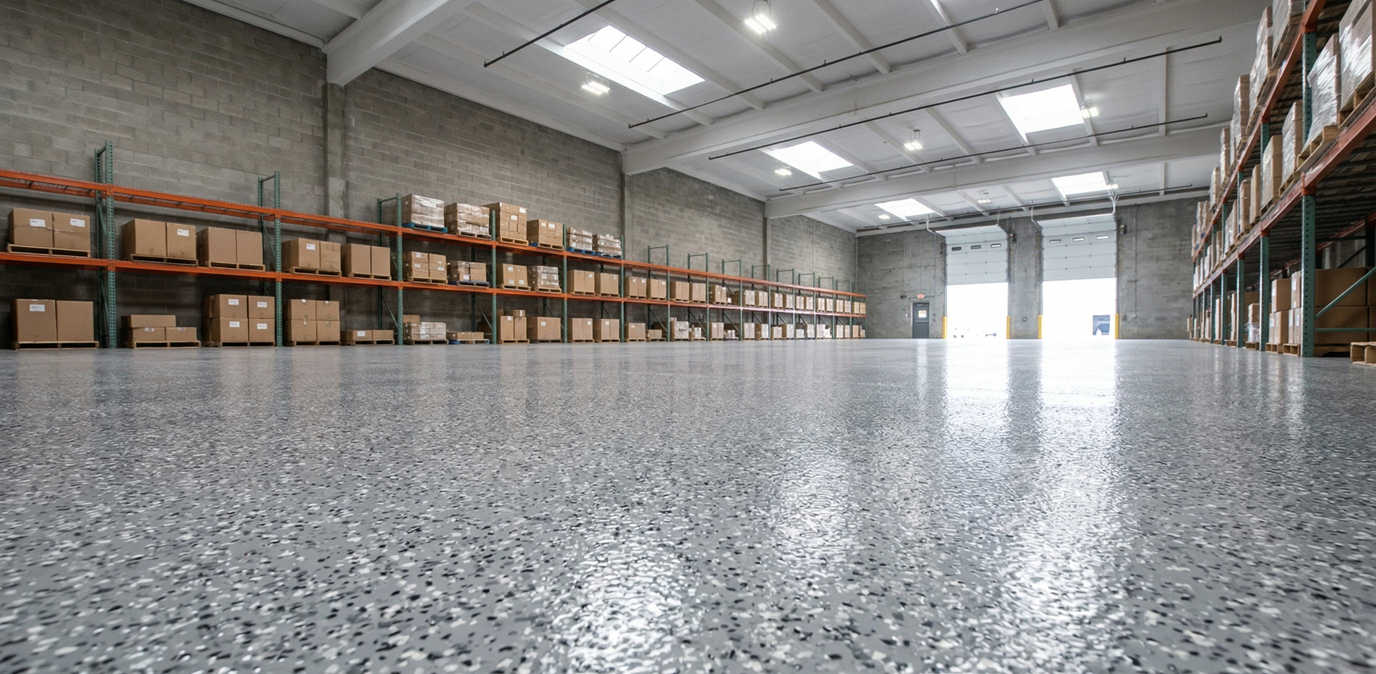
Epoxy bonds mechanically to prepared concrete, typically builds to 10 to 20 mils thick, and handles compressive loads from heavy equipment without deforming. For manufacturing cells, storage areas, and service bays, it delivers long-term performance at a reasonable cost.


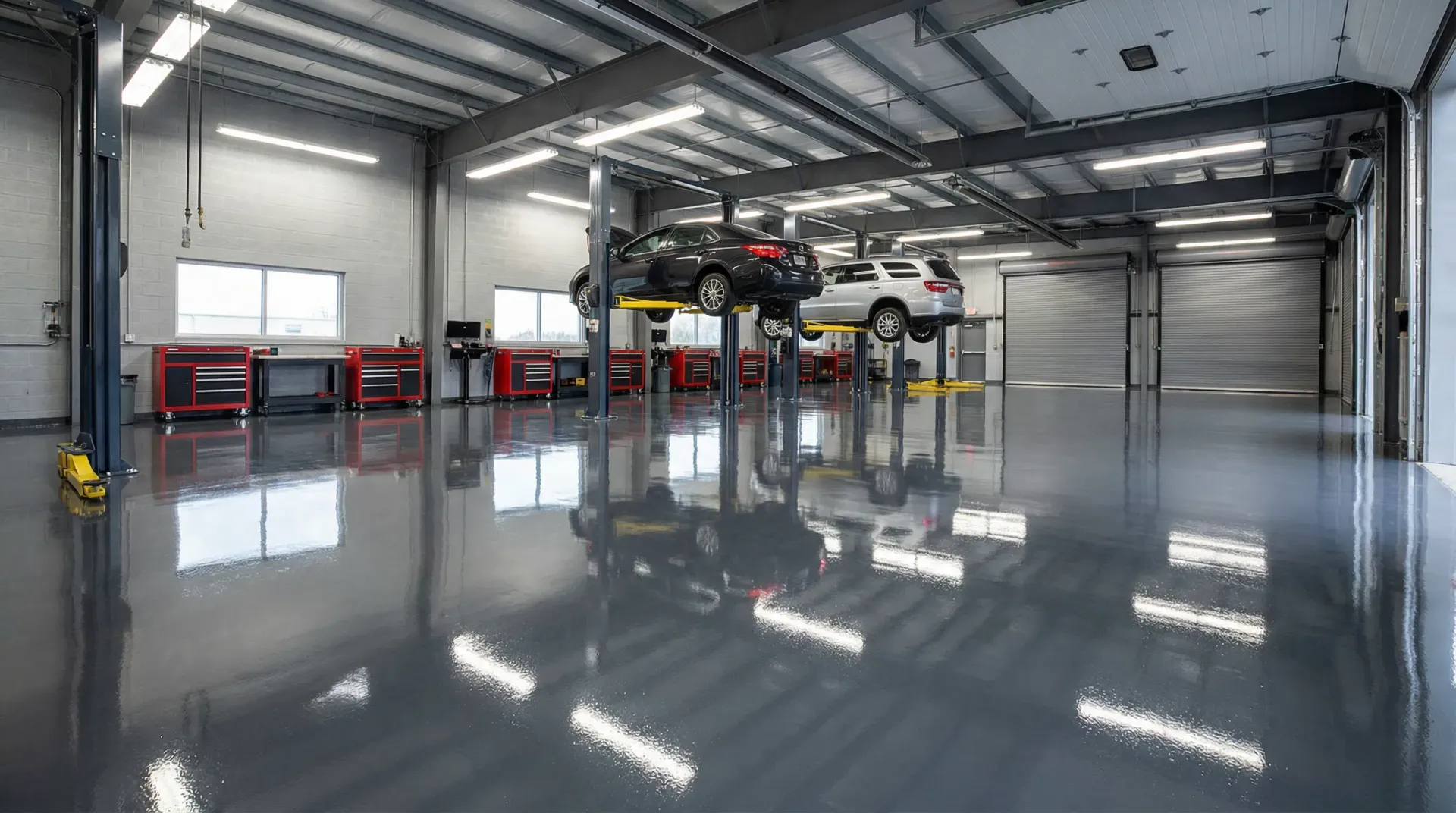
The limitation is thermal tolerance. In environments with hot liquids or sharp temperature swings, that rigidity creates stress fractures. For standard applications, epoxy floor coatings are available in full flake, metallic, and quartz configurations. The quartz system increases compressive strength and slip resistance for wet or oily conditions.


Urethane Cement: The Right System for Thermal Shock and Chemical Resistance

A close up of a cracked concrete surface.

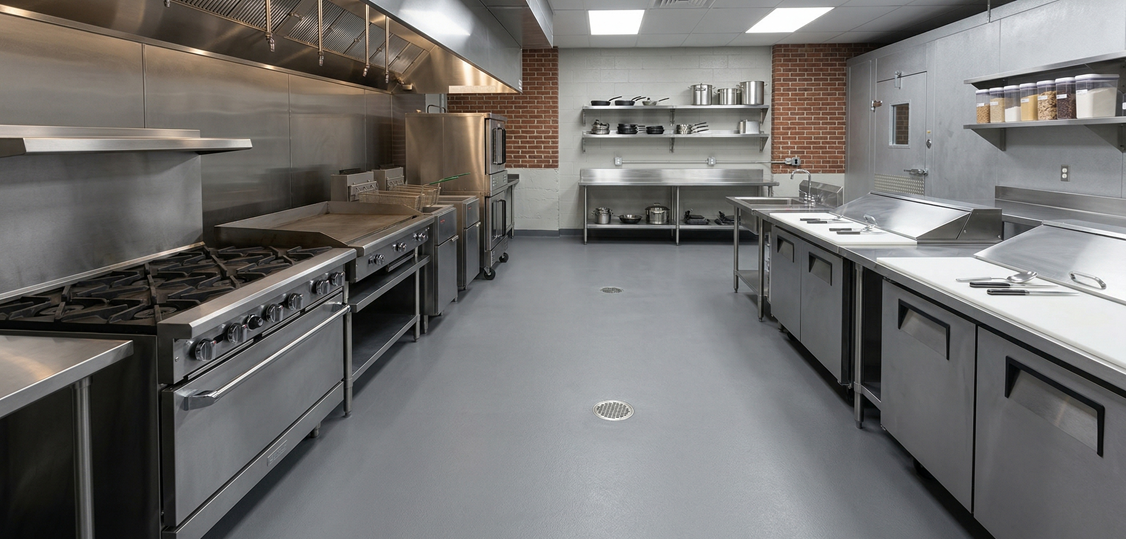
Urethane cement, a hybrid of polyurethane binder and cementitious aggregate, flexes with the substrate, tolerates rapid temperature changes, and resists a broader range of chemicals than epoxy. Standard epoxy delaminates in kitchens and processing lines that see steam cleaning and refrigerated zones in the same footprint, often within one to two years. Urethane cement handles that cycling because its expansion coefficient is closer to concrete. NSF-listed formulations meet food safety standards for surfaces near food production.


Urethane cement flooring costs more per square foot than epoxy, but it's the system that stays installed. In food service and processing environments, it's the right specification from the start.


Polished Concrete: Durability Without a Topcoat

A close up of a cracked concrete surface.

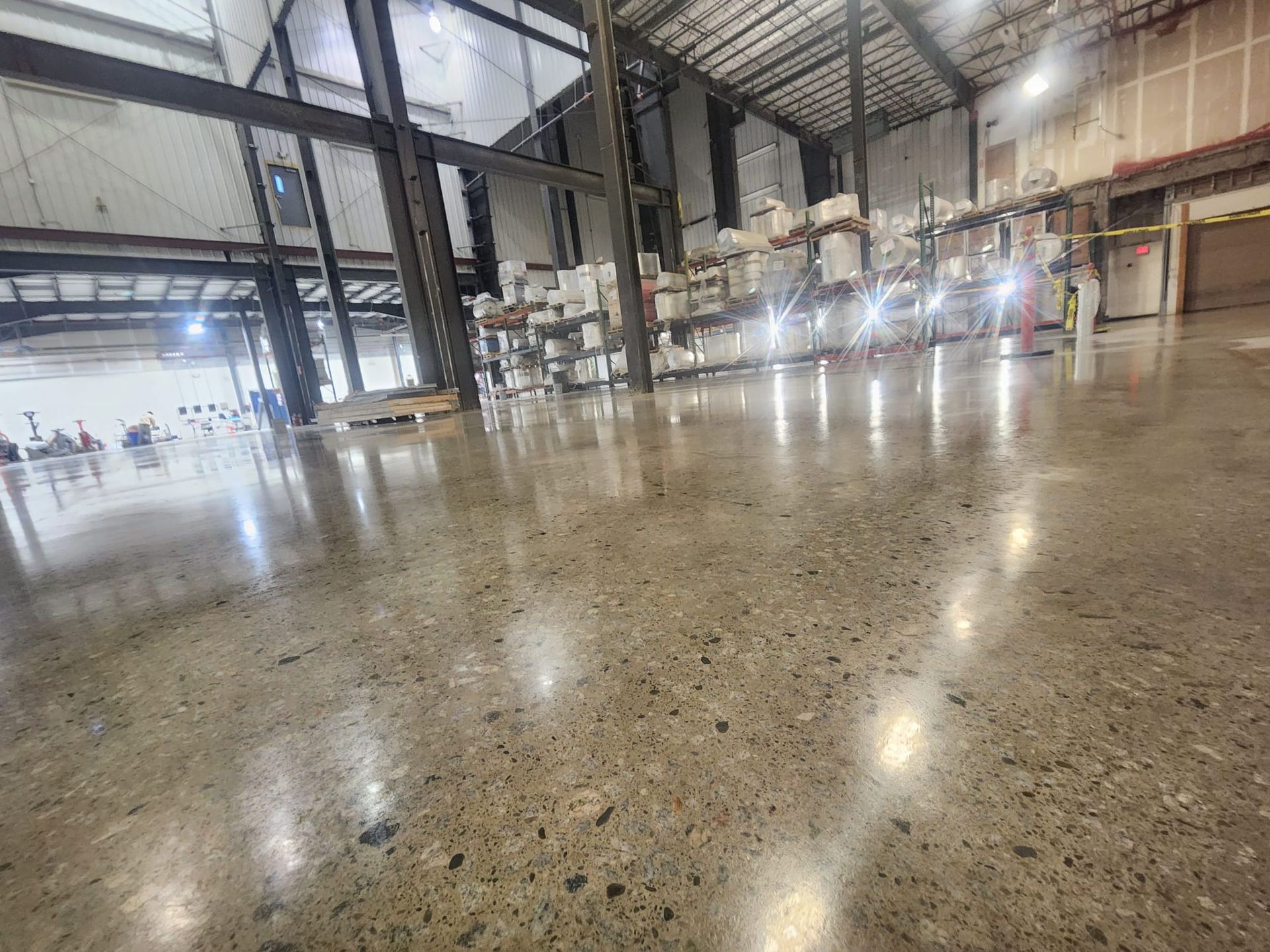
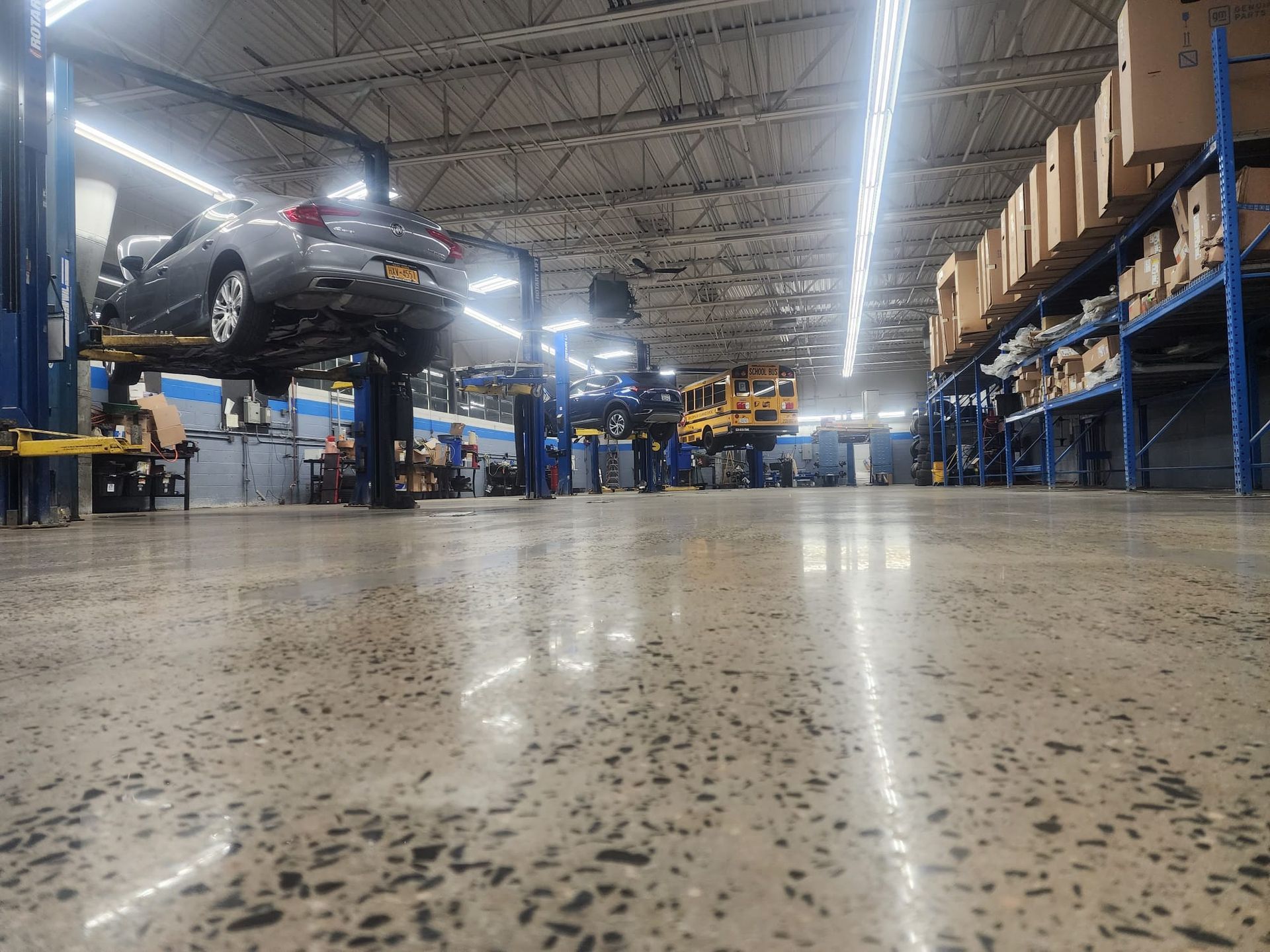
Concrete polishing refines the slab itself rather than adding a surface layer. Diamond tooling progressively densifies and hardens the concrete, producing a finish with no separate layer to chip, peel, or delaminate.


For distribution centers and facilities running floor scrubbers, polished concrete reduces long-term maintenance costs. It works best on sound, flat concrete. Slabs with significant cracking or moisture issues need remediation before polishing begins.


Matching the Right Coating to Your Facility

A close up of a cracked concrete surface.

Three factors narrow the decision: traffic type, chemical exposure, and thermal environment.


  • Pedestrian and light cart traffic: epoxy or polished concrete
  • Forklift and heavy wheeled equipment: high-build epoxy with quartz aggregate
  • Continuous floor scrubber use: polished concrete
  • Oils, mild solvents, road salt: epoxy with chemical-resistant topcoat
  • Acids, caustics, or cleaning agents: urethane cement
  • Food production, steam, or freeze-to-heat cycling: NSF-listed urethane cement


A South Brunswick warehouse running refrigerated freight faces different demands than a Cranbury commercial kitchen. Which pressure dominates—mechanical, chemical, or thermal—determines the right system.


Frequently Asked Questions

How long does industrial floor coating installation take?

Most industrial coating projects are completed within a few days, depending on the floor size and system type. Concrete Refresh schedules work to minimize downtime. We can perform phased installation when a full shutdown isn't feasible for NJ warehouses and manufacturers.


Can industrial floor coatings be applied to damaged concrete?

Yes, but surface preparation is required first. Cracks, spalling, and contamination require mechanical grinding, patching, or leveling before coating. Skipping prep is the primary reason coatings fail early. No system bonds reliably to a compromised substrate, regardless of the product quality.


What is the cost difference between epoxy and urethane cement?

Urethane cement typically costs significantly more per square foot than epoxy. For facilities that need its thermal and chemical performance, the premium pays off. A failed epoxy system in a food processing environment costs far more to replace than the correct coating from day one.


Get the Right Industrial Coating for Your NJ Facility

The right industrial floor coating comes down to three factors: traffic load, chemical contact, and thermal environment. Concrete Refresh has been installing these systems across Middlesex, Mercer, and Somerset counties for over 15 years. 


Get your free quote and have our team assess your floor and match it to the right system.

April 9, 2026
Learn the commercial epoxy floor coating process step by step—surface prep, application, curing, and downtime—for NJ businesses and facility managers.
An empty underground parking garage with purple walls and blue floors.
By Eric April 8, 2026
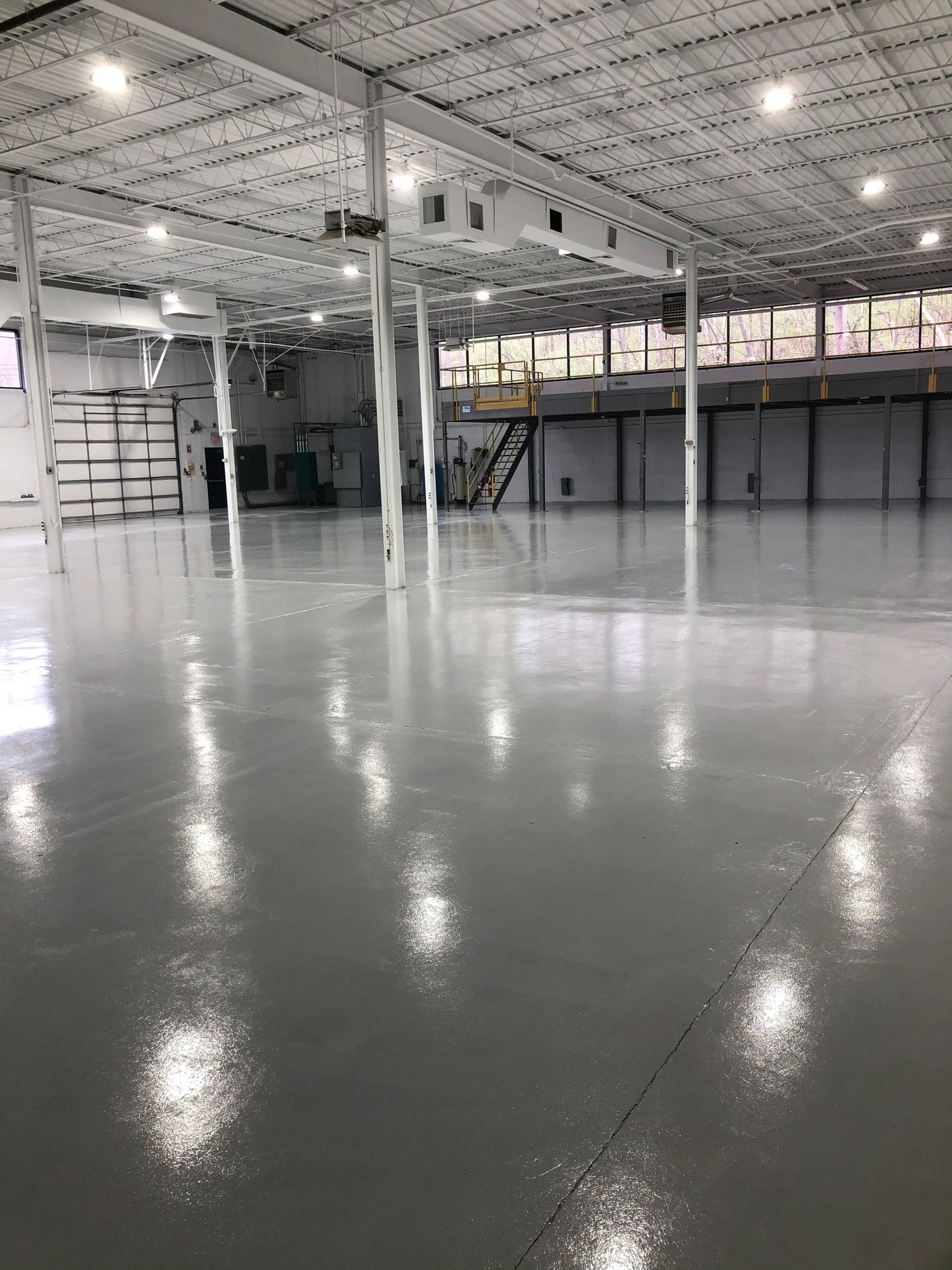
Why is industrial epoxy flooring the top choice for NJ automotive shops and showrooms? Learn about its chemical resistance, durability, & more.
April 7, 2026
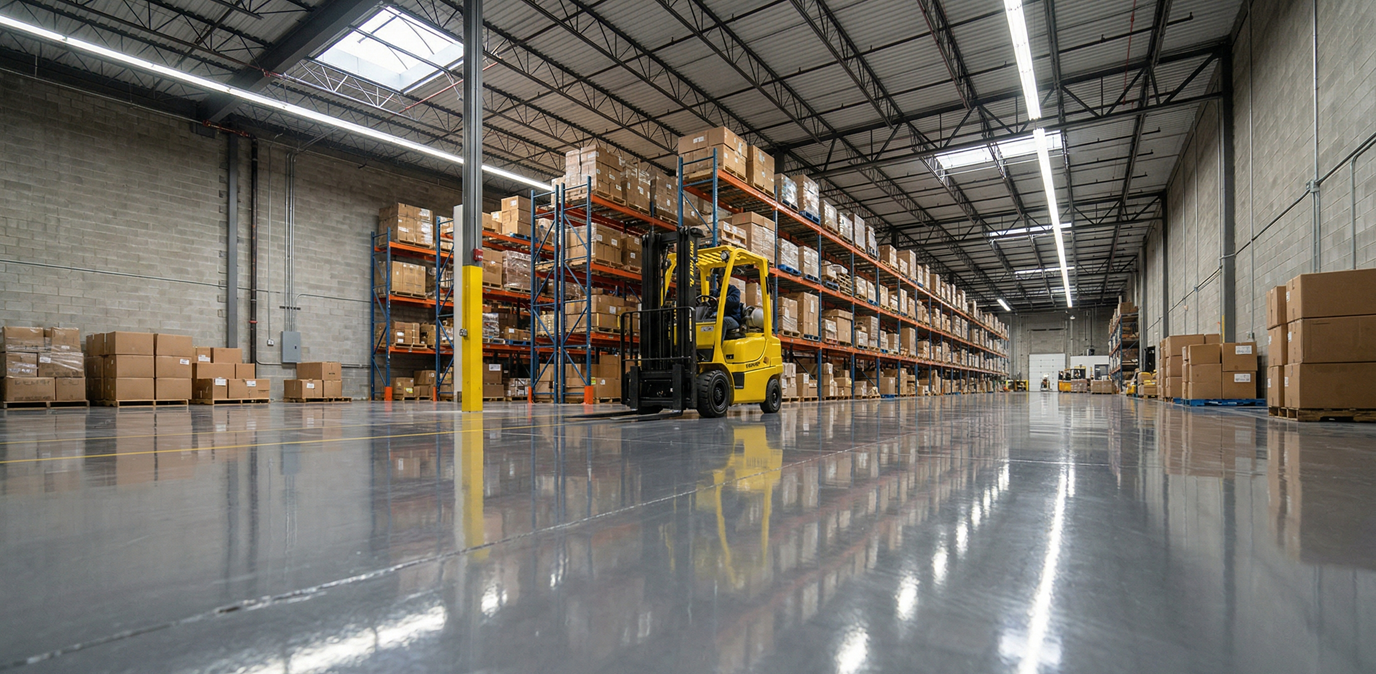
Comparing polyaspartic vs epoxy flooring for NJ commercial spaces? Learn which coating handles downtime, durability, and New Jersey conditions better.
April 6, 2026
Discover epoxy flooring pros and cons for commercial and industrial facilities in NJ. Learn where epoxy excels, where it falls short, and what to use instead.
April 3, 2026
Compare epoxy, tile, and urethane cement for commercial kitchen floors. See which holds up to heat, grease, and health codes in NJ food service facilities.
April 2, 2026
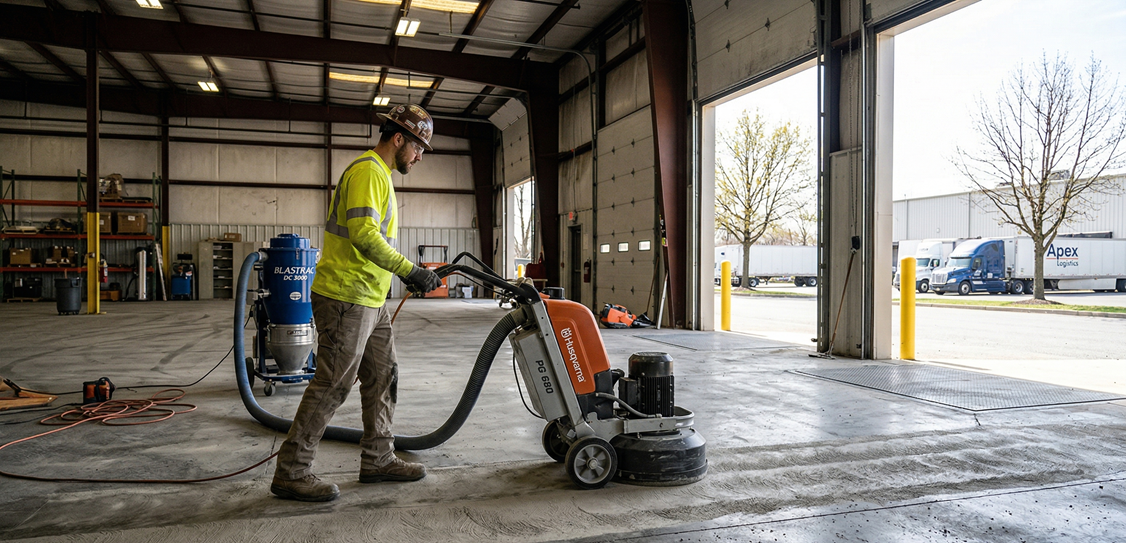
Commercial epoxy flooring in NJ costs $3–$12/sq ft installed. See what drives pricing, system options, and what to ask before signing a quote.
April 1, 2026
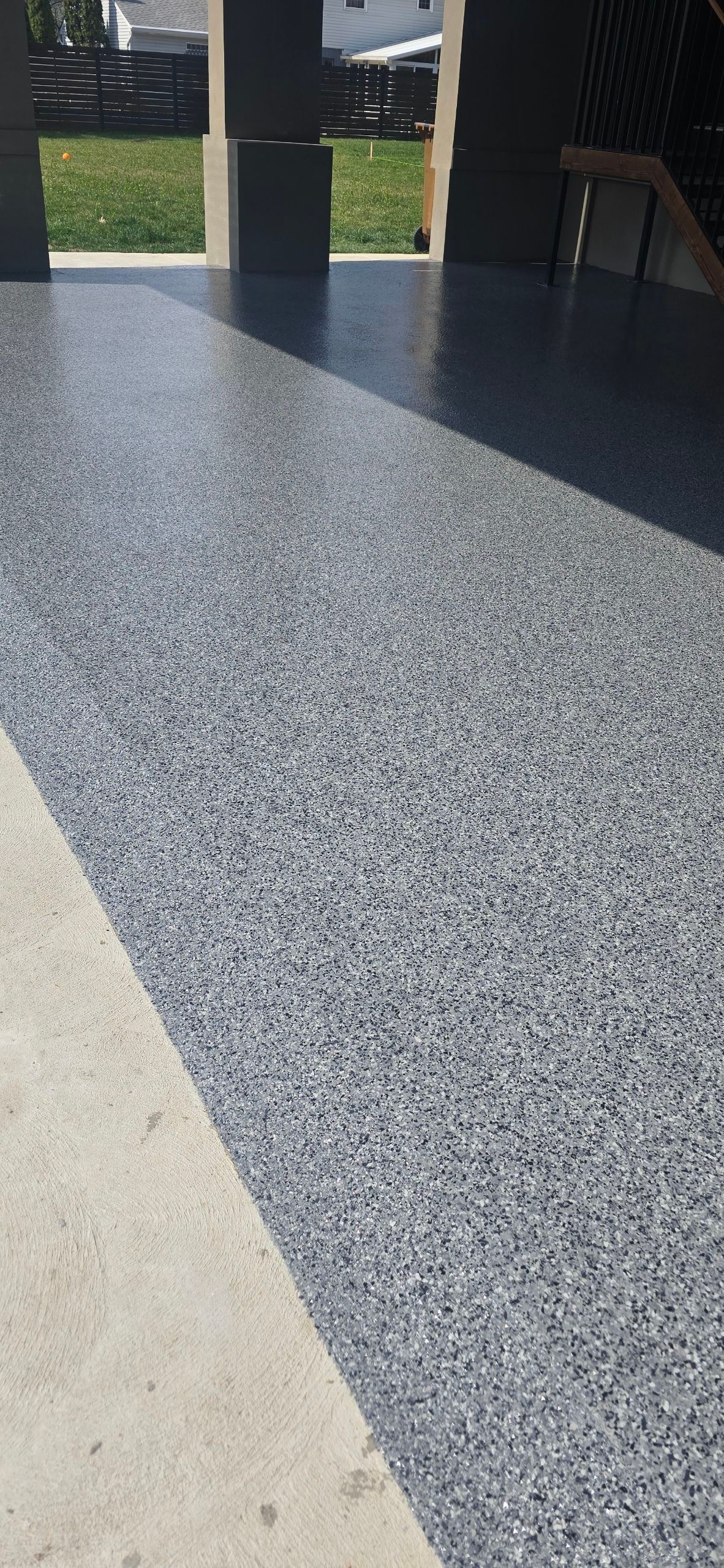
Spring is the best time to install commercial epoxy in NJ. Learn why temperature and timing matter, and how Concrete Refresh carefully prepares NJ floors.
March 11, 2026
Can you epoxy outdoor concrete? Yes, but standard epoxy fails in NJ's climate. Learn which epoxy systems work for patios and pool decks, and which don't.
March 9, 2026
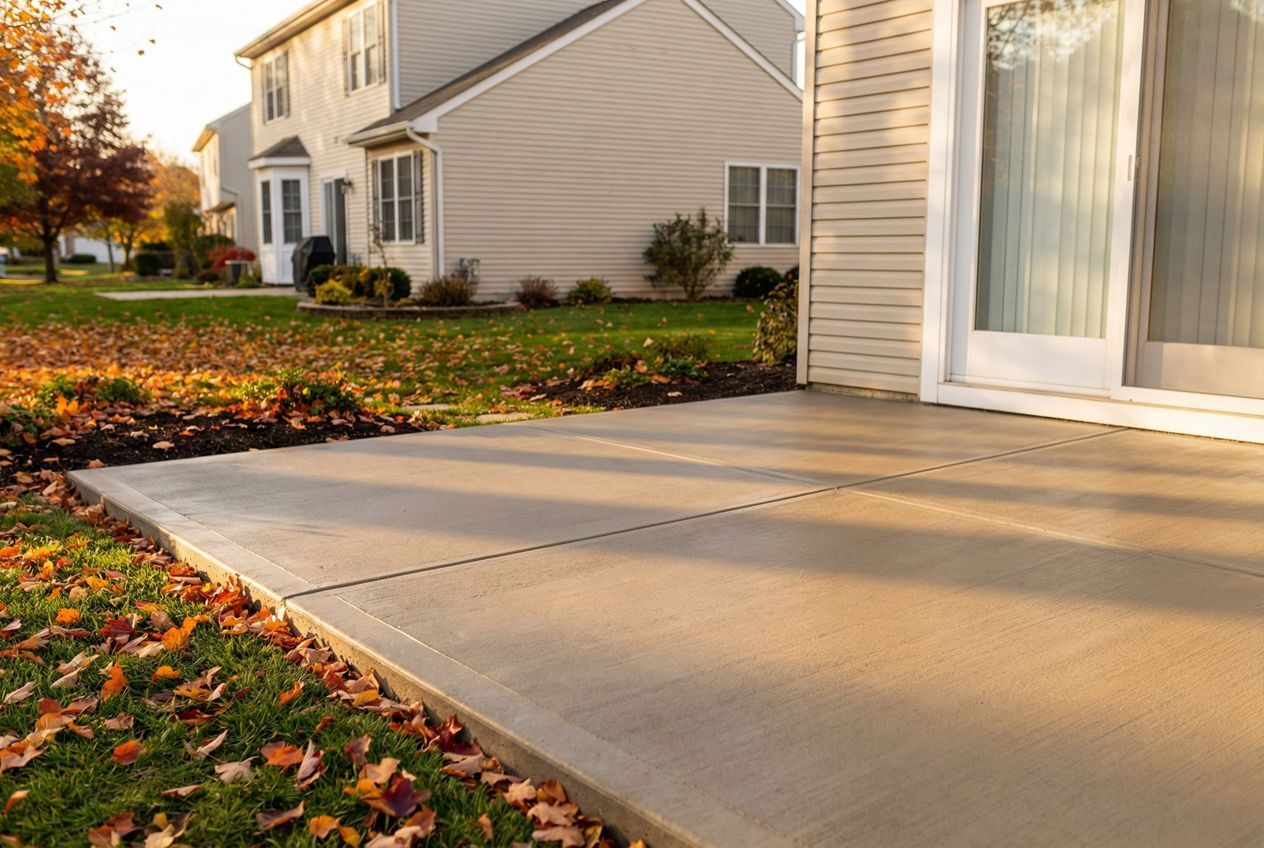
Find the most durable outdoor concrete coating for NJ patios. Compare options, understand freeze-thaw performance, and get expert advice from Concrete Refresh.
March 5, 2026
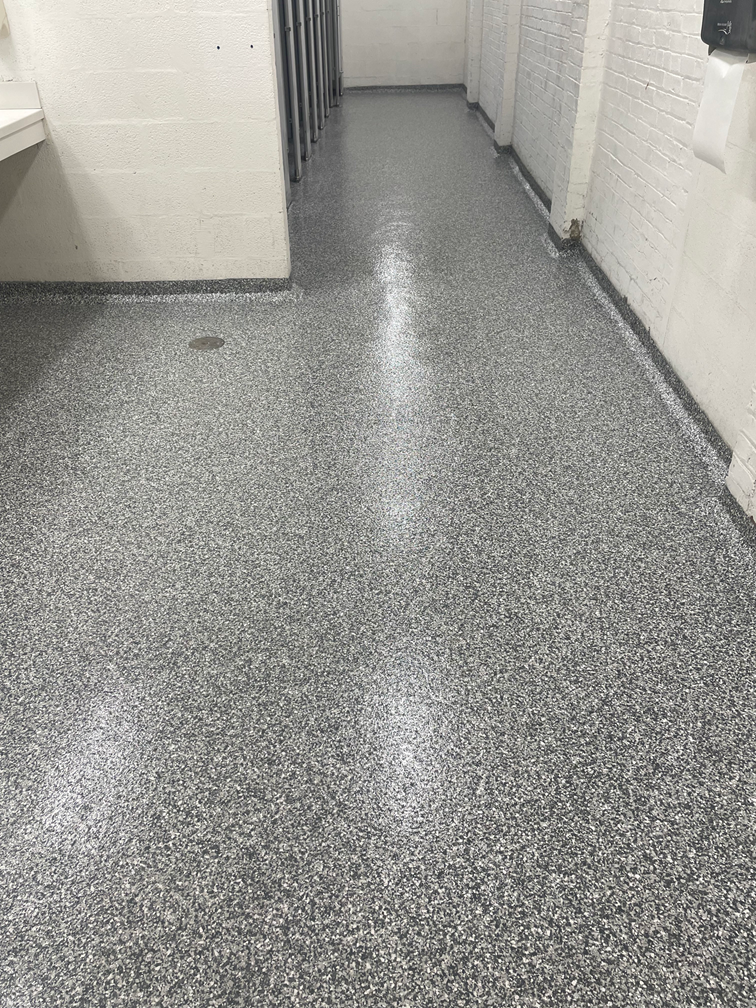
Learn how to clean epoxy floor coatings and keep them looking sharp. Here are 7 maintenance tips from Concrete Refresh—covering daily care, stains, and more.
Show More