Best Flooring Options for Commercial Kitchens: Epoxy, Tile, and Urethane Cement Compared

April 3, 2026

The best flooring for commercial kitchens depends on traffic volume, thermal exposure, and sanitation requirements. Epoxy, quarry tile, and urethane cement are the three most common options, each with distinct performance profiles. Concrete Refresh installs commercial concrete coatings for food service facilities throughout Central New Jersey, and this guide breaks down how each system performs under real kitchen conditions.


A restaurant owner in New Brunswick called us last spring after his quarry tile floor was flagged during a health inspection. The grout lines had absorbed years of grease and cleaning chemicals, and no amount of scrubbing could make them code-complliant. The problem wasn't his maintenance routine—it was that the floor was never the right system for a high-output commercial kitchen. 


After 15 years installing concrete floor coatings across Middlesex and Mercer counties, Concrete Refresh has seen this scenario more than once. The right floor choice from the start saves thousands in remediation costs.


Why Commercial Kitchen Floors Fail Faster Than Expected

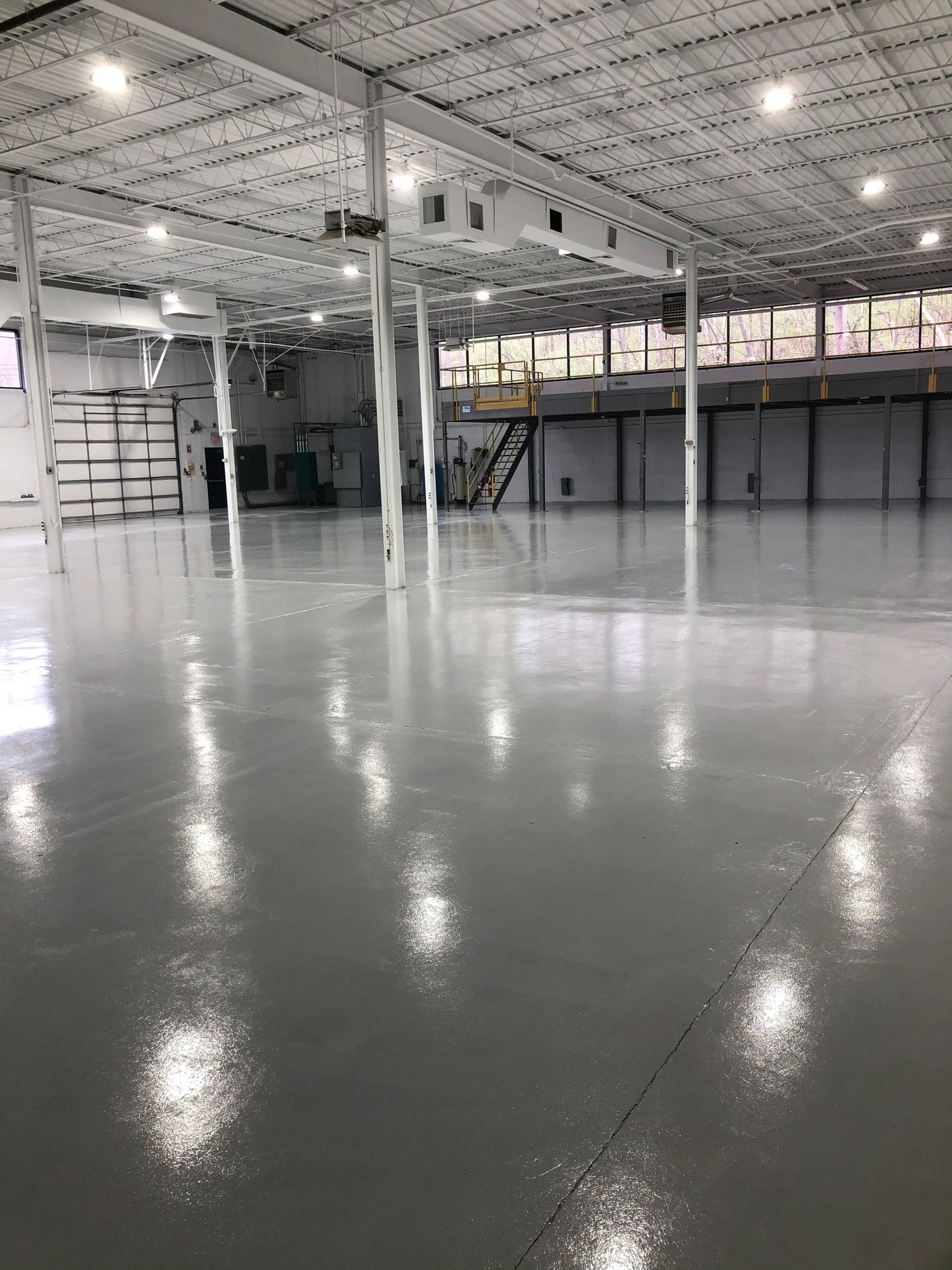
There is a staircase in the corner of the room.

Commercial kitchens subject flooring to a combination of stresses that most surfaces aren't designed to handle simultaneously: thermal shock from steam and hot water, chemical exposure from industrial degreasers, constant foot traffic, and strict sanitation requirements under New Jersey Department of Health guidelines. 


A surface that excels in one area often falls short in another. Quarry tile handles heat well but creates a grout problem. Standard epoxy resists chemicals but can blister under repeated steam exposure. Understanding each system's drawbacks is how you choose one that actually lasts.


Epoxy: Popular Choice, But With Trade-Offs

A close up of a cracked concrete surface.

Epoxy flooring is seamless, non-porous, and cost-effective for many commercial applications. In dry environments like warehouses, retail spaces, and light-traffic commercial kitchens, it performs well for years. The challenge in a full-service commercial kitchen is thermal shock: the temperature swings that happen when boiling water or steam hits a cold floor. 


Standard epoxy is a rigid system, and repeated thermal cycling can cause it to crack or delaminate at the concrete bond line over time.


Epoxy works in commercial kitchens when:


  • Thermal exposure is limited (prep kitchens, dry storage areas, front-of-house)
  • Traffic volume is moderate
  • Chemical exposure involves standard sanitizers rather than heavy industrial cleaners


In high-heat, high-steam environments, such as commercial dish rooms, cooking lines, and food processing areas, epoxy's rigidity becomes a liability rather than an asset.


Tile: Familiar, But Maintenance-Intensive

A close up of a cracked concrete surface.

Quarry tile remains common in older NJ restaurant kitchens because it's been specified for decades and inspectors are familiar with it. The material is durable, but the grout lines are the problem. In a commercial kitchen, grout is a porous joint that absorbs grease, bacteria, and cleaning chemicals even when sealed. Health departments in Middlesex County regularly scrutinize grout conditions because failure there creates a direct food safety risk.


Replacing individual broken tiles also means matching discontinued patterns in kitchens that have been operating for years. The maintenance burden compounds over time.


Urethane Cement: Built Specifically for Commercial Kitchen Demands

A close up of a cracked concrete surface.

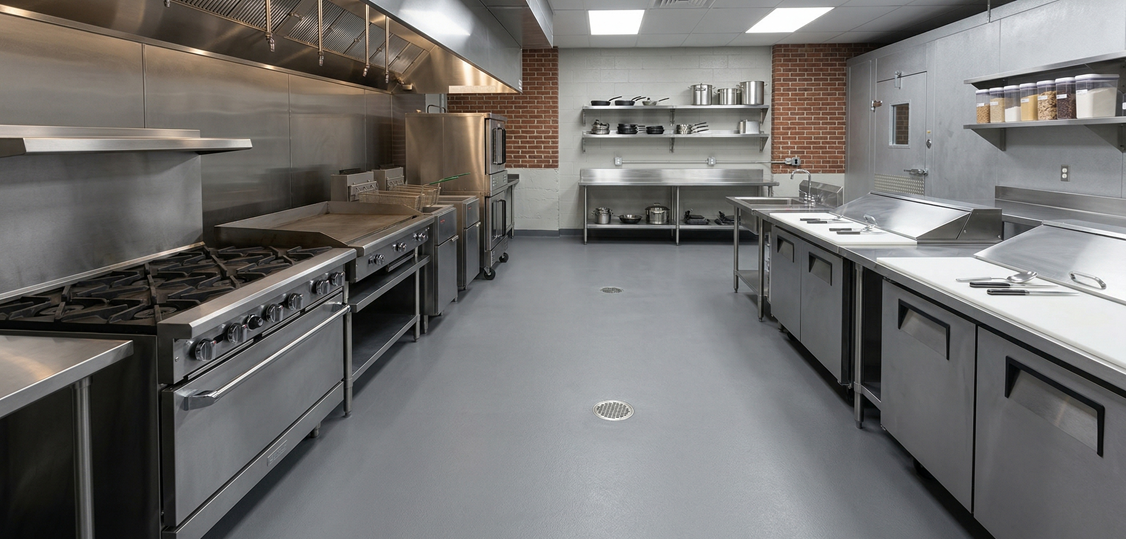
Urethane cement was developed specifically for food production environments where epoxy and tile consistently fall short. It's a cementitious urethane system that bonds deeply to the concrete substrate, handles thermal shock across a wide temperature range including steam exposure, and creates a fully seamless surface with no grout lines.


These are the key properties that make urethane cement the preferred specification for food service floors:


  • Thermal shock resistance: handles rapid temperature changes without cracking or delaminating
  • Seamless, non-porous surface: no grout lines for bacteria to colonize
  • Chemical resistance: withstands industrial degreasers, caustic cleaners, and sanitizing agents
  • Slip-resistant finish options: designed to meet OSHA slip-resistance requirements for commercial wet areas
  • Antimicrobial formulations: available in systems that inhibit bacterial growth at the surface level


For Central NJ food service operators dealing with rigorous health department oversight, it's the system that removes the grout-line variable entirely.


How To Choose the Right System for Your Kitchen

The decision between epoxy and urethane cement comes down to three factors: how much heat and steam the floor sees daily, how intensive the cleaning chemicals are, and what your local health code requires. For a full side-by-side look at how these two systems compare in commercial environments, our post on urethane cement vs. epoxy flooring covers their performance differences in detail.


Tile is rarely the right new installation choice today because the grout liability outweighs the familiarity benefit. For kitchens being built or renovated, the conversation almost always comes down to epoxy or urethane cement. In any environment with steam, high heat, or heavy sanitation demands, urethane cement is the more defensible specification.


Frequently Asked Questions

How long does urethane cement flooring last in a commercial kitchen?

Urethane cement flooring in commercial kitchens carries manufacturer ratings in the range of 10 to 15 years with proper maintenance, depending on traffic volume and chemical exposure. The system's thermal shock resistance prevents the cracking and delamination that shortens the life of rigid coatings. Concrete Refresh installs urethane cement for NJ food service facilities backed by a 5-year workmanship warranty.


Is epoxy flooring safe for commercial kitchens?

Epoxy is safe and code-compliant in many commercial kitchen areas, particularly prep zones, dry storage, and lower-traffic spaces. In high-steam cooking lines or dish rooms, standard epoxy may delaminate over time due to thermal shock. For those environments, a urethane cement system is the more durable and inspection-ready choice.


What does the NJ Department of Health require for commercial kitchen floors?

New Jersey health codes require commercial kitchen floors to be smooth, non-absorbent, and easily cleanable. Grout joints in tile floors can fail this standard if they absorb grease or bacterial contamination. Seamless systems like urethane cement and properly applied epoxy eliminate the grout-line variable and are generally easier to keep compliant through routine inspections.


Get the Right Floor Specified Before You Build or Renovate

Choosing the wrong floor system means remediation costs, failed inspections, and downtime. Concrete Refresh works with restaurant owners, facility managers, and general contractors throughout Central New Jersey to specify and install the right flooring system the first time. 


Contact us for a free estimate and we'll assess your kitchen's specific demands before recommending a system.
April 9, 2026
Learn the commercial epoxy floor coating process step by step—surface prep, application, curing, and downtime—for NJ businesses and facility managers.
An empty underground parking garage with purple walls and blue floors.
By Eric April 8, 2026
Why is industrial epoxy flooring the top choice for NJ automotive shops and showrooms? Learn about its chemical resistance, durability, & more.
April 7, 2026
Comparing polyaspartic vs epoxy flooring for NJ commercial spaces? Learn which coating handles downtime, durability, and New Jersey conditions better.
April 6, 2026
Discover epoxy flooring pros and cons for commercial and industrial facilities in NJ. Learn where epoxy excels, where it falls short, and what to use instead.
April 3, 2026
Learn which industrial floor coating is right for your NJ facility—epoxy, urethane cement, or polished concrete—and how each performs in real-world conditions.
April 2, 2026
Commercial epoxy flooring in NJ costs $3–$12/sq ft installed. See what drives pricing, system options, and what to ask before signing a quote.
April 1, 2026
Spring is the best time to install commercial epoxy in NJ. Learn why temperature and timing matter, and how Concrete Refresh carefully prepares NJ floors.
March 11, 2026
Can you epoxy outdoor concrete? Yes, but standard epoxy fails in NJ's climate. Learn which epoxy systems work for patios and pool decks, and which don't.
March 9, 2026
Find the most durable outdoor concrete coating for NJ patios. Compare options, understand freeze-thaw performance, and get expert advice from Concrete Refresh.
March 5, 2026
Learn how to clean epoxy floor coatings and keep them looking sharp. Here are 7 maintenance tips from Concrete Refresh—covering daily care, stains, and more.
Show More